Wednesday, January 13, 2016

401k’s are About to Get Wiped Out #2016Collapse


Full Transcript:
The Economy is Imploding
For the past 7 years the world has been living through a really ugly experiment, hyper-Keynesian economics.
Stimulus, low interest rates, quantative easing, and plenty of fraud to go around from government statistics, to the lack of honest accounting with the suspension of marking current assets, to current market prices.
For years investors were bullish on China, a country that was hailed as a great success from central planning, a state run economy with some capitalism, perhaps a model others could look to in the future.
As China fueled commodity consumption for the past 15 years, now the world has to take a serious look at what they accomplished.
Ghost cities, $50 billion dollar bridges to no where, were all part of an economy and job market built on air.
Now, as reality sets in for China’s future growth, a new reality needs to set in for investors, the fact that we have no idea what will be China’s new normal….Because even once they hit bottom, they’ve already built cities for the next 20 years. Think of the harm this has done to a construction worker looking to enter the workforce in 5 years, what’s the point, the cities of 2025, were built in 2010.
For commodity investors, this is a disaster, which is why we suggest anyone buying a resource stock today, should also seriously consider having a position a China bear fund or ETF like CHAD.
Here in the U.S., oil companies since 2009 have borrowed at artificially low interest rates, in order to produce higher cost oil from fracking…Which has now helped flood the world in oil.
Only now we have lower oil prices, higher interest rates for the oil frackers, and an almost certain default as these companies can’t pay the debt back, especially with lower oil prices that for the most part are unprofitable for unconventional drillers.
So what does an oil executive do in this scenario, well so far they’ve tried to make up losing money on oil with volume, which obviously has only made the problem much worse.
All around the world, stock markets are crashing, Brazil is in Depression, China and Europe are in recession, and Canada and the U.S. look to be entering an official recession in 2016.
FutureMoneyTrends.com has just put together an action plan for 2016.
Included in this report, is what to do now with your money, on asset allocation, cash, gold, and how to best hedge as the entire global economy implodes.
The central planners have truly made the reset of 2008, ten times worse, and unfortunately there is no silver bullet, but we believe we have put your best options forward.
Download our free report, at FutureMoneyTrends.com/protect
Our 2016 Guide Includes the top 7 trends we see for the next year and what actions to take.
In just the first week of January, as markets melted down, our members are up considerably, as we suggested to short China last month, and go long a
specific high quality gold company, which rose 26%while major indexes melted down, Go to FutureMoneyTrends.com/protect and and receive our 2016 Guide
with actions to take, with our Weekly Wealth Digest updates every Wednesday.
FutureMoneyTrends.com/protect
Personal Finance, for the New Economy!

Conn Hallinan’s 2015 “Are You Serious?” Awards

The First Amendment Award to U.S. Defense Secretary Ashton Carter for issuing a new Law Of War manual that defines reporters as “unprivileged belligerents” who will lose their “privileged” status by “the relaying of information” which “could constitute taking a direct part in hostilities.” Translation? If you report you are in the same class as members of al-Qaeda.
A Pentagon spokesperson said that the military “supports and respects the vital work that journalists perform.” Just so long as they keep what they see, hear, and discover to themselves? Professor of constitutional law Heidi Kitrosser called the language “alarming.”
Runner-up is the U.S. Military College at West Point for hiring Assistant Professor of Law William C. Bradford, who argues that the military should target “legal scholars” who are critical of the “war on terrorism.” Such critics are “treasonous,” he says. Bradford proposes going after “law school facilities, scholars’ home offices and media outlets where they give interviews.”  Bradford also favors attacking “Islamic holy sites,” even if that means “great destruction, innumerable enemy casualties, and civilian collateral damage.”
The Little Bo Peep Award for losing track of things goes to the U.S. Defense Department for being unable to account for $35 billion in construction aid to Afghanistan, which is about $14 billion more than the country’s GDP. The U.S. has spent $107.5 billion on reconstruction in Afghanistan, more than the Marshall Plan. Most of it went to private contractors.
The Pentagon response to the report by the Special Inspector General for Afghanistan on the missing funds was to declare that all such information was now classified, because it might provide “sensitive information for those that threaten our forces and Afghan forces.” It has since partially backed off that declaration.
While it is only pocket change compared to Afghanistan, the Pentagon also could not account for more than $500 million in military aid to Yemen. The U.S. is currently aiding Saudi Arabia and a number of other Gulf monarchies that are bombing Houthi rebels battling the Yemeni government. Much of that aid was supposed to go for fighting Al-Qaeda in the Arabian Peninsula (AQAP), against which the U.S. is also waging a drone war.  The most effective foes of AQAP are the Shiite Houthis. So we are supporting the Saudis and their allies against the Houthis, while fighting Al-Qaeda in Yemen, Somalia, Afghanistan, and Iraq.
If the reader is confused, Dispatches (Conn Hallinan’s Dispatches from the Edge) suggests taking a strong painkiller and lying down.
The George Orwell Award for Language goes to the intelligence gathering organizations of the “Five Eyes” surveillance alliance — the U.S., Britain, Canada, Australia, and New Zealand — who changed the words “mass surveillance” to  “bulk collection.” The linguistic gymnastics allows the Five to claim that they are not violating Article 8 of the European Convention on Human Rights. In the 2000 decision of Amann v. Switzerland, the Court found that it was illegal to store information on an individual’s private life.
As investigative journalist Glen Greenwald points out, the name switch is similar to replacing the world “torture” with “enhanced interrogation techniques.” The first is illegal, the second vague enough for interrogators to claim they are not violating the International Convention Against Torture.
A runner-up is the U.S. Defense Department, which changed the scary title of “Air Sea Battle” to describe the U.S.’s current military doctrine vis-à-vis China, to “Joint Concept for Access and Maneuver in the Global Commons.” The Air Sea Battle doctrine calls for bottling up China’s navy, launching missile attacks to destroy command centers, and landing troops on the Chinese mainland. It includes scenarios for the use of nuclear weapons. “Global Commons,” on the other hand, sounds like a picnic on the lawn.
The Lassie Come Home Award to the U.S. Marine Corps for creating a 160-pound robot dog that will “enhance the Marine Corps war-fighting capabilities,” according to Captain James Pineiro. Pineiro heads up the Corp’s Warfighting Laboratory at Quantico, Virginia. “We see it as a great potential for the future dismounted infantry.”
The Defense Advanced Research Projects Agency is also designing an autonomous fighting robot. Can the Terminator be far off?
The Golden Lemon Award goes to Lockheed Martin, the biggest arms manufacturer in the world, which has managed to produce two stunningly expensive weapons systems that don’t work.
The F-35 Lighting II is the single most expensive weapons system in U.S. history: $1.5 trillion. It is supposed to replace all other fighter-bomber aircraft in the American arsenal, including the F-15, F-16 and F-18, and will begin deployment in 2016.
Slight problem.
In dogfights with the three decade-old F-16, the F-35 routinely lost. Because it is heavy and underpowered, it is extremely difficult to turn the plane during air-to-air combat. It has a fancy 25-MM Gatling gun that gets off 3,000 rounds a minute — but the plane can only carry 180 rounds. As one Air Force official put it, “Hope you don’t miss.” Oh, and the software for the gun won’t be out until 2019.
And that’s not the only glitch.
The F-35 has stealth technology, but its Identification Friend or Foe system is so bad that pilots are required to get a visual confirmation of their target. Not a good idea when the other guys have long-range air-to-air missiles. The $600,000 high-tech helmet the pilot uses to see everything around him often doesn’t work very well, and there isn’t enough room in the cockpit to turn your head. If the helmet goes out, there is no backup landing system, so maybe you had better eject? Bad idea. The fatality rate for small pilots (those under 139 pounds) at low speeds is 98 percent, not good odds. Larger pilots do better but the changes of a broken neck are still distressingly high.
But it is not just Lockheed Martin’s airplanes that don’t work, neither do its ships.
The company’s new Littoral Combat Ship (LCS), the Milwaukee, broke down during its recent East Coast tour and had to be towed to Virginia Beach. The LCSs are designed to fight in shallow waters, but a recent Pentagon analysis says the ships would “not be survivable in a hostile combat situation.” The LCSs have been plagued with engine problems and spend more than 50 percent of their time in port being repaired. The program costs $37 billion.
And Lockheed Martin, along with Northrop Grumman and Boeing, just got a $58.2 billion contract to build the next generation Long Range Strike Bomber. Sigh.
The Great Moments In Democracy Award goes to Jyrki Katainen, Finnish vice-president of the European Commission, the executive arm of the 28-nation European Union. When Greece’s anti-austerity Syriza Party was elected, he commented, “We don’t change policies depending on elections.” So, why is it that people have elections?
A close runner-up in this category is German Finance Minister Wolfgang Schauble, who denounced Athens’ government for not cracking down on Greeks who can’t pay their taxes. The biggest tax dodger in Greece? That would be the huge German construction company, Hochtief, which has not paid the Value Added Tax for 20 years, nor made its required contributions to social security. Estimates are that the company owes Greece one billion Euros.
The Ty-D-Bol Cleanup Award to the U.S. State Department for finally agreeing to clean up plutonium contamination, the residue from three hydrogen bombs that fell near the Andalusia town of Palomares in Southern Spain in 1966. The bombs were released when a B-52 collided with an air tanker. While the bombs did not explode — Palomares and a significant section of southern Spain would not exist if they had — they broke open, spreading seven pounds highly toxic plutonium 239 over the area. Plutonium has a half-life of 24,000 years.
While there was an initial cleanup, Francisco Franco’s fascist government covered up the incident and played down the dangers of plutonium. But recent studies indicate that there is still contamination, and some of the radioactive materials are degrading into americium, a producer of dangerous gamma radiation.
When Spain re-raised the issue in 2011, the U.S. stonewalled Madrid. So why is Washington coming to an agreement now? Quid pro quo: the U.S. wants to base some of its navy at Rota in Southern Spain, and the Marines are setting up a permanent base at Moron de la Frontera.
As for nukes, the U.S. is deploying its new B61-12 guided nuclear bomb in Europe. At $11 billion it is the most expensive nuke in the U.S. arsenal. The U.S. will base the B61-12 in Germany, the Netherlands, Belgium, Italy and Turkey, a violation of Articles I and II of the Nuclear Non-Proliferation Treaty. Those two articles ban transferring nukes from a nuclear weapon state to a non-nuclear weapon state.
Dispatches assumes they will also bring lots of mops and buckets.
Buyer Beware Award to the purchasing arm of the U.S. Defense Department that sent dozens of MD-530 attack helicopters to Afghanistan to build up the Afghan Air Force. Except the McDonnell Douglas-made choppers can’t operate above 8,000 feet, which means they can’t clear many of the mountains that ring Kabul. The Afghan capital is at 6,000 feet. It also doesn’t have the range to reach Taliban-controlled areas and, according to the pilots, its guns jam all the time. The Pentagon also paid more than $400 million to give Afghanistan 16 transport planes that were in such bad condition they couldn’t fly. The planes ended up being sold as scrap for $32,000.
The Pogo Possum “We Have Met The Enemy and He Is Us” Award goes to Defense Intelligence Agency for warning Congress that “Chinese and Russian military leaders…were developing capabilities to deny [the] U.S. use of space in the event of a conflict.” Indeed, U.S. military satellites were jammed 261 times in 2015 — by the United States. Asked how many times China and Russia had jammed U.S. signals, Gen. John Hyten, head of the Air Force Space Command replied, “I don’t really know. My guess is zero.”

This piece was reprinted from Foreign Policy In Focus by RINF Alternative News with permission.

Chinese Shipyards "Vanish" As Baltic Dry Collapses To New Record Low

Another day, another plunge in The Baltic Dry Index, which just dropped a further 3.1% to 402 today - a new record low. While the index is driving headlines, under the surface, reality in the shipping (and shipbuilding) industry is a disaster. Total orders at Chinese shipyards tumbled 59% in the first 11 months of 2015, and as Bloomberg reports, with bulk ships accounting for 41.6% of Chinese shipyards’ $26.6 billion orderbook as of December, there is notably more pain to come, as one analyst warns "Chinese shipbuilders won’t be able to revive even if you try breathing some life into them."

Baltic Dry Bloodbath...


About 140 yards in the world’s second-biggest shipbuilding nation have gone out of business since 2010, and more are expected to close in the next two years after only 69 won orders for vessels last year, JPMorgan Chase & Co. analysts Sokje Lee and Minsung Lee wrote in a Jan. 6 report. That compares with 126 shipyards that fielded orders in 2014 and 147 in 2013.
As Bloomberg reports, the weakening yuan and China’s waning appetite for raw materials have come around to bite the country’s shipbuilders, raising the odds that more shipyards will soon be shuttered.
“The chance of orders being canceled at Chinese yards is becoming greater and greater,” said Park Moo Hyun, an analyst at Hana Daetoo Securities Co. in Seoul.

“While a weaker yuan could mean cheaper ship prices for customers, it still won’t be enough to lure back any buyers. Chinese shipbuilders won’t be able to revive even if you try breathing some life into them.”
And it is not going to get better anytime soon...
Bulk ships accounted for 41.6 percent of Chinese shipyards’ $26.6 billion orderbook as of Dec. 1, according to Clarkson Plc, the world’s largest shipbroker.


That compares with a 3.5 percent share at South Korean shipyards, which have more exposure to the tankers and gas carriers that are among the few bright spots in a beleaguered shipping industry.
Builders have sought government support as excess vessel capacity drives down shipping rates and prompts customers to cancel contracts. Zhoushan Wuzhou Ship Repairing & Building Co. last month became the first state-owned shipbuilder to go bankrupt in a decade.

Mounting U.S. Household Debt and Bank Overdraft Fees

We have all been shafted by overdraft fees from our bank at some time or another. It’s an annoyance and frustration, especially to those of us who already don’t have much money as well as a constant puzzle: If one doesn’t have $5, how are they going to pay an extra $35?  Yet banks continue to do this and rake in money, as can be seen by them having made $35 billion[1] in overdraft fees in 2014. In order to get a better handle on the problem of overdrafts, we need to understand the history of such fees as well as reframe how we look at the situation, changing our perspective to see overdraft fees as a sort of loan rather than a fee.
After World War 2, society as a whole began to change, included how people borrowed money. Credit itself began to change with things such as pawning and open-book credit (in which goods are shipped with the recipient promising to make payments) declined in usage and were replaced with other forms of loans such as payday loans, credit cards, and overdraft protection. However, it wasn’t as if everyone had access to overdraft protection, it was generally reserved for those high-income customers who were having short-term problems. Yet, as time wore on more and more people gained access to overdraft protections, with “banks and credit unions [offering] ‘courtesy pay’ or overdraft features” starting in the mid-1990s “so that consumers could overdraw their checking or debit accounts, for a fee.”[2] What was important, though, was that people were accruing these fees on their own, however this would change in the new millennium.
In 2003, it was reported that around 1,000 banks were “encouraging customers with low balances to overdraw their checking accounts, allowing the banks to skirt credit laws and collect billions of dollars in new fees.”[3] Banks were now actively encouraging people with little money to spend beyond their limit as to have to pay massive amounts in fees. From the banks’ perspective, this made since as USA Today noted in 2005 that overdraft fees “provide a more stable source of income to banks than products tied to fluctuating interest rates.”[4]
According to an FDIC 2006 survey, it was reported that “overdraft fees on average represent 6% of total net operating revenues of FDIC-insured banks.”[5] It seems that only a small group of banks are making money off of overdraft fees. Data from the company SNL Financial showed that during the first quarter of 2015, the three largest banks (JP Morgan Chase, Bank of America, and Wells Fargo) “collectively generated $1.14 billion from overdraft fees and related service charges”[6] and that those very same banks were also the ones that collected the highest ATM fees of the first quarter. So, not only have banks been actively encouraging people to get overdraft fees, but they were making a killing from it.
There are a number of other problems with overdraft fees, such as their similarity to payday loans and how they act like credit cards, but are worse. A 2005 report from the Consumer Federation of America found that overdraft fees were similar to payday loans in that those without enough money to make ends meet until the next payday were effectively given a cash advance by being able to overdraw their account, however, overdrawing one’s account was similar credit card usage.[7] Yet, with credit cards, banks aren’t allowed to take funds directly from a person’s bank account to pay off a credit card debt, but those who overdraw their account with a debit card “lack this protection. A bank can use the right of setoff when a customer creates an overdraft with a debit card to repay itself immediately when the customer deposits funds into the account.”[8] Of course, this doesn’t just cover the general costs, but also the overdraft fees that are applied to the account.
The report also found that in many cases, banks allow people to overdraw on purpose when they pay checks that result in overdrawn accounts, “knowingly permit consumers to electronically withdraw funds at the ATM or to make purchases at point of sale,” or “pay pre-authorized debits despite the lack of funds in the consumer’s account.”[9]
In addition to this, banks don’t tell consumers of better alternatives, from that same report:
For example, Citizens Bank’s overdraft protection language on its website sells its line of credit or savings account transfer overdraft protection product as offering ‘convenience and peace of mind.’ On the other hand, Citizens Bank sent an addendum to its deposit disclosure in late 2004 describing the account’s ‘courtesy’ overdraft provisions and informing consumers that overdrawing a check, ATM or debit card transaction would incur a fee of between $25 and $33 each, depending on the number of days the account remains overdrawn. This disclosure did not inform consumers that they could purchase optional savings account overdraft transfer coverage for $3 per month or apply for an overdraft protection line of credit which costs $20 annually, both of which could be more affordable for consumers.[10] (emphasis added)
It seemed that things would change for the better in 2010 as the rules regarding overdraft fees changed. Starting in July, banks were now “required to allow debit card customers to opt-in to overdraft fees rather than automatically enrolling card users in programs that charge $20 to $30 whenever there are insufficient funds to cover purchases,”[11] meaning that if one didn’t have the necessary funds to complete a transaction, their debit cards would be declined at the register. Unfortunately, banks found a way around this by engaging in bank fee manipulation. Information came out in August 2010 when a federal judge ordered Wells Fargo “to pay California customers $203 million in restitution for claims that it had manipulated transactions to maximize the overdraft fees it charged.”[12]
What occurred was that, rather than dealing with each transaction in the order it was received, Wells Fargo put through the largest to smallest transactions, resulting in people paying increased overdraft fees. The very next year, Bank of America paid out $410 million for the same reasons.[13] But the bank fee manipulation continued, with Forbes reporting on the findings of a 2012 Consumer Financial Protection Bureau (CFPB) report which showed that it was still ongoing.[14]
The situation can get much, much worse though. The Center for Responsible Lending complied a report in July 2013 which found that while the average banks charges an overdraft fee of $35, some banks “also add a ‘sustained overdraft fee’ once the account has remained overdrawn for several days. At some banks, this is a one-time additional fee in the $35 range; at others, it is a fee in the $6-$8 range charged daily until the account balance is returned to positive” and that while a few banks have put limits on such sustained fees, it “still [allows] for daily fees in the hundreds of dollars.”[15] So not only are people’s bank fees being manipulated so that they pay more money in overdraft fees, but unless they can come up with the money quickly, the problems worsen.
For all this talk that’s been going on, though, we still have yet to discuss exactly who suffers from overdraft fees.
In 2008, the FDIC found that “9 percent of checking account customers bear about 84 percent of overdraft fees” and that evidence pointed to overdraft fees disproportionately impacting low-income and young customers.[16] A CFPB 2014 report reinforced this information as one of the key findings was that “eight percent of customers incur nearly 75 percent of all overdraft fees” and that “10.7 percent of the 18-25 age group [have] more than 10 overdrafts per year.”[17]
What effectively occurs with overdraft fees is that the poor subsidize the rich. In an article for The Economist, it was reported that “according to the FDIC low income (people who earn less than $30,000) earners are nearly twice as likely to have paid an overdraft fee”[18] and that it wasn’t uncommon for many of these low-income people to rack up fees to the point where they can’t pay them all.
When this occurs, banks close the indebted accounts and it is extremely difficult for people to open accounts at other banks. They are effectively shut off from formal banking, thus forcing them to turn to services such as pre-paid cards which “charge for all kinds of things checking account customers are used to getting for free: loading funds on to the card, point-of-sale purchases, talking to a customer service representative, cutting a check”[19] or check cashing which “can incur an average of 3-5% of the check amount in fees, regardless of the nature of the check.”[20] The costs of both of these can easily add up to more than what it would cost to have a regular checking account.
Alternatives to overdraft fees are asking one’s bank about a linked line of credit[21] or an affordable small-dollar loan.[22] However, the best solution would be to get rid of overdraft fees entirely. By combating overdraft fees, we will be able to free millions of people from the worry of debt and its potential long-term effects.
Notes
1: Statistic Brain Research Institute, Overdraft Fee Statistics, http://www.statisticbrain.com/total-overdraft-fees/
2: Andrea Ryan, Gunnar Trumbull, Peter Tufano, A Brief Postwar History of US Consumer Finance, Harvard Business School, http://www.hbs.edu/faculty/Publication%20Files/11-058.pdf (2010)
3: Alex Berenson, Banks Are Reaping Billions From Stealth Overdraft Charges, Citizen Review Online, http://www.citizenreviewonline.org/jan_2003/banks.htm (January 23, 2003)
4: Kathy Chu, “Rising Bank Fees  Hit Consumers,” USA Today, October 4, 2005 (http://usatoday30.usatoday.com/money/industries/banking/2005-10-04-bank-fees-usat_x.htm)
5: Todd J. Zywicki, “The Economics and Regulation of Bank Overdraft Protection,” Washington and Lee Law Review 69:2 (2012), pg 1153
6: Jon C. Ogg, Banks Making The Most From Overdraft and ATM Fees, 24/7 Wall Street, http://247wallst.com/banking-finance/2015/06/17/banks-making-the-most-from-overdraft-and-atm-fees/ (June 17, 2015)
7: Jean Ann Fox, Patrick Woodall, Overdrawn: Consumers Face Hidden Overdraft Charges From Nation’s Largest Banks, http://www.consumerfed.org/pdfs/CFAOverdraftStudyJune2005.pdf (June 9, 2005)
8: Ibid, pg 5
9: Ibid, pg 7
10: Ibid, pgs 7-8
11: Connie Prater, Fed: Consumers Must Opt In To Debit Card Overdraft Fees, http://www.creditcards.com/credit-card-news/opt-in-fed-debit-card-overdraft-fee-rules-1271.php (September 13, 2010)
12: Ron Lieber, Andrew Martin, “Wells Fargo Loses Ruling on Overdraft Fees,” New York Times, http://www.nytimes.com/2010/08/11/business/11wells.html (August 10, 2010)
13: Ben Popken, Bank of America Paying Out $410 Million For Reordering Your Transactions To Maximize Overdraft Fees, The Consumerist, http://consumerist.com/2011/07/14/bank-of-america-paying-out-410-million-for-reordering-your-transactions-to-maximize-overdraft-fees/ (July 14, 2011)
14: Halah Touryalai, “Yes, Banks Are Reordering Your Transactions And Charging Overdraft Fees, “ Forbes, June 11, 2013 (http://www.forbes.com/sites/halahtouryalai/2013/06/11/yes-banks-are-reordering-your-transactions-and-charging-overdraft-fees/)
15: Rebecca Borne, Peter Smith, The State of Lending in America and its Impact On U.S. Households, Center for Responsible Lending, http://www.responsiblelending.org/state-of-lending/reports/8-Overdrafts.pdf (July 2013), pg 3
16: Consumer Financial Protection Bureau, CFPB Launches Inquiry Into Overdraft Practices, http://www.consumerfinance.gov/newsroom/consumer-financial-protection-bureau-launches-inquiry-into-overdraft-practices/ (February 22, 2012)
17: Trevor Bakker, Nicole Kelly, Jesse Leary, Éva Nagypál, Data Point: Checking Account Overdraft, Consumer Financial Protection Bureau, http://files.consumerfinance.gov/f/201407_cfpb_report_data-point_overdrafts.pdf (July 2014). pg 5
18: A.S., “How The Poor Subsidize The Rich,” The Economist, http://www.economist.com/blogs/freeexchange/2010/08/money_and_banking (August 2, 2010)
19: Claes Bell, Check Cashing: Still Not A Good Deal, Bankrate, http://www.bankrate.com/financing/banking/check-cashing-still-not-a-good-deal/ (November 18, 2011
20: Account Now, Check Cashing Centers: Pros and Cons, http://www.accountnow.com/content/check-cashing/check-cashing-centers-pros-and-cons/
21: Jax Federal Credit Union, Overdraft Protection: Overdraft Line of Credit & Courtesy Pay, https://jaxfcu.org/checking/overdraft-protection.html
22: Federal Deposit Insurance Corporation, FIL-50-2007, https://www.fdic.gov/news/news/financial/2007/fil07050a.html

RBS is telling traders to 'sell everything'


RBS has advised traders to "sell everything" in an alarming research note that warns of a global deflationary crisis.

That would mean prices start to decline, creating a vicious cycle where people hang onto their money rather than invest it in the economy.
“Sell everything except high quality bonds. This is about return of capital, not return on capital. In a crowded hall, exit doors are small,” RBS said in a note to clients.
RBS said that major stock markets could fall by a fifth and that oil may plummet to $16 a barrel.
Oil flirted with $30 a barrel on Tuesday in lows not seen for over a decade. Morgan Stanley, the American investment bank, said that Brent would slide further to $20 a barrel on currency alone, because the dollar is gaining in value, and oil is valued in dollars.
Oil has already lost 11 per cent of its value so far this year.
A surge in supermarket shares, powered by better than expected Christmas trading results at Morrisons, helped the FTSE 100 index of the 100 biggest companies listed on the London Stock Exchange to make gains on Tuesday morning.
But the FTSE 100 is still suffering its worse start to the year in four decades.
Sharon Bell, a Goldman Sachs European equities strategist, told the BBC that European stocks were so cheap that they were an attractive buy for medium term investors, proving it's not all sell, sell, sell.
"You're looking at a dividend yield on the FTSE 100 of 4 per cent. I think some of that yield is vulnerable, particularly because of a lot of it is paid for by commodities companies but even on the FTSE 250, being a mid-cap index with more UK exposure, there's a dividend yield of 2.5-3 per cent. I think it's looking reasonable," Bell said.
Chinese deflationary fears are weighing on investor sentiment. Trading of Chinese shares was halted twice last week when an automatic circuit breaker kicked in following losses of 7 per cent. China then removed the circuit breaker over fears it was making the situation worse.
China shares suffered another brutal start to the week on Monday, dropping a further 5 per cent.
RBS said that China was at the centre of global stress. “As China slows, as it now is doing now that the credit binge comes home to roost, it is taking the world with it. This is your number one theme for 2016, without any question in my mind,” Andrew Roberts, part of the interest rate team at RBS, said in the note.
Roberts' team first warned about another slowdown in November. It said the US Federal Reserve's decision to raise interest rates had hastened the decline.
Paras Anand, head of European equities at Fidelity International, told the BBC that the RBS note was worrying but symptomatic of a broader shift to pessimism.
"It's probably an extreme version of a view that's starting to form around the idea that we're in an environment of secular stagnation, so low growth, low prices, deflationary environment and I feel that's where consensus is moving to. My perspective would be that risks being far too pessimistic," Anand said.

Central Bankers Converted The US Into A Corporation To Control The People: Anita Whitney


Lottery winners in Illinois get IOUs for prizes over $600

chicago lottery
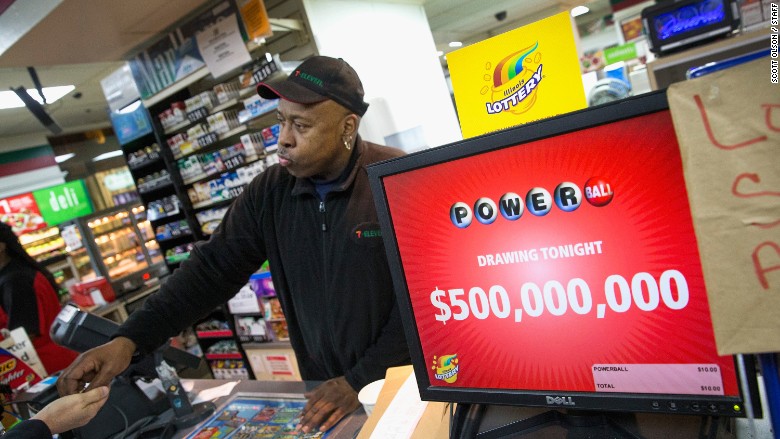
Back in the good old days when this photo was taken (Feb. 11,) Chicagoans who won the lottery jackpot could actually cash in. But Illinois has capped winnings at $600 because of a budget impass. Bigger winners get an IOU.

You can play the lottery in Illinois these days, but you just can't win much.

The cash-strapped state said on Thursday that it can't pay out anything over $600 for the time being. For a ticket worth more than that, winners get an IOU that won't be paid off until the state government resolves its long-running budget crisis.
Illinois Lottery spokesman Steve Rossi blamed the hold-up on "the ongoing budget stalemate in Springfield," the state capital. "Once a budget is passed, all outstanding claims will be paid."
The administration of Republican Gov. Bruce Rauner has been tussling over the state's finances with the Democratic-controlled legislature for months.
Things have been going downhill for Illinois lottery winners for a while. Back in July the state capped its payouts at $25,000.
Related: How to win the lottery ... and lose it all
Up until Oct. 15, winnings between $600 and $25,000 could only be cashed in at the state's lottery claims centers. But now Illinois' ability to make payments over $600 has been "exhausted," said Rossi.
Winners can still cash in up to $600 at any store selling lottery tickets.
The state is still advertising a big fat jackpot, regardless of its ability to pay it. Illinois Mega Millions jackpot is currently $84 million and Powerball is $80 million.