Wednesday, March 18, 2015

US Housing Starts Collapse Most in 4 Years As Clueless Yellen Sings Praises For “Full Employment”

(Bloomberg) — Housing starts slumped in February by the most in four years as bad winter weather in parts of the U.S. prevented builders from initiating new projects.
Work began on 897,000 houses at an annualized rate, down 17 percent from January and the fewest in a year, the Commerce Department reported Tuesday in Washington. The median estimate of 80 economists surveyed by Bloomberg called for 1.04 million.
“It was just the weather, basically,” said Richard Moody, chief economist at Regions Financial Corp. in Birmingham, Alabama. Still, “my view of the recovery in single-family housing is that it’s coming more gradually than others think.”
An increase in building permits was driven by applications for multifamily units, indicating single-family construction, the biggest part of the market, will keep struggling. While stronger hiring and low borrowing costs have helped the industry advance, sales remain challenged by limited supply of cheaper homes and sluggish wage growth.
The median estimate of 81 economists in the Bloomberg survey called for 1.04 million starts. Estimates ranged from annualized rates of 975,000 to 1.08 million after a previously reported January pace of 1.07 million.
http://www.bloomberg.com/news/articles/2015-03-17/home-starts-plunge-on-weather-while-u-s-building-permits-rise
The jobless rate, at 5.5%, is now at the Fed’s most recent estimate of “full employment”
The U.S. economy added 295,000 jobs in February, the 12th straight month where job gains surpassed 200,000. That adds up to 3.3 million net new jobs, the best yearlong period of job gains in nearly 15 years.
image: http://si.wsj.net/public/resources/images/BN-HG900_030616_G_20150306090159.jpg
The headline jobless rate declined to 5.5%, the lowest since May 2008 and down from 5.7% in January. Measures of unemployment that include discouraged workers and marginally attached workers also declined. The broadest measure of underemployment, which also includes part-time workers who would like full-time work, declined to 11%, from 11.3% last month.

The tensions, imbalances, distortions and malinvestment that caused the 2008 meltdown are much worse today than they were then. And the same clueless people are still in charge.

By BILL BONNER, CHAIRMAN, BONNER & PARTNERS
Dear Diary,
The stock market paused to draw breath yesterday. The Dow ended up more or less where it started.
Not a bad day. Not a good day either. There was no bounce afterTuesday’sdizzying slide.
September 15, 2008, was a really bad day on Wall Street….
Lehman Brothers sought Chapter 11 bankruptcy protection. The Dow plummeted more than 500 points.
Putnam Investments shut a $12.3 billion money-market fund. Mizuho Trust & Banking cut its profit forecast in half. And the New York Stock Exchange halted trading in Constellation Energy, after its stock dropped 57%.
But this was just the start, not the end…

The Day the Cash Disappeared

The following Thursday, the Federal Reserve noticed an odd and alarming trend: Cash was disappearing. Outflows from money market accounts topped $550 billion in less than two hours.
If that had continued, Representative Paul Kanjorski of the 11th congressional district of Pennsylvania recalled:
The Treasury opened up its window to help and pumped $105 billion into the system. And it quickly realized it could not stem the tide.
We were having an electronic run on the banks. They decided to close down the operation… to close down the money accounts. […]
If they had not done so, in their estimation, by 2 p.m. that day $5.5 trillion would have been withdrawn. That would have collapsed the US economy. Within 24 hours, the world economy would have collapsed.
We talked at that time about what would have happened. It would have been the end of our economic and political system as we know it.
People who say we would have gone back to the 16th century were being optimistic.
Neel Kashkari, the man fellow Goldman Sachs alum Hank Paulson appointed to oversee the Troubled Assets Relief Program (TARP), elaborated. He was talking about what didn’t happen in 2008:
“Literally your ATM wouldn’t work. You type in your code and no money comes out. You get your paycheck; you can’t cash it.”
“The money was so tight that ATMs could have stopped working. It could have really gotten out of control,” adds Lawrence McDonald, coauthor of the New York Times bestseller A Colossal Failure of Common Sense: The Inside Story of the Collapse of Lehman.

“I Want You to Go to the ATM…”

Few people grasped what was happening: For the first time in history, a credit-based financial system was melting down.
And those who understood it least were those in control of it.
Announced then Fed chairman Ben Bernanke on June 10, 2008:
The risk that the economy has entered a substantial downturn appears to have diminished over the past month or so.
Although Bernanke had no idea what was going on, some people did. One of them knew what to do, too:
On Friday night, I called my wife and I said, “Brooke, I am not coming home this weekend. I will call you on Monday. Tonight, I want you to go to the ATM, and I want you to draw out everything it will let you take. And I want you to go tomorrow, and I want you to go again Sunday.”
Richard Burr, US senator from North Carolina, was convinced, he said, “that if you put a plastic card in an ATM the last thing you were going to get was cash.”
Every financial system must encounter stress from time to time. The shock of 2008 was severe.
But it never got to the level that Senator Burr feared.
Next time, we predict it will. And then some.
Because the tensions, imbalances, distortions and malinvestment that caused the 2008 meltdown are much worse today than they were then.
And the same clueless people are still in charge.

Vanishing Cash

By some measures, the US stock market is more overvalued than it was in 2008.
There are bubbles in auto loans, student loans, biotech stocks and corporate bonds. And there is $8 trillion more in public and private debt in the US alone.
What’s more, the Fed has already played the ace up its sleeve. It has sucked up roughly $4 trillion in Treasury bonds as well as Fannie Mae, Freddie Mac and Ginnie Mae mortgage bonds. And it has held short-term interest rates on the floor for the last six years.
And there they have stayed, doing nothing but further enriching the rich and further distorting an already grotesque and unnatural economy.
Next time a crisis comes, millions of people will take the advice Senator Burr gave to his wife…
They will rush the ATMs.
And dollars – old-fashioned paper greenbacks – will vanish.
More to come…
Regards,
image: https://blogger.googleusercontent.com/img/proxy/AVvXsEjiBfBe9d3AbcydcMqmJzMSosk7votFank4YRNGjjHUyowLwMpSDTdrIov8pgZdBxEkkFDkQqndUoEJZzCLou1ywytiKnAHT6IsBGkwyXo0YVV65AapYzG3z1Fhxd5NHLFrObMbUSCzN5BUgzAn2fS7Yoe3O3cZW1oJHeAScUmNu9bM8yCiPlOwESN1gFvCqA=s0-d-e1-ft
Signature
Bill
Further Reading: Bill recently told paid-up Bill Bonner Letter subscribers how he’s preparing for the next big crisis. We’ll give you a risk-free trial subscription when you pick up your copy of Bill new book, Hormegeddon. All for just $4.95.Learn how to protect your assets here.

Britain's big six energy giants see their profits rise almost 1,000% in just five years as family bills soar

  • Between 2007 and 2013 energy firms' profits soared from £110m to £1.1bn
  • In 2007 the energy giants were pocketing £2.31 in profit from each family
  • By 2013 this had risen to £23.71, the Competition & Markets Authority said

Britain's big six energy giants have seen their profits rise almost 1,000 per cent in just five years, new analysis has revealed.
Between 2007 and 2013 the energy firms' profits soared from £110million to £1.1billion, the competition watchdog found.
In 2007 the energy giants were pocketing £2.31 in pure profit from each household for their gas or electricity. By 2013 this had risen to £23.71, according to the Competition and Markets Authority.
Between 2007 and 2013 Britain's big six energy firms saw their profits soar from £110million to £1.1billion
Families with gas and electricity dual fuel were handing over £1.32 in profit in 2007 - when gas supply was loss-making – but now pay £48.16 extra.
A typical dual fuel bill increased by 45 per cent over the same period, from £841 in 2007 to £1,217 in 2013, the Telegraph reported.
Tom Greatrex, Labour's shadow energy minister, said: 'This is yet more evidence that energy companies are increasing their profits on the back of spiralling bills for households and businesses.
'The next Labour Government will freeze energy prices until 2017, so that bills can only fall and not rise, and give the regulator the power to cut bills in time for winter.'
The energy companies will claim the £23.71 which they make from each family every year amounts to a tiny 3.9 per cent profit margin before interest and tax.
This is lower than the 5p-in-a-£1 target most of the suppliers claim would be justifiable.
The Competition and Markets Authority launched an investigation into the energy sector last year amid allegations companies were ripping off their customers.
The watchdog found most energy companies made much higher profit margins on their standard variable tariffs – those that the majority of their customers remain on - than on fixed price deals.
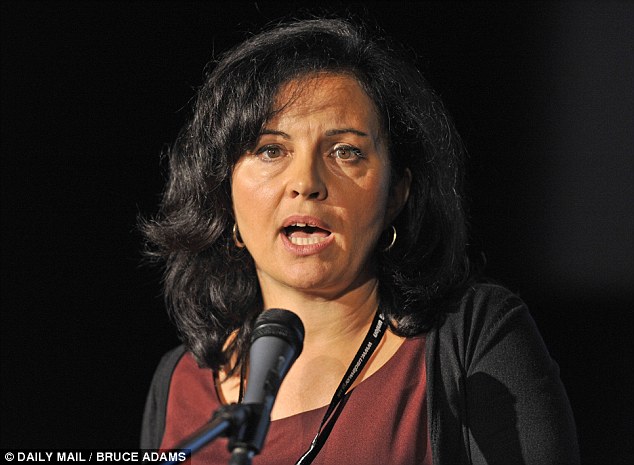
Labour's shadow energy secretary Caroline Flint has accused the big six of increasing their profits on the back of spiralling bills for households
Ofgem, the energy regulator, has claimed the major suppliers are set to make more than £110 per household for both gas and electricity over the next 12 months.
The analysis also masks significant variation in the fortunes of each of the Big Six - British Gas, SSE, ScottishPower, EDF Energy, E.On and Npower.
An Ofgem report last year showed EDF was consistently loss-making in recent years – while British Gas made consistently higher profits than anyone else.
Last month the Competition and Markets Authority claimed the vast majority of British families had been paying £234 too much for their energy because companies charged loyal customers higher prices.


China Gaining Western Allies as Development Bank Partners: “A Blow to U.S. Efforts”

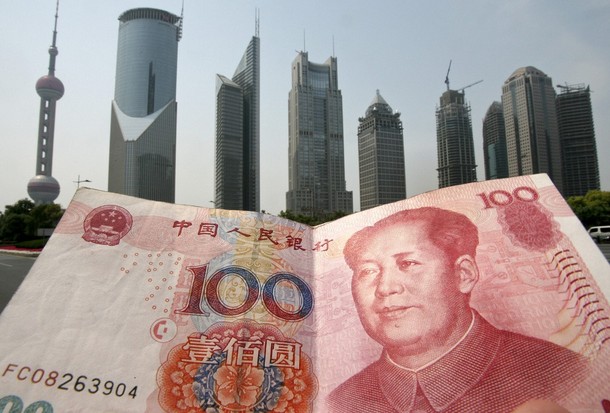
CHINA-ECONOMY-RATE-BANK-FOREX
Recently, SHTF has pointed out the rise of China and their aim to become a major part of the new global reserve currency, and hence a major weight in the new global order.
China’s renminbi is positioning for major global exchange; the BRICS development bank is taking off, to the chagrin of the U.S. axis of global finance; and the IMF is talking with China about the likelihood of including the yuan in the “basket of currencies” that make up SDRs, or Special Drawing Rights that already includes the dollar, the pound, the euro and the yen:
China is pushing for the International Monetary Fund to endorse the Chinese yuan as a global reserve currency alongside the dollar and euro.
A senior Chinese central bank official said Thursday that the country is “actively communicating” with the IMF on the possibility of including the yuan, or RMB, in the basket of the Special Drawing Rights (SDRs).
Now, American leadership is silently watching Anglo partners – and close establishment allies in the post-war world – join ranks with China on its emerging development bank.
Washington’s Blog reports:
This week, 2 major U.S. allies – 2 of the “Five Eyes” – have disregarded American pleas and joined China’s new development bank … alternative to the US-dominated IMF and World Bank lending order. (A third member of the Five Eyes – New Zealand – previously signed onto the Chinese bank.)
The Financial Times now reports that France, Germany and Italy have all agreed to join the China-led international development bank as well, “delivering a blow to US efforts to keep leading western countries out of the new institution.”
Both FT and the New York Times have pointed the implicit threat to U.S. hegemony since World War II… yet another sign that things are changing:
Via FT:
[The decision of the UK to join the Chinese development bank was made with] virtually no consultation with the US.
We are wary about a trend toward constant accommodation of China, which is not the best way to engage a rising power.
Via NYT:
Fundamentally, Washington views the Chinese venture as a deliberate challenge to those postwar institutions, which are led by the United States and, to a lesser extent, Japan, and the Obama administration has put pressure on allies not to participate…
What exactly is on the horizon for global finance and the new world order? China is clearly a major part of whatever is to come.

MORE: Nearly 30 countries have confirmed joining China-led infrastructure bank

The finance ministries of France and Germany have confirmed they’ll join China’s new Asian Infrastructure Investment Bank (AIIB), and Italy is expected to soon. Joining the rival to the US-led World Bank is seen as a setback for the Obama administration.
“The Ministry of Finance confirmed that France would join the AIIB bank,” French daily Le Figaroreported Tuesday.
Germany’s finance ministry said it was joining the bank, the BBC says, although Italy has yet to confirm the earlier report by the Financial Times (FT).
The decision comes after Britain last week became the first Western country to agree to become a founding member of the AIIB, FT reports. The UK government said the decision was in the country’s national interest, but it got a negative reaction from the United States.
The new China-led bank is expected to challenge the Washington-based World Bank, so the US is increasing pressure on its allies not to join the institution. The US’ concern is that the new investment bank might not have high standards of governance and environmental and social safeguards.
The new bank is expected to challenge the Western dominance of the US-led World Bank and IMF in global infrastructure projects, which experts believe will create healthy competition.
http://rt.com/business/241365-china-bank-eu-usa/

Major American Allies Ignore U.S. Pleas and Join China’s Alternative Bank

Source: Washington's Blog

UK, Australia, New Zealand, Singapore and India All Sign On … South Korea Next?
Update: The Financial Times now reports that France, Germany and Italy have all agreed to join the China-led international development bank as well, “delivering a blow to US efforts to keep leading western countries out of the new institution.”
This week, 2 major U.S. allies – 2 of the “Five Eyes” – have disregarded American pleas and joined China’s new development bank … alternative to the US-dominated IMF and World Bank lending order. (A third member of the Five Eyes – New Zealand – previously signed onto the Chinese bank.)
Specifically, the UK and Australia signed on this week.
The Financial Times reports, quoting a senior US Official:
[The decision of the UK to join the Chinese development bank was made with] virtually no consultation with the US.
We are wary about a trend toward constant accommodation of China, which is not the best way to engage a rising power.
The New York Times reported last week:
Fundamentally, Washington views the Chinese venture as a deliberate challenge to those postwar institutions, which are led by the United States and, to a lesser extent, Japan, and the Obama administration has put pressure on allies not to participate…
***
South Korea and Australia, both of which count China as their largest trading partner, have seriously considered membership but have held back, largely because of forceful warnings from Washington, including a specific appeal to Australia by President Obama.
Zero Hedge predicted last week:
In short order Australia and South Korea will likely be on board and at that point, the stigma the US has created around membership will have completely disappeared (if it hasn’t already), opening the door for other US “allies” to join ….
An Op-Ed in The Australian argues:
The decision by the Abbott government to sign on for negotiations to join China’s regional bank … represents another defeat for Barack Obama’s diplomacy in Asia.
***
Canberra’s move follows similar decisions by Britain, Singapore, India and New Zealand.
Make no mistake — all this represents a colossal defeat for the Obama administration’s incompetent, distracted, ham-fisted dip­lomacy in Asia.
***
Since then, the Abbott government has felt absolutely zero subjective good will for Obama.
This is an outlook shared by many American allies.
***
The Obama administration has neither the continuous presence, nor the tactical wherewithal nor the store of goodwill or personal relationships to carry Canberra, or other allies, on non-essential matters.
***
Such prestige as the US enjoys in Asia these days rests disproportionately on the shoulders of the US military.
Obama has neglected and mistreated allies and as a result Washington has much less influence than previously.
The saga of the China Bank is almost a textbook case of the failure of Obama’s foreign policy.
***
Obama treats allies shabbily and as a result he loses influence with them and then seems perpetually surprised at this outcome.
***
The consensus is that the Obama White House is insular, isolated, inward-looking, focused on the President’s personal image and ineffective in foreign policy.

Share This Article...

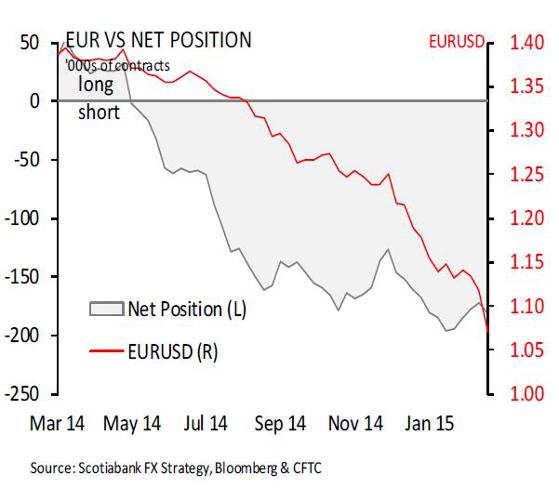
The speed of the euro’s decline is starting to put seasoned market-watchers on edge

View image on Twitter
The speed of the euro’s decline is starting to put seasoned market-watchers on edge http://on.wsj.com/1CmLt7t 
 
The speed of the euro’s decline is starting to put seasoned market-watchers on edge.
Monday, the currency hit another 12-year low, an almost daily occurrence right now, with the rate touching $1.0457.
This is marvelous news for the funds that have bet on a slide.
But with the euro now down by almost 13% against the dollar so far this year and counting, it’s all happening very quickly. Many analysts had penciled in $1.05-ish for the end of this year. Now they’re scrambling for ‘more bearish than thou’ forecasts under parity.
As a general rule, major currencies just don’t move as sharply as this. Emerging-markets currencies sometimes, but not the big tectonic plates like the euro.
http://blogs.wsj.com/moneybeat/2015/03/16/the-euro-and-the-risk-of-a-squeeze/