Saturday, September 10, 2011

Cohan & Taibbi: Shut Down The SEC And Start Over


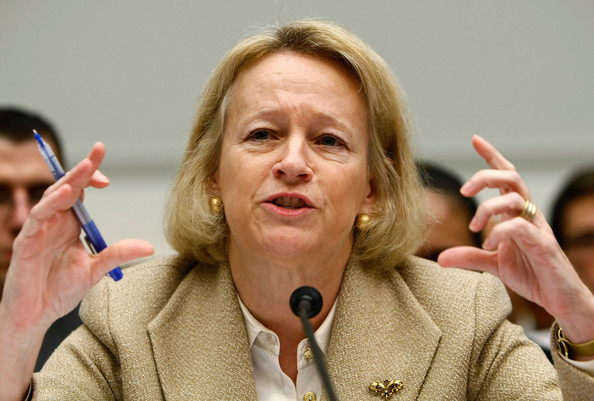
SEC Chief Mary Schapiro demonstrates the size of the problem with her agency.
William Cohan and Matt Taibbi are proposing that we scrap the SEC and create a new enforcement agency with new rules, an idea that is long overdue given the overwhelming failure of the financial watchdog to police Wall Street and watch anything other than porn.
Just yesterday the Washington Post reported that despite warnings from Congress, the SEC is STILL shredding documents related to criminal investigations, leaving no paper trail for future discovery.
--
Read Cohan's proposal at Bloomberg...
Taibbi's reaction with additional detail...
---
Cohan Excerpt
The SEC has long had a too-cozy relationship with Wall Street. Witness Robert Khuzami, the SEC’s director of enforcement, who used to be the general counsel for the Americas at Deutsche Bank in New York, a firm that issued one fatally flawed mortgage-backed security and collateralized-debt obligation after another during the early part of the last decade. (A Senate subcommittee report on the financial crisis devotes 45 pages to Deutsche Bank’s squirrelly securities business and the role it played in fomenting the meltdown.)

Targeting Goldman

Is it any surprise that Khuzami set his sights on Goldman Sachs, rather than on his old company, in trying to create some accountability for the mortgage mess? Deutsche Bank was a bigger player in the mortgage-securitization and CDO markets than Goldman Sachs was, yet it was Goldman that the SEC ended up going after in April 2010 when the agency filed -- to great fanfare -- a politically useful civil suit related to a synthetic CDO that Goldman created and sold in April 2007. (Deutsche Bank did many similar deals.) Goldman Sachs settled the accusations in July 2010 for $550 million, more to make the bad publicity go away than because it did anything different from any other Wall Street firm.
There’s no evidence of impropriety on Khuzami’s part, but it should hardly give investors confidence that someone with such an obvious conflict of interest could bring a suit against a competitor of his old employer. (Schapiro, meanwhile, was previously head of the Financial Industry Regulatory Authority, and was paid almost $9 million when she left to join the SEC.) It goes both ways: For years, top SEC officials have been turning in their regulatory credentials for compensation bonanzas at the very companies they were once charged with overseeing.
A new SEC would pay its top officials much higher salaries (in line with top private-sector attorneys) but not allow any of them to have previously worked on Wall Street or to go there for five years after they leave the agency. It would have genuine law-enforcement power, as opposed to the SEC’s civil-suit-only mandate, and be able to indict a firm and its top executives for wrongdoing. In other words, the agency would have the chops to regulate a powerful industry badly in need of it, free of conflicts of interest.
---
Taibbi Excerpt
Cohan’s proposal would do an awful lot to clear out two of the agency’s main problems, the revolving door and its impotence to properly (and speedily) combat criminal wrongdoing. As it is, the SEC can only refer criminal cases to the Department of Justice for prosecution, which a) slows down an already slow enforcement process to an absurd degree and b) is one of the reasons that people like ex-SEC enforcement lawyer Jacob Frenkel can claim with a straight face that the SEC is “not a law enforcement agency.”
Frenkel said this yesterday in an on-air discussion with me and Michael Smallberg of the Project on Government Oversight on the Kojo Nnamdi show in Washington, and to me this symbolizes the attitude among some people in the agency. If even people from the Enforcement Division deny they’re in the "enforcement" business, you know the agency has issues.
As it is, ex-SEC officials don’t have to wait even ten minutes to start whoring for the banks after they quit the SEC. Incidentally, Frenkel had an amusing answer when asked about that yesterday on the Nnamdi show by Washington Post reporter Marc Fisher:
Fisher: In the past five years, there have been more than 400 cases of SEC enforcement employees going right to work for outside companies that had business before the SEC. Jacob Frenkel, is there a problem with that?
Frenkel: Well, federal regulations permit it. 
If “federal regulations permit it” is the best justification for allowing instant-lobbying by former SEC officials, that’s a pretty clear signal that it’s time for the policy to change.
---

The Swiss Franc Abdicates the Crown - Gold and Silver are King!

On Tuesday, Switzerland abdicated the crown as the safe haven currency and pegged itself to the Euro - 1.2 Swiss Francs to the Euro. This left a void. Who would step in as the safe haven currency? Everyone thought it would be gold and silver. Last night as we slept the Central Bank sold of about a billion dollars in gold to force the price of gold down. This caused the dollar to rise and sent money running to the stock market. This is blatant manipulation of the precious metals market because the Central Bank does not want the middle class having any safe harbor. They want them tied to the fiat paper currencies. In the end it won't work because China will stabilize the PM market but it worked yesterday as the Dow rose 275 and the S&P rose 33.38 points.

Before I begin my essay let me begin with a rousing cheer of “Long Live the King.” The Japanese don't want it, the U.S. doesn't want it, and now the Swiss don't want it either. Gold on the other hand is happy to take the reins.

On Tuesday, Switzerland's National Bank sent shock waves through the market sending a clear and deliberate message to the world that it doesn't want to be the de facto safe haven currency.

For months and months, traders have been running to the Swiss franc amid the worldwide turmoil. With the Swiss stepping down as the world's safe haven currency, gold is now the de facto safe haven currency.

Lest there be any confusion there is now one king – gold. So I say “Long Live the King.”

There has always been a strong correlation between the price of gold and the price of silver.  There has also always been a concept that silver, like gold was currency. Indeed, when I was a child growing up silver was currency. I never knew until I went to college that silver had a strong base in industrial usage and industrial use was responsible for a large demand for the supply of silver. Be that as it may, any negative news regarding the industrial use of silver has always been eclipsed by its role as a precious metal.

           As gold prices rise, whether in the paper market or the physical market, silver surely benefits. This is because silver offers a greater exposure to the rising demand for a safe haven asset and does so at a cheaper price. Sadly, it has had to wear the thorny crown of being called “poor man’s gold.” I feel while this is a catchy phrase that allows gold to wear the crown of the king it, like most clichés, is untrue. Silver is the perfect currency for bartering. I can’t imagine using a gold double eagle as a medium of barter unless I was trading for a house.

           Silver does have a high degree of volatility due to the health of the industrial sector. There a minute traces of silver in almost every electronic device that is made. Computers, IPads, IPods’, are a few examples of devices that use silver and when they are worn out or broken they end up in the landfill. At this time it is too labor intensive to make recycling the silver profitable but the day will come when that is not so.

           Investing in silver brings many risks but in spite of these risks many investors still find silver a profitable investment.  Indeed many investors say the return on investment (ROI) can far surpass gold exponentially as movements in the price over the last tear has shown. Over the next few years I expect gold to continue to rise in price and continue to reach new highs. I also expect silver to continue to outperform gold on a percentage basis. As gold has enjoyed a parabolic run in the last several months, when I look at the ratio of gold to silver I expect silver to continue to outperform gold and expect silver to be priced at about $80.00 by the middle of next year. Silver is the perfect alternative to gold.

           According to the World Silver Survey 2011 world investment in silver rose 40% in 2010 to a new record of 279.3 million ounces. What I found fascinating was that the major demand came from the silver backed ETFs SLV, PSLV, SIVR, SIL, DBS and AGQ.. Physical markets also contributed to the demand.

           Strong demand from Asian Markets was a large factor in the growth of import levels reaching record highs. I believe that it is purely human as silver’s allure is especially attractive to the growing middle class of China and India as silver is seen as a cheaper alternative to the safe haven of gold.

In conclusion, demand for silver in China grew by 67% between 2008 and 2010, according to the Hong Kong Mercantile Exchange, which recently began trading silver future contracts due to the amazing growth in the demand for silver. Growth in China and India in the physical markets alone is expected to grow another 30% this year. Physical bar and coin hoarding will continue to gain popularity amongst the Chinese investors as they prefer physical rather than future contracts. Silver demand from India is also expected to do well as the healthy monsoon seasons are increasing the purchasing power of rural Indian farmers who account for 60% 0f India’s total silver demand.
By George Maniere
http://investingadvicebygeorge.blogspot.com/
In 2004, after retiring from a very successful building career, I became determined to learn all I could about the stock market. In 2009, I knew the market was seriously oversold and committed a serious amount of capital to the market. Needless to say things went quite nicely but I always remebered 2 important things. Hubris equals failure and the market can remain illogical longer than you can remain solvent. Please post all comments and questions. Please feel free to email me at maniereg@gmail.com. I will respond.
© 2011 Copyright George Maniere - All Rights Reserved

Disclaimer: The above is a matter of opinion provided for general information purposes only and is not intended as investment advice. Information and analysis above are derived from sources and utilising methods believed to be reliable, but we cannot accept responsibility for any losses you may incur as a result of this analysis. Individuals should consult with their personal financial advisors.


© 2005-2011 http://www.MarketOracle.co.uk - The Market Oracle is a FREE Daily Financial Markets Analysis & Forecasting online publication.

More than 100K told to evacuate in Pa.

HERSHEY, Pa. - More than 100,000 residents were ordered to flee the rising Susquehanna River on Thursday as the remnants of Tropical Storm Lee dumped more rain across the Northeast, socking areas still recovering from Hurricane Irene and closing major highways at the morning rush.

The Susquehanna is projected to crest in northeastern Pennsylvania between 4 p.m. and 8 p.m. Thursday at 41 feet — the same height as the levee system protecting riverfront communities including Wilkes-Barre and Kingston, officials said. Residents were ordered to leave by 4 p.m.

"There is no need to panic," Wilkes-Barre Mayor Tom Leighton said. "This is a precautionary evacuation and the safety of our residents is our biggest concern. We have prepared for this type of emergency and we are ready to respond to whatever comes our way over the next 72 hours."

In Binghamton, N.Y., about 80 miles upstream from Wilkes-Barre, the Susquehanna broke a flood record Thursday morning and overflowed its retaining walls downtown.

Emergency responders were scrambling to evacuate holdouts who didn't heed earlier warnings to leave city neighborhoods threatened by record flooding. Evacuation orders began being issued Wednesday to some 20,000 people in the city and neighboring communities along the Susquehanna.
Broome County emergency services manager Brett Chellis told The Associated Press that water started coming over the walls about 10 a.m., less than 12 hours after officials issued a mandatory evacuation order for sections of the city near where the Susquehanna and Chenango rivers converge.

"It's getting worse by the minute," Chellis said.

The National Weather Service said the river level is over 25 feet, above the 25-foot record set in 2006 and more than 11 feet above flood stage. It's expected to rise another foot or so.

more
http://www.startribune.com/nation/129449778.html

FAKED 15-YO KUWAITI GIRL TESTIMONY BEFORE CONGRESS, 1990

Was War the Only Answer to 9/11?

This is the 10th anniversary of the horrendous atrocities of Sept. 11, 2001, which, it is commonly held, changed the world.
9/11 - US WarThe impact of the attacks is not in doubt. Just keeping to western and central Asia: Afghanistan is barely surviving, Iraq has been devastated and Pakistan is edging closer to a disaster that could be catastrophic.
On May 1, 2011, the presumed mastermind of the crime, Osama bin Laden, was assassinated in Pakistan. The most immediate significant consequences have also occurred in Pakistan. There has been much discussion of Washington’s anger that Pakistan didn’t turn over bin Laden. Less has been said about the fury among Pakistanis that the U.S. invaded their territory to carry out a political assassination. Anti-American fervor had already intensified in Pakistan, and these events have stoked it further.
One of the leading specialists on Pakistan, British military historian Anatol Lieven, wrote in The National Interest in February that the war in Afghanistan is “destabilizing and radicalizing Pakistan, risking a geopolitical catastrophe for the United States – and the world – which would dwarf anything that could possibly occur in Afghanistan.”
At every level of society, Lieven writes, Pakistanis overwhelmingly sympathize with the Afghan Taliban, not because they like them but because “the Taliban are seen as a legitimate force of resistance against an alien occupation of the country,” much as the Afghan mujahedeen were perceived when they resisted the Russian occupation in the 1980s.
These feelings are shared by Pakistan’s military leaders, who bitterly resent U.S. pressures to sacrifice themselves in Washington’s war against the Taliban. Further bitterness comes from the terror attacks (drone warfare) by the U.S. within Pakistan, the frequency of which was sharply accelerated by President Obama; and from U.S. demands that the Pakistani army carry Washington’s war into tribal areas of Pakistan that had been pretty much left on their own, even under British rule.
The military is the stable institution in Pakistan, holding the country together. U.S. actions might “provoke a mutiny of parts of the military,” Lieven writes, in which case “the Pakistani state would collapse very quickly indeed, with all the disasters that this would entail.”
The potential disasters are drastically heightened by Pakistan’s huge, rapidly growing nuclear weapons arsenal, and by the country’s substantial jihadi movement.
Both of these are legacies of the Reagan administration. Reagan officials pretended they did not know that Zia ul-Haq, the most vicious of Pakistan’s military dictators and a Washington favorite, was developing nuclear weapons and carrying out a program of radical Islamization of Pakistan with Saudi funding.
The catastrophe lurking in the background is that these two legacies might combine, with fissile materials leaking into the hands of jihadis. Thus we might see nuclear weapons, most likely “dirty bombs,” exploding in London and New York.
Lieven summarizes: “U.S. and British soldiers are in effect dying in Afghanistan in order to make the world more dangerous for American and British peoples.”
Surely Washington understands that U.S. operations in what has been christened “Afpak” – Afghanistan-Pakistan – might destabilize and radicalize Pakistan.
The most significant WikiLeaks documents to have been released so far are the cables from U.S. Ambassador Anne Patterson in Islamabad, who supports U.S. actions in Afpak but warns that they “risk destabilizing the Pakistani state, alienating both the civilian government and military leadership, and provoking a broader governance crisis in Pakistan â(euro) .125.”
Patterson writes of the possibility that “someone working in (Pakistani government) facilities could gradually smuggle enough fissile material out to eventually make a weapon,” a danger enhanced by “the vulnerability of weapons in transit.”
A number of analysts have observed that bin Laden won some major successes in his war against the United States.
As Eric S. Margolis writes in The American Conservative in May, “(bin Laden) repeatedly asserted that the only way to drive the U.S. from the Muslim world and defeat its satraps was by drawing Americans into a series of small but expensive wars that would ultimately bankrupt them.”
That Washington seemed bent on fulfilling bin Laden’s wishes was evident immediately after the 9/11 attacks.
In his 2004 book “Imperial Hubris,” Michael Scheuer, a senior CIA analyst who had tracked Osama bin Laden since 1996, explains: “Bin Laden has been precise in telling America the reasons he is waging war on us. (He) is out to drastically alter U.S. and Western policies toward the Islamic world,” and largely achieved his goal.

He continues: “U.S. forces and policies are completing the radicalization of the Islamic world, something Osama bin Laden has been trying to do with substantial but incomplete success since the early 1990s. As a result, I think it is fair to conclude that the United States of America remains bin Laden’s only indispensable ally.” And arguably remains so, even after his death.
The succession of horrors across the past decade leads to the question: Was there an alternative to the West’s response to the 9/11 attacks?
The jihadi movement, much of it highly critical of bin Laden, could have been split and undermined after 9/11, if the “crime against humanity,” as the attacks were rightly called, had been approached as a crime, with an international operation to apprehend the suspects. That was recognized at the time, but no such idea was even considered in the rush to war. It is worth adding that bin Laden was condemned in much of the Arab world for his part in the attacks.
By the time of his death, bin Laden had long been a fading presence, and in the previous months was eclipsed by the Arab Spring. His significance in the Arab world is captured by the headline in a New York Times article by Middle East specialist Gilles Kepel: “Bin Laden Was Dead Already.”
That headline might have been dated far earlier, had the U.S. not mobilized the jihadi movement with retaliatory attacks on Afghanistan and Iraq.
Within the jihadi movement, bin Laden was doubtless a venerated symbol but apparently didn’t play much more of a role for al-Qaida, this “network of networks,” as analysts call it, which undertake mostly independent operations.
Even the most obvious and elementary facts about the decade lead to bleak reflections when we consider 9/11 and its consequences, and what they portend for the future.
* Noam Chomsky is an American linguist, philosopher, cognitive scientist, and activist. He is an Institute Professor and pressor emeritus of linguistics at the Massachusetts Institute of Techonology. Chomsky is well known in the academic and scientific communities as one of the fathers of modern linguistics, and a major figure of analytic philosophy. Chomsky is the author of more than 150 books and has received worldwide attention for his views.

An Example Of How The Alternative Media Is Destroying The Main Stream Media

"How Many Trillions Have We Spent Fighting Trumped-Up Wars?"

http://revolutionarypolitics.tv/video/viewVideo.php?video_id=16163