Wednesday, November 24, 2010

« Ambrose Evans Pritchard - Shut Down The Fed »

Scroll down for video on QE2...

---

Reprinted with permission.

Originally published at the UK Telegraph

By Ambrose Evans-Pritchard

I apologise to readers around the world for having defended the emergency stimulus policies of the US Federal Reserve, and for arguing like an imbecile naif that the Fed would not succumb to drug addiction, political abuse, and mad intoxicated debauchery, once it began taking its first shots of quantitative easing.

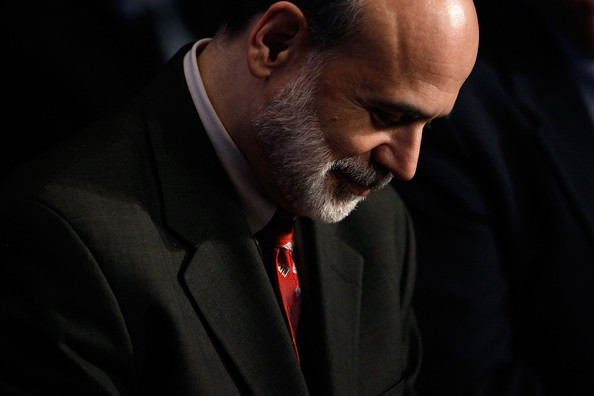
My pathetic assumption was that Ben Bernanke would deploy further QE only to stave off DEFLATION, not to create INFLATION. If the Federal Open Market Committee cannot see the difference, God help America.

We now learn from last week’s minutes that the Fed is willing “to provide additional accommodation if needed to … return inflation, over time, to levels consistent with its mandate.”

NO, NO, NO, this cannot possibly be true.

Ben Bernanke has not only refused to abandon his idee fixe of an “inflation target”, a key cause of the global central banking catastrophe of the last twenty years (because it can and did allow asset booms to run amok, and let credit levels reach dangerous extremes).

Worse still, he seems determined to print trillions of emergency stimulus without commensurate emergency justification to test his Princeton theories, which by the way are as old as the hills. Keynes ridiculed the “tyranny of the general price level” in the early 1930s, and quite rightly so. Bernanke is reviving a doctrine that was already shown to be bunk eighty years ago.

So all those hillsmen in Idaho, with their Colt 45s and boxes of krugerrands, who sent furious emails to the Telegraph accusing me of defending a hyperinflating establishment cabal were right all along. The Fed is indeed out of control.

The sophisticates at banking conferences in London, Frankfurt, and New York who aplogized for this primitive monetary creationsim – as I did – are the ones who lost the plot.

My apologies. Mercy, for I have sinned against sound money, and therefore against sound politics.

I stick to my view that Friedmanite QE ‘a l’outrance‘ is legitimate to prevent a collapse of the M3 broad money supply, and to prevent outright deflation in economies with total debt levels near or above 300pc of GDP. Not in any circumstances, but where necessary, and where conducted properly by purchasing bonds outside the banking system (not the same as Bernanke “creditism”).

The dangers of tipping into a debt compound trap – as described by Irving Fisher in Debt-Deflation Theory of Great Depresssions in 1933 – outweigh the risk of an expanded money stock catching fire and setting off an inflation surge later. Debt deflation is a toxic process that can and does destroy societies as well as economies. You do not trifle with it.

But deliberately creating inflation “consistent” with the Fed’s mandate – implicitly to erode debt – is another matter. Nor can this be justified at this particular juncture. M3 has been leveling out. M2 has begun to rise briskly. The velocity of money has picked up. The M1 monetary mulitplier has jumped.

We have a very odd world. The IMF has doubled its global growth forecast to 4.5pc this year, and authorities everywhere have ruled out a serious risk of a double dip recession.

Yet at the same time the Bank of Japan has embarked on unsterilised currency intervention, which amounts to stimulus, and both the Fed and the Bank of England are signalling fresh QE.

You can’t have it both ways. If the US is not in deep trouble, the Fed should not be thinking of extra QE. It should step back and let the economy heal itself, if necessary enduring several years of poor growth to purge excess leverage.

Yes, U6 unemployment is 16.7pc. But as dissenters at the Minneapolis Fed remind us, you cannot solve a structural unemployment crisis with loose money.

Fed is trying to conjure away the hangover from the last binge (which Greenspan/Bernanke caused, let us not forget), as if to vindicate its prior claim that you can always clean up painlessly after asset bubbles.

Are the Chinese right? Are the Americans and the British now so decadent that they will refuse to take their punishment, opting to default on their debts by stealth?

Sooner or later we may learn what the Fed’s hawkish bloc of Fisher, Lacker, Plosser, Hoenig, Warsh, and Kocherlakota really think about this latest lurch into monetary la la land, with all that it implies for moral hazard and debt contracts.

If I have written harsh words about these heroic resisters, I apologise for that too.

---

QE2 for Dummies...

More detail on this clip is here:

MOST RECENT STORIES

Will Have To Borrow $413 Billion MORE, Video OF TSA Goons Abusing Children, Who's Who of FBI Insider Trading Bust, Ron Paul's Message On War (LINKS)

---

Who's who of the insider trading bust

---

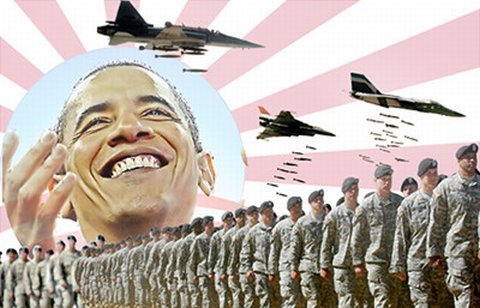
US to spend $413bn more on Afghan war as Obama extends to 2014

A decision by US President Barack Obama to extend the presence of American troops in Afghanistan beyond 2014 is likely to increase the remaining cost of the unpopular war to USD 413 billion.

http://presstv.ir/detail/151939.html

---

The truth about war from Dr. Ron Paul...

  • "What if Americans learned the truth..."
  • Please watch and pass it on.

---

Shut Down the Fed (Part II) - Ambrose Evans-Pritchard


I apologise to readers around the world for having defended the emergency stimulus policies of the US Federal Reserve, and for arguing like an imbecile naif that the Fed would not succumb to drug addiction, political abuse, and mad intoxicated debauchery, once it began taking its first shots of quantitative easing.

http://blogs.telegraph.co.uk/finance/ambroseevans-pritchard/100007777/shut-down-the-fed-part-ii/


---

Hedge Funds Raided in Probe

FBI Agents Seize Documents in 3 Cities as Insider-Trading Investigation Widens


In coordinated raids in New York, Connecticut and Massachusetts, Federal Bureau of Investigation agents seized documents at the offices of Level Global Investors LP, Diamondback Capital Management LLC and Loch Capital Management LLC.

"The FBI is executing court-authorized search warrants in an ongoing investigation," said Richard Kolko, an FBI spokesman, who declined to comment further. Diamondback and Level Global confirmed the raids and said they were cooperating with the investigation. A lawyer for Loch Capital, Leonard Pierce, declined to comment.

http://online.wsj.com/article/SB10001424052748704243904575630693960704872.html?mod=djemalertNEWS

---

FBI Visit Exposes Insider Trading Tactics

The Federal Bureau of Investigation's attempt to pressure an independent analyst to record his calls with a client offers a window into how the government is trying to build what could become one of the most far-reaching insider-trading cases ever.

John Kinnucan says he was sipping wine on his front porch in Portland, Ore., on Oct. 25 when a gray sedan pulled up and two men in business suits jumped out, identifying themselves as FBI agents.

The two men accused Mr. Kinnucan, 53 years old, of passing inside information to his hedge-fund and mutual-fund clients, he says. He says they threatened to arrest him and asked him to cooperate with their investigation by tape-recording his calls with a client. Mr. Kinnucan declined the offer, and later that night he sent out a blast email to his clients detailing the visit.

http://online.wsj.com/article/SB10001424052748703567304575629061523575940.html?mod=mktw

---

Top banks face $100 billion Basel shortfall

LONDON (Reuters) - The new Basel III banking rules will leave the biggest U.S. banks short of between $100 billion and $150 billion in equity capital, with 90 per cent of the shortfall concentrated in the top six banks, the Financial Times said, citing research from Barclays Capital.

http://finance.yahoo.com/news/Top-banks-face-100-billion-rb-861408851.html

---

Scandal Bruises a Star Investor

Joseph F. "Chip" Skowron III was in a hurry to try his hand in finance, such a hurry that he quit a prestigious Harvard University orthopedic-surgery residency to begin a career trading health-care stocks.

Dr. Skowron's decision in 2001 disappointed a Harvard adviser who tried to persuade him to finish his medical training, but it paid off handsomely. That same year, Dr. Skowron became a health-care analyst for the hedge fund SAC Capital Advisors LP before quickly moving on to another well-known hedge fund, Millennium Partners LLC. By 2003, he had joined FrontPoint Partners LLC, a hedge fund where he soon would co-manage more than $1 billion in health-care investments.

http://online.wsj.com/article/SB10001424052748703531504575625101727862996.html?mod=WSJ_newsreel_business

---

Avoid These 68 Airports If You Don't Want An X-Ray Body Scan

http://www.businessinsider.com/what-airports-have-scanners-2010-11#ixzz164Cy5vDI

---

TSA abuse and strip-search 3 year-old boy...

Text below from the youtube page...

Lets get the facts straight first. Before the video started the boy went through a metal detector and didn't set it off but was selected for a pat down. The boy was shy so the TSA couldn't complete the full pat on the young boy. The father tried several times to just hold the boys arms out for the TSA agent but i guess it didn't end up being enough for the guy. I was about 30 ft away so i couldn't hear their conversation if there was any. The enraged father pulled his son shirt off and gave it to the TSA agent to search, thats when this video begins.

******* THIS VIDEO OCCURRED AT SALT LAKE CITY INTERNATIONAL AIRPORT ON NOVEMBER 19TH AT AROUND THE TIME OF 12:00 PM **********

***Insertion of what happened after the video (full story)****

After I finished videotaping the incident I went through the check point myself. I collected my things and went over to talk to the father and son. Before I could get to them a man in a black suit who had been talking with the other TSA officials approached me. He asked to speak to me and I obliged, wondering what was to come. He then proceeded to interrogate me about why I was videotaping the "procedures of the TSA". I told him that I had never seen such practices before on a young child and decided to record it. The man being frustrated at this point demanded to know my plans with the video, of which I didn't respond. Repeatedly he asked me to delete the video, hoping his mere presence could intimidate me to obey, but I refused. By this point it became obvious that he felt TSA had done something wrong and that I caught it on tape. After the interview, I left for my gate. I called my brother who told me I should put the tape on YouTube because this had been a recent hot topic in the news.
My gate was a long way off, but about 15 minutes after arriving 2 TSA agents came and sat 15 feet or so away from me. I stood up and moved so that they were in front of me and then took a picture. A 3rd and then a 4th agent came and sat down with the others. They would occasionally glance at me and talk on their walkie-talkies. I don't know why they were there or if it was a huge coincidence but they stayed for 30-45 minutes and left just before I boarded the plan. Interesting to say the least, intimidating? Maybe a little...

---

Post the links you're reading in comments. Does anyone out there still support the Afghanistan War besides the Washington-captured politicians doing the business of the military-industrial complex. Tell me what you think in comments below.

Tuesday, November 23, 2010

Members of US Congress Get Richer Despite Sour Economy

Members of US Congress Get Richer Despite Sour Economy
Did you know members of Congress are able to own shares in companies they may have an influence over on committees they serve on. Republican JackBerkman says the reason congress can do this is because this is a free country and strategist want successful people in congress so they can lead and teach others how to make money.

Despite a long and deep recession, the collective personal wealth of congressional members increased by more than 16 percent between 2008 and 2009, according to a study released Wednesday by the Center for Responsive Politics.

The study also indicates that a significant number of members owned shares of major players in the health-care and financial-services sectors, which were the subject of major reform legislation during the period.

The findings-based on federal financial disclosure data released earlier this year-paint a wealthy bunch in Congress, with more than half of all members-261-were millionaires.

About one in five of those had average calculated wealth in 2009 of at least $10 million. Eight of the 261 were in the $100 million-plus range.

Rep. Darrell Issa (R-Calif.) ranked No. 1 in personal wealth-$303.5 million.

In contrast, U.S. median household income dropped 3 percent to $50,221 between 2008 and 2009, the second straight decline, according to the Census Dept. In terms of millionaires, only about 1 percent of the overall population qualifies.

The CRP study comes amid a growing public outcry about the size of government and rising employee salaries when the economy-and most taxpayers-are struggling like never before, with unemployment stuck at 9.5 percent and wages and benefits flat in many sectors.

“Congressional representatives on balance rank among the wealthiest of wealthy Americans and boast financial portfolios that are all but unattainable for most of their constituents,” said Sheila Krumholz, the Center’s executive director.

The period covered is December 2008 to December 2009.

The median wealth of a representative was $765,010, up from $645,503 in 2008, while that of a senator was almost $2.38 million, versus $2.27 million the previous year.

That is sizable considering that by law members of each chamber receive an annual salary of $175,000. They do, however, qualify for a number of perks, including paid travel expenses.

Politicos’ Portfolios
Stock holdings are among the assets covered in the report, and the investing tastes of Congress appear to be somewhat conventional, with large-cap, Dow 30 companies dominating the widely-held list of members.

General Electric (NYSE: ge), parent company of CNBC, is No. 1, with 82 current members of Congress listing it. Rounding out the top five are: Bank of America (NYSE: bac) (63), Cisco Systems (NASDAQ: csco) (61), Proctor & Gamble (NYSE: pg) (61) and Microsoft (54).

In another context, however, Beltway watchers might find it unsettling that some of the most widely-held stocks are those of companies at the center of the financial crisis in 2008-2009.

“The most popular investment among congressional members reads as a who’s who list of the most powerful corporate political forces in Washington, D.C. — companies that each spend millions, if not tens of millions of dollars each year lobbying federal officials,” states the CRP report.

In addition to Bank of America, Goldman Sachs (NYSE: gs) , Wells Fargo(NYSE: wfc) , JPMorgan Chase (NYSE:JPM – News) and Citigroup(NYSE: c) were popular holdings. All of them received funding under the TARP. Morgan Stanley, General Motors and AIG are not on the list.

Another big sector is health care-drugs, which, like financial services, was the subject of major reform legislation in 2009.

Drug industry giants like Pfizer (NYSE: pfe) , for instance, ranked seventh on the list, with 49 members disclosing ownership. Rivals Johnson & Johnson (NYSE: jnj) and Merck (NYSE: mrk) also made the list of 50 companies.

The study indicates that party affiliation is not a key factor in the increase of lawmakers’ personal assets. Twelve Democrats and seven Republicans were among the 20 congressmen with the greatest annual increases.That ratio mirrors the overall party breakdown of the current Congress.

The CRP study is by no means precise science. The group notes: “Members of Congress are only required to report their wealth and liabilities in broad ranges. It’s therefore impossible to precisely determine how much value their assets are worth….”

CNBC business news discuses the report from the Center for Responsive Politics with Republican Jack Burkman and Democrat Julian Epstein. (Click here to see a video of that discussion)

« 41 Facts On The History Of U.S. Central Banking »

Scroll down for VIDEO...

---

Guest post submitted by Michael Snyder who blogs at:

Today, most American students don't even understand what a central bank is, much less that the battle over central banks is one of the most important themes in U.S. history. The truth is that our nation was birthed in the midst of a conflict over taxation and the control of our money. Central banking has played a key role in nearly all of the wars that America has fought. Presidents that resisted the central bankers were shot, while others shamefully caved in to their demands. Our current central bank is called the Federal Reserve and it is about as "federal" as Federal Express is. The truth is that it is a privately-owned financial institution that is designed to ensnare the U.S. government in an endlessly expanding spiral of debt from which there is no escape. The Federal Reserve caused the Great Depression and the Federal Reserve is at the core of our current economic crisis. None of these things is taught to students in America's schools today.

In 2010, young Americans are taught a sanitized version of American history that doesn't even make any sense. As with so many things, if you want to know what really happened just follow the money.

The following are 41 facts about the history of central banks in the United States that every American should know....

#1 As a result of the Seven Years War with France, King George III of England was deeply in debt to the central bankers of England.

#2 In an attempt to raise revenue, King George tried to heavily tax the colonies in America.

#3 ---Correction--- The following quote, supposedly from Benjamin Franklin in 1763, was quoted in Money and Men by Robert McCann Rice in 1941 but it has not been found in any previous source to this point. So is it really from Franklin? In any event, it does accurately describe the conditions of the day....

"That is simple. In the colonies we issue our own money. It is called Colonial Script. We issue it in proper proportion to the demands of trade and industry to make the products pass easily from the producers to the consumers.

In this manner, creating for ourselves our own paper money, we control its purchasing power, and we have no interest to pay to no one."

#4 The Currency Act of 1764 ordered the American Colonists to stop issuing legal tender. Colonial script (the money the colonists were using at the time) was to be exchanged at a two-to-one ratio for "notes" from the Bank of England.

#5 ---Correction--- There is debate over whether or not Benjamin Franklin was the original source of the following quote....

"In one year, the conditions were so reversed that the era of prosperity ended, and a depression set in, to such an extent that the streets of the Colonies were filled with unemployed."

#6 ---Correction--- When asked why the American colonies had lost respect for Parliament, Benjamin Franklin responded with the following quote....

"To a concurrence of causes: the restraints lately laid on their trade, by which the bringing of foreign gold and silver into the Colonies was prevented; the prohibition of making paper money among themselves, and then demanding a new and heavy tax by stamps; taking away, at the same time, trials by juries, and refusing to receive and hear their humble petitions."

#7 Gouverneur Morris, one of the authors of the U.S. Constitution, solemnly warned us in 1787 that we must not allow the bankers to enslave us....

"The rich will strive to establish their dominion and enslave the rest. They always did. They always will... They will have the same effect here as elsewhere, if we do not, by (the power of) government, keep them in their proper spheres."

#8 Unfortunately, those warning us about the dangers of a central bank did not prevail. After an aborted attempt to establish a central bank in the 1780s, the First Bank of the United States was established in 1791. Alexander Hamilton (who had close ties to the Rothschild banking family) cut a deal under which he would support the move of the nation's capital to Washington D.C. in exchange for southern support for the establishment of a central bank.

#9 George Washington signed the bill creating the First Bank of the United States on April 25, 1791. It was given a 20 year charter.

#10 In the first five years of the First Bank of the United States, the U.S. government borrowed 8.2 million dollars and prices rose by 72 percent.

#11 The opponents of central banking were not pleased. In 1798, Thomas Jefferson said the following....

"I wish it were possible to obtain a single amendment to our Constitution - taking from the federal government their power of borrowing."

#12 In 1811, the charter of the First Bank of the United States was not renewed.

#13 One year later, the War of 1812 erupted. The British and the Americans were at war once again.

#14 In 1814, the British captured and burned Washington D.C., but the Americans subsequently experienced key victories at New York and at New Orleans.

#15 The Treaty of Ghent, officially ending the war, was ratified by the U.S. Senate on February 16th, 1815 and was ratified by the British on February 18th, 1815.

#16 In 1816, another central bank was created. The Second Bank of the United States was established and was given a 20 year charter.

#17 Andrew Jackson, who became president in 1828, was determined to end the power of the central bankers over the United States.

#18 In fact, in 1832, Andrew Jackson's re-election slogan was "JACKSON and NO BANK!"

#19 On July 10th, 1832 President Jackson said the following about the danger of a central bank....

"It is not our own citizens only who are to receive the bounty of our government. More than eight millions of the stock of this bank are held by foreigners... is there no danger to our liberty and independence in a bank that in its nature has so little to bind it to our country? ... Controlling our currency, receiving our public moneys, and holding thousands of our citizens in dependence... would be more formidable and dangerous than a military power of the enemy."

#20 In 1835, President Jackson completely paid off the U.S. national debt. He is the only U.S. president that has ever been able to accomplish this.

#21 President Jackson vetoed the attempt to renew the charter of the Second Bank of the United States in 1836.

#22 Richard Lawrence attempted to shoot Andrew Jackson, but he survived. It is alleged that Lawrence said that "wealthy people in Europe" had put him up to it.

#23 The Civil War was another opportunity for the central bankers of Europe to get their hooks into America. In fact, it is claimed that Abraham Lincoln actually contacted Rothschild banking interests in Europe in an attempt to finance the war effort. Reportedly, the Rothschilds were demanding very high interest rates and Lincoln balked at paying them.

#24 Instead, Lincoln pushed through the Legal Tender Act of 1862. Under that act, the U.S. government issued $449,338,902 of debt-free money.

#25 This debt-free money was known as "Greenbacks" because of the green ink that was used.

#26 ---Correction--- The following quote is claimed to have appeared in the London Times in 1865, but many historians dispute whether it is actually real or not....

"If this mischievous financial policy, which has its origin in North America, shall become endurated down to a fixture, then that Government will furnish its own money without cost. It will pay off debts and be without debt. It will have all the money necessary to carry on its commerce. It will become prosperous without precedent in the history of the world. The brains, and wealth of all countries will go to North America. That country must be destroyed or it will destroy every monarchy on the globe."

#27 Abraham Lincoln was shot dead by John Wilkes Booth on April 14th, 1865.

#28 After the Civil War, all money in the United States was created by bankers buying U.S. government bonds in exchange for bank notes.

#29 ---Correction--- How President James A. Garfield really felt about the international bankers is a matter of legitimate historical debate. The quote from the original article has not been fully documented.

#30 President Garfield was shot about two weeks later by Charles J. Guiteau on July 2nd, 1881. He died from medical complications on September 19th, 1881.

#31 In 1906, the U.S. stock market was setting all kinds of records. However, in March 1907 the U.S. stock market absolutely crashed. It is alleged that elite New York bankers were responsible.

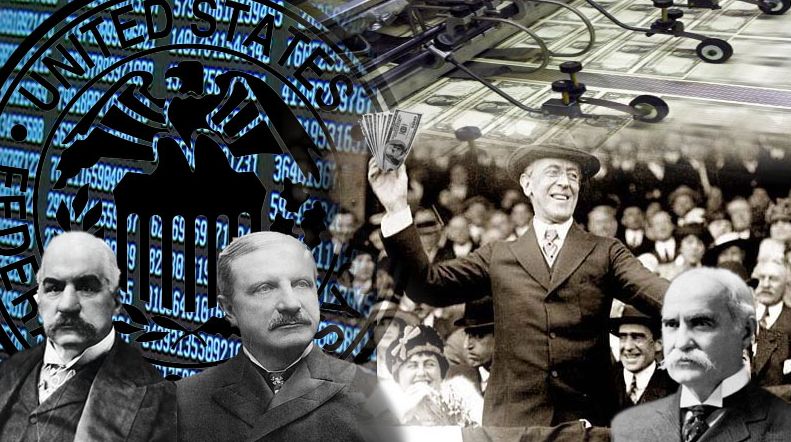
#32 In addition, in 1907 J.P. Morgan circulated rumors that a major New York bank had gone bankrupt. This caused a massive run on the banks. In turn, the banks started recalling all of their loans. The panic of 1907 resulted in a congressional investigation that ended up concluding that a central bank was "necessary" so that these kinds of panics would never happen again.

#33 It took a few years, but the international bankers finally got their central bank in 1913.

#34 ---Correction--- The U.S. House of Representatives voted on the Federal Reserve Act on December 22nd, 1913 and the U.S. Senate voted on the Federal Reserve Act the following day on December 23rd, 1913.

#35 A significant portion of Congress was either sleeping at the time or was already at home with their families celebrating the holidays.

#36 ---Correction--- The correct version of the quote about our system of credit from President Woodrow Wilson is posted below....

A great industrial nation is controlled by its system of credit. Our system of credit is privately concentrated. The growth of the nation, therefore, and all our activities are in the hands of a few men who, even if their action be honest and intended for the public interest, are necessarily concentrated upon the great undertakings in which their own money is involved and who necessarily, by very reason of their own limitations, chill and check and destroy genuine economic freedom. This is the greatest question of all, and to this statesmen must address themselves with an earnest determination to serve the long future and the true liberties of men.

There is debate about whether or not Woodrow Wilson ever truly regretted allowing the Federal Reserve to be created, but hopefully most of us can agree that he should have regretted it.

#37 Between 1921 and 1929 the Federal Reserve increased the U.S. money supply by 62 percent. This was the time known as "The Roaring 20s".

#38 In addition, highly leveraged "margin loans" became very common during this time period.

#39 In October 1929, the New York bankers started calling in these margin loans on a massive scale. This created the initial crash that launched the Great Depression.

#40 Rather than expand the money supply in response to this crisis, the Federal Reserve really tightened it up.

#41 In fact, it was reported the the U.S. money supply contracted by eight billion dollars between 1929 and 1933. That was an extraordinary amount of money in those days. Over one-third of all U.S. banks went bankrupt. The New York bankers were able to buy up other banks and all kinds of other assets for pennies on the dollar.

---

#

---

Want to be Felt Up by Government Personnel?

By Dr. Mark Sircus

This is what happens if you refuse to walk through a radiation-emitting scanning machine at your local airport. The United States government is obsessed with people having hidden bombs on their bodies going so far as to even screen little children. Only under considerable pressure the Federal Transportation Security Administration (TSA) announced this past week that it will no longer screen children under 12. They are still worried though that our teenagers could be terrorists in disguise.

“In episode after episode the TSA has demonstrated a knack for ignoring the basics of customer relations,” writes the Associated Press. It should be no surprise, considering their mission, that they cannot do their work “without treating everyone from frequent business travelers to the family heading home to visit Grandma as a potential terrorist.”

Rep. Ron Paul has introduced the American Traveler Dignity Act, which would strip away some of the TSA’s power over travelers by denying them immunity for any crimes committed in airport security stemming from their new invasive search procedures. The New York Times writes, “There is no excuse for the bumbling, arrogant way the Transportation Security Administration has handled questions and complaints about its new body-scanning machines and more aggressive pat-downs. The Times reported on Friday that civil liberties groups have collected more than 400 complaints since the new pat-downs began three weeks ago.”

Some airports are considering another way to show dissatisfaction with
what the government is doing and that is to
ditch TSA agents altogether.
Federal law allows airports to opt for screeners from the private sector instead.

Not sure exactly why they are afraid for public safety when they themselves are the greatest threat to Americans and what used to be the cherished American way of life. Certainly Americans are not enjoying what their government is doing to them. “Some offer graphic accounts of genital contact, others tell of agents gawking or making inappropriate comments, and many express a general sense of powerlessness and humiliation. In general, passengers are saying they are surprised by the intimacy of a physical search usually reserved for police encounters. ‘I didn’t really expect her to touch my vagina through my pants,’ said Kaya McLaren, an elementary schoolteacher from Cle Elum, Wash., who was patted down at Dallas-Fort Worth International Airport last Saturday because the body scanner detected a tissue and a hair band in her pocket.” writes the New York Times.

“This technology can go right up a woman’s skirt,” says Susan Herman, President of the American Civil Liberties Union (ACLU) and law professor at Brooklyn Law School. The Christian Science Monitor writes, “As the debate about the Transportation Security Administration’s screening procedures pings across the Internet, a growing chorus of critics is asserting that electronic imaging scans and ‘enhanced pat-downs’ both represent an unconstitutional violation of the Fourth Amendment, which protects against unreasonable searches.” As the high-travel Thanksgiving holiday approaches, travelers and lawmakers are up in arms over airport security measures. On special web sites, the American Civil Liberties Union (ACLU) and the U.S. Travel Association have been getting thousands of complaints. Facebook and Twitter are smoking with posted outrage.”

Time Magazine writes, “The new ‘strip search’ scanning machines at airport security checkpoints are increasingly causing furor over issues of privacy, decency, and health. Whether or not you feel the new backscatter body scans (let alone the security gropes) are an overly humiliating invasion of privacy, there’s no arguing that the scans expose you to extra radiation. Many passengers and some scientists say the excess radiation exposure could pose a health hazard to frequent fliers and to young children. The scans may be exposing passengers to more radiation than Napolitano is letting on.”

The Associated Press writes, “As the government rolls out hundreds more full-body scanners at airports just in time for crowds of holiday travelers, scientists worry that machines might malfunction, raising the risk of cancer. ‘The thing that worries me the most is what happens if the thing fails in some way and emits too much radiation,’ said Arizona State University physics professor Peter Rez. ‘The risk for failure is higher than in a medical setting because the machines are operated much more often, and by TSA workers without medical training,’ Rez said. ‘Though the scanner images do not reveal what’s beneath the skin’s surface, the radiation they emit could potentially affect breast tissue, sex organs and eyes,’ said David Agard, an imaging expert at the University of California at San Francisco.”

The Science of Radiation Danger

The government insists that full-body scanners at airports are safe. The federal government insists many things are safe when we damn well know they are not. In July of 2005 the National Academy of Sciences came to the conclusion that the preponderance of scientific evidence shows that even very low doses of radiation pose a risk of cancer or other health problems and there is no threshold below which exposure can be viewed as harmless. [1]

Many scientists generally assumed that low levels of radiation are harmless since they produced no immediately observable effects. However during the past few decades tremendously improved radiation measurement techniques coupled with detailed laboratory studies revealed many previously unsuspected hazards from low levels of ionized radiation. Some researchers have even added the view that chronic low-level exposure to radiation poses a greater risk than short-term, high-level exposure.[2]

Just being alive today is to walk through the valley and shadow of death in terms of radiation exposure. Background radiation on earth has increased in the nuclear age, coming from all the above-ground testing of the last century, nuclear plants, nuclear waste, uranium mining, and from depleted uranium weapons that are used in the American, British and Israeli armies, navies, and air forces. In addition there is constant and increasing exposure to other forms of radiation from microwave towers, cell phones, wireless phones, and computer Wi-Fi systems.

The medical establishment throws caution to the wind and subjects people to ever-higher levels of radiation with the addition of massive use of these new body scanners at airports. According to the Times, “Americans today receive far more medical radiation than ever before. The average lifetime dose of diagnostic radiation has increased sevenfold since 1980, and more than half of all cancer patients receive radiation therapy.” CT scans can deliver the radiation equivalent of 400 chest X-rays. An estimated 70 million CT (for computed tomography) scans are performed in the United States every year, up from three million in the early 1980s according to a study published in the Archives of Internal Medicine.

Radiation exposure became a major concern in October 2009 after the FDA said it was investigating 206 cases of patients being exposed to toxic doses of radiation during CT scans of the brain at Cedars-Sinai Medical Center in Los Angeles. High doses of radiation can cause skin burns, cataracts, and other injuries—and, in extreme cases, cancer and death. The FDA said it received 1,182 medical device reports about problems between December 31, 1999 and February 18, 2010.

But don’t worry, if the government says it’s safe then it must be. Obama administration officials are insisting that the measures now in place are justified by the risks. We have lost the war on terrorism for the terrorists have increasingly been able to scare the west into becoming increasingly controlling of their own populations. Now when Big Brother says jump, we just say: How high? The destruction of human freedom and dignity is worth it right? I wonder what’s next.

Special Note: I suggest everyone in the States read Dr. Rabbi Gabriel Cousens letter Defend Your Dinner – Fight Bill 510 in the Senate

I am writing to tell you about an opportunity to turn the tide in the battle to secure authentic freedom for organic farming and non-GMO foods. For some time now, we have been aware of an impending threat to the foundations of our health. Having stopped a mandated swine flu vaccine, and having addressed, to the best of our ability, the Dietary Supplement Safety Act of 2010, it is time for us to nip Bill S 510, or the FDA Food Safety Modernization Act, in the proverbial bud. Bill S 510 is currently stalled in Congress. If we act now, we can ameliorate its potentially deadly implications, or even end it altogether.

Bill S 510 amends the Federal Food, Drug, and Cosmetic Act (FFDCA) and expands the authority of the Secretary of Health and Human Services to regulate food. It also authorizes the Secretary to suspend the registration of a food facility. Given the fact that Bill S 510 “considers” harmonization with Codex Alimentarius, this appears to be a strategic maneuver, in a long line of attacks, on our health and rights. Read More…..


[1] The linear no threshold modelor LNTM is a model of damage done by radiation. This model assumes that the response to radiation exposure is linear and that this linear relationship continues to very small doses, that is to say that there is no threshold of exposure below which the response ceases to be linear. When it comes to radiation if a particular dose of radiation is found to produce one extra case of a type of cancer in every thousand people exposed, the LNTM predicts that one thousandth of this dose will produce one extra case in every million people so exposed, and that one millionth of this dose will produce one extra case in every billion people.

[2] The Petkau effect: discovered by Abram Petkau at the Atomic Energy of Canada Ltd. Whiteshell Nuclear Research Establishment, Manitoba, Canada in 1972 Dr. Petkau discovered that at 26 rads per minute (fast-dose rate) it required a total dose of 3,500 rads to destroy a cell membrane. However, at 0.001 rad per minute (slow dose rate), it required only 0.7 rad to destroy the cell membrane. The mechanism at the slow-dose rate is the production of free radicals of oxygen (O2 with a negative electrical charge) by the ionizing effect of the radiation. The sparsely distributed free radicals generated at the slow-dose rate have a better probability of reaching and reacting with the cell wall than do the densely crowded free radicals produced by fast-dose rates.

Top banks face $100 billion Basel shortfall: report

LONDON (Reuters) - The new Basel III banking rules will leave the biggest U.S. banks short of between $100 billion and $150 billion in equity capital, with 90 per cent of the shortfall concentrated in the top six banks, the Financial Times said, citing research from Barclays Capital.

The newspaper said the study by the investment banking arm of Barclays Plc (LSE:BARC.L - News) assumes the banks will need to hold top quality capital equal to 8 percent of their total assets -- a one point cushion against falling below the effective global minimum of 7 percent set in September by the Basel Committee on Banking Supervision.

The regulations mean banks may need to increase their capital through retained earnings or issuing equity or they can cut their risk-weighted assets by selling off assets and cutting back riskier business.

"These shortfalls are entirely manageable ... The more difficult question is what affect the new rules will have on the cost and availability of credit and bank profitability," the FT quoted Tom McGuire, head of the Capital Advisory Group at BarCap, as saying.

McGuire estimates that U.S. banks can cut their equity needs by $10 billion with each $125 billion reduction in risk-weighted assets, the FT said.

Barclays Capital could not be reached for comment.

(Reporting by Louise Heavens; Editing by Lincoln Feast)

THE BANKERS MANIFESTO

We (the bankers) must proceed with caution and guard every move made, for the lower order of people are already showing signs of restless commotion. Prudence will therefore show a policy of apparently yielding to the popular will until our plans are so far consummated that we can declare our designs without fear of any organized resistance.

Organizations in the United States should be carefully watched by our trusted men, and we must take immediate steps to control these organizations in our interest or disrupt them.

At the coming Omaha convention to be held July 4, 1892, our men must attend and direct its movement or else there will be set on foot such antagonism to our designs as may require force to overcome.

This at the present time would be premature. We are not yet ready for such a crisis. Capital must protect itself in every possible manner through combination (conspiracy) and legislation.

The courts must be called to our aid, debts must be collected, bonds and mortgages foreclosed as rapidly as possible.

When, through the process of law, the common people have lost their homes, they will be more tractable and easily governed through the influence of the strong arm of the government applied to a central power of imperial wealth under the control of the leading financiers.

People without homes will not quarrel with their leaders. History repeats itself in regular cycles.
This truth is well known among our principal men who are engaged in forming an imperialism of the world. While they are doing this, the people must be kept in a state of political antagonism.

The question of tariff reform must be urged through the organization known as the Democratic Party, and the question of protection with the reciprocity must be forced to view through the Republican Party.

By thus dividing voters, we can get them to expend their energies in fighting over questions of no importance to us, except as teachers to the common herd. Thus, by discrete actions, we can secure all that has been so generously planned and successfully accomplished.