Thursday, March 20, 2014

Pay Our Pensions Or We’ll Throw You in Jail: the Legalization of Looting

Rather than deal forthrightly with the reality that unrealistic promises made to their employees cannot be honored, local government has pursued a strategy of legalizing looting.
The gradual erosion of civil liberties, legal rights and government ethics are connected: our rights don’t just vanish into thin air, they are expropriated by government: Federal, state and local. Though much is written about the loss of civil liberties at the Federal level, many of the most blatantly illegal power grabs are occurring in local government.
This expropriation is under the radar of the average citizen because the process slowly chips away the fundamentals of legality and justice: bit by bit, due process and the rights of the individual have been eroded by state and local governments until the fundamental Constitutional protections simply cease to exist.
When local government looting is legalized, the entire system is illegal. Here are three recent examples of blatantly illegal looting by local governments.
First up: privatizing the collection of traffic fines and probation to create a modernized debtor’s prison. We turn to The Nation for the story:
The Town That Turned Poverty Into a Prison Sentence Most states shut down their debtors’ prisons more than 100 years ago; in 2005, Harpersville, Alabama, opened one back up.
 
What happened to Ford in the small town of Harpersville was tangled and unconstitutional– but hardly unique. Similar tales have been playing out in more than 1,000 courts across the country, from Georgia to Idaho. In the face of strained budgets and cuts to public services, state and local governments have been stepping up their efforts to ensure that the criminal justice system pays for itself. They have increased fines and court costs, intensified law enforcement efforts, and passed so-called “pay-to-stay” laws that charge offenders daily jail fees. They have also begun contracting with “offender-funded” probation companies like JCS, which offer a particularly attractive solution—collection, at no cost to the court.Harpersville’s experiment with private probation began nearly ten years ago. In Alabama, people know Harpersville best as a speed trap, the stretch of country highway where the speed limit changes six times in roughly as many miles. Indeed, traffic is by far the biggest business in the town of 1,600, where there is little more than Big Man’s BBQ, the Sudden Impact Collision Center and a dollar store.
In 2005, the court’s revenue was nearly three times the amount that the town received from a sales tax, Harpersville’s second-largest source of income. Fines had become key to Harpersville’s development, but it proved difficult to chase down those who did not pay. So, that year, Harpersville decided to follow in the footsteps of other Alabama cities and hire JCS to help collect.
It was a system of extraction and coercion so flagrant that Alabama Circuit Court Judge Hub Harrington likened it to a modern-day “debtors’ prison.”
Her fines for the three charges added up to $2,922, court papers show. Ward sentenced her–and others who said they couldn’t pay their full fines that day– to probation. Once a means of allowing convicted offenders to stay out of jail on the condition of good behavior, probation had now become a court-sanctioned tool for debt collection.
Burdette reported to the JCS office in nearby Childersburg, where she paid her probation officer $100. Of that, $45 went toward her fine, $10 toward a one-time “start-up fee,” and the last $45 went to JCS as a monthly fee for service.
Next up: illegal search and seizure under the pretext of traffic violations. As if “driving while black” isn’t bad enough, now “driving with cash” is pretext enough to be stripped of your rights and your property stolen by local government:
 
 
Tan Nguyen of Newport, Calif., and Michael Lee of Denver said in lawsuits filed in U.S. District Court in Reno they were stopped last year on U.S. Interstate 80 near Winnemucca about 165 miles east of Reno under the pretext of speeding. They said they were subjected to illegal searches and told they wouldn’t be released with their vehicles unless they forfeited their cash.The lawsuits claimed the cash seizures were part of a pattern of stopping drivers for speeding as a pretext for drug busts in violation of the Constitution.
Nguyen was given a written warning for speeding but wasn’t cited. As a condition of release, he signed a “property for safekeeping receipt,” which indicated the money was abandoned or seized and not returnable. But the lawsuit says he did so only because Dove threatened to seize his vehicle unless he “got in his car and drove off and forgot this ever happened.”
“He wasn’t charged with anything. He had no drugs in his car. The pretext for stopping him was he was doing 78 in a 75,” John Ohlson told KRNV-TV. “It’s like Jesse James or Black Bart,” he told AP in an interview last week.
The district attorney’s statement said both men were stopped legally and that “every asset that was seized pursuant to those stops was lawfully seized.”
Exhibit # 3: guilty until proven innocent: State of California seizes cash from “suspected” tax evaders with no evidence, no court action, no recourse. I have documented in detail how the jackboot of the State of California has pressed on the necks of thousands of law-abiding citizens whose only crime was moving out of California.
The State of California presumes anyone moving out of the state who still has a source of income in California–for example, a few dollars of interest earned on a bank account–owes California income tax on all their presumed income, even if they have filed income tax returns in another state.
If this isn’t the acme of illegal seizure and denial of basic rights, i.e. presumed innocent until proven guilty, then what is?
Here is one reader’s account of how this legal looting works: I wrote about this inWelcome to the United States of Orwell: Law-Abiding Taxpayers Are Treated as Criminals While the Real Criminals Go Free (March 27, 2012).
 
I received a letter last year that we owed the state of California’s Franchise Tax Board $90,000 for taxes in the year 2008.We replied to the Franchise Tax board in a similar manner as RT stating that:
– Did not reside in California in 2008
– Did not file a State income tax return in California in 2008
– Did not have any outstanding tax issues with California in 2008
– Did no business in California in 2008
– Owned no property in California in 2008
The CA Franchise Tax board responded by putting a lien on us in the state – fortunately, our banks and assets have no business in CA or I am certain our accounts would have been robbed as well.
After a great deal of uncertainty and angst, I found an accountant in CA who advised us that we needed to file a complete CA tax return for 2008 even though we did not owe any tax. We filed the return and received a response that we owed the state $625 to cover the State’s collection fees. We paid the fee and within two weeks received a “refund” check for the $625.
On reflection, we felt as if we had been “held up” by some powerful gangsters and if it had not been for an honest tax accountant we would have suffered much financial damage.
In other words, honest taxpayers are reduced to begging the predatory state of California to return their own money. Meanwhile, the bagmen for the local government thieves, Wells Fargo and Bank of America, among others, get to keep the $100 fee they charged the taxpayer for stealing their money. If this isn’t Orwellian, then what do you call it? “Legal”? If this is legal, legality has lost all meaning.
For more on the blatantly illegal seizures of cash from people who aren’t even residents of California and who filed income tax returns in another state, please read:
Just as pernicious as outright looting is the growing dependence of local government on fines and related rip-offs. Correspondent Joel M. recently submitted this article which features New York City officials whining that the recent snow storm deprived them of sorely needed revenues from parking fines.
 
“If the winter was costly for individuals, it was even more so for municipalities. The snow triggered repeated suspensions of New York City’s alternate-side-of-the-street parking rules, delighting car owners but costing the city an average of $270,000 a day in potential fines, officials said. That added up to $4.3 million during a three-week stretch in February alone, money that would have gone to help pay for city services, including the fire and police forces, city officials said.”
Everyone who believes local government is “here to fill potholes and help disadvantaged people” needs to wake up and ask what kind of government we have when due process has been replaced with “legal” looting. Is local government focused on serving citizens or on funding public employee pensions and healthcare benefits?
The erosion of ethics of those in government service is as pernicious as the rise of legal looting. Let’s be honest, shall we? Those in local government tasked with collecting all these forms of legal looting are “just doing my job,” but how many protest the process? How many public employee unions are outraged by the legal looting that fills the coffers of their pension funds?
For context, government employees constitute about 15% of the employed workforce in the U.S.: 22 million out of 142 million. Unlike the other 85%, their employer can legalize looting on their behalf.
Local government spending has soared for decades.
So has local government debt.
Promises were made to local government employees by craven, bought-and-paid-for politicos that cannot possibly be honored in a stagnating economy with widening wealth inequality. But rather than deal forthrightly with that reality, local government has pursued a strategy of legalizing looting.
From the point of view of the hapless tax donkeys and debt-serfs being looted, this strategy boils down to a stark threat: Pay Our Pensions Or We’ll Throw You in Jail.
Here’s the deal: government is supposed to serve the people, not the insiders. Please read the above news stories; can anyone claim that legalized looting is OK because the “ends” (public services) justify the “means” (legalized looting)? How many public employees care about where the money that funds their paycheck, pension and healthcare benefits comes from?
Maybe public employees should start caring about where the money is coming from, because taxation approved by elected officials or direct voter approval is one thing, and legalized looting is another. If you don’t care that your pay/pension/benefits may be partly funded by legalized looting, perhaps you should start caring.
Remember that we (the general public) can’t pull you over and “legally” steal your cash, nor can we order Wells Fargo to go into your bank account and “legally” steal your money without court review, evidence of wrongdoing or recourse. We can’t award private collection agencies the powers reserved for representative government and rig the probation system into a cash cow that benefits us.
Please don’t trot out the “good German” excuse: I only take orders. You’re the ones who are pulling the levers of the legalized looting machine; us tax donkeys and debt-serfs are on the receiving end. Given that special interests own the state legislatures, the tax donkeys and debt-serfs have only three choices: opt out, move out or stop paying, and fill your modern debtors’ prisons to the brim.

Tuesday, March 18, 2014

Time for world to sanction US government: Analyst

A view of the White House
 
A political analyst has called on the global community to bring US rulers to justice and impose sanctions against the Machiavellian regime in Washington over its hegemonic policies.
In a Monday article on the Press TV website, Paul Craig Roberts pointed to Washington’s incessant destruction of countries across the world through its military and economic warfare coupled with propaganda tactics.
“When will the world sanction the criminal enterprise that pretends to be a government of the United States?
“When will the War Crimes Tribunal and the International Criminal Court issue arrest warrants for [US President Barack] Obama and his entire criminal regime as well as the criminal regimes of Bush and Clinton? When will the assets of the US government and its criminal members be seized?” he asked.
The analyst slammed the US government as “the worst criminal enterprise in the history of the world,” which constantly manipulates democratic slogans to extend its pernicious influence across the world.
Roberts censured Washington and its allies for their refusal to accept the Sunday referendum in the Republic of Crimea in which nearly 95.7 percent of the Crimeans voted to join Russia.
“Democracy is not acceptable to Washington, or to the two-bit punk American puppets who rule for Washington in Germany, UK, and France, when democracy does not serve Washington’s agenda of hegemony over the entire world,” Roberts pointed out.
Following the referendum, the Supreme Council of Crimea declared independence from Ukraine on Monday and formally applied to join Russia.
The United States and the European Union have rejected the Crimea vote as “illegal” and threatened Russia with sanctions over its stance on Ukraine. Russia says such measures are counterproductive.
ASH/HGH/SS
 

Why Can't Cell Phone Data be Used To Find Missing Malaysia Airlines Flight 370?


UBS Investigated For Gold Manipulation Suggesting Gold Inquiry Goes Beyond London Fix

The last time the FT penned an article on the topic of gold manipulation, titled "Gold price rigging fears put investors on alert" it was promptly taken down without much (any) of an explanation. Luckily, we recorded the article for posterity here. Earlier today, another article on the topic appears to have slipped through the cracks of the distinguished editors of the financial journal that enjoys the ad spend of the status quo, when it reported that "Gold pricing scrutiny widens", hardly an update that will take the world by storm, however it is notable that "even" the FT, where for years goldbugs claiming gold manipulation had been ridiculed, is finally start to admit the glaringly obvious.
In this case, the FT looks at one of the most habitual and recidivist manipulators of practically every asset class that the market has ever known, Swiss bank UBS, better known as the rat that is allegedly perfectly happy to expose all other manipulators in exchange for immunity, and focuses on the Friday’s admission by UBS in its 2013 annual report: "that a review of its foreign exchange operations has been widened to include its precious metals business. In the report, the Swiss bank said: "Following an initial media report in June 2013 of widespread irregularities in the foreign exchange markets, UBS immediately commenced an internal review of its foreign exchange business, which includes our precious metals business.
And while it was recently revealed that there has been unprecedented collusion and rigging of gold at the time of the London fix, the latest revelations confirms that the inquiry is going beyond merely what the venerable five member banks of the London Gold Market Fixing Ltd, on the premises of N M Rothschild & Sons: after all UBS is not part of this particular criminal syndicate, which at last check included Barclays, Deustche (soon to be replaced by Standard Bank which is merely a front for China's ICBC), Bank of Nova Scotia, HSBC and SocGen.
More from the FT:
“A number of authorities also are reportedly investigating potential manipulation of precious metal prices. UBS has taken and will take appropriate action with respect to certain personnel as a result of its ongoing review.”

UBS has been in front of its peers in revealing important details about various regulatory probes – most notably the rigging of Libor and other interbank lending rates.

Until Friday the bank had not mentioned its precious metals business was included in its review of trading practices. There was, for example, no mention of the metals business alongside fourth-quarter results a month ago.
But before anyone gets too excited, let's recall that the last time the CFTC did an "in depth" investigation of manipulation in precious metals, it found... nothing (however, according to Bart Chilton that was only due to the zero or negative budget allotted to the impotent regulator, until recently headed by a Goldmanite). Perhaps this time will be different, and suddenly it may be in someone's interest to finally see gold trade up to its fair value, whatever that may be, although certainly higher than the current prevailing beaten down prices, which have seen China buy up unprecedented amounts of physical gold courtesy of manipulated paper supply and demand. Especially supply. 
Better yet: we look forward to learning all about it by the staunch defender of fair and efficient gold markets, the FT. Which is why, just in case, we have saved this article too. You never know when the FT will pull down this article or that, simply for breaching the taboo topic of gold price manipulation, something the Bank of England we are confident, will be very interested in as well.

Fed Nominee Stanley Fischer’s Cayman Islands Problem

By Pam Martens: March 17, 2014
Senator Elizabeth Warren Questioning Fed Nominee Stanley Fischer on March 13, 2014
Stanley Fischer did not get a proper vetting at his Senate Banking confirmation hearing last Thursday to serve as Vice Chairman of the Federal Reserve Board of Governors. Of the 22-member Senate Banking Committee, only five Senators, outside of the Chair and Ranking Member, showed up to question Fischer. Questions should have focused on Fischer’s ties to Citigroup, the serially corrupt mega bank which collapsed into the arms of taxpayers in 2008, requiring a bailout of $45 billion in equity infusions, $300 billion in asset guarantees to stop a run on the bank, and over $2 trillion in below market rate loans from the Federal Reserve to prop it up.
Of the five regular Committee members questioning Fischer, all Democrats, only one, Senator Elizabeth Warren, brought up his ties to Citigroup and the bank’s insidious relationship with government and regulators. We’ll get to that in a moment. First, these are the issues on which the public has been denied adequate information and which the Senate Banking Committee has failed miserably to question.
In a December 20, 2001 employment agreement filed with the Securities and Exchange Commission on behalf of Citigroup by Sanford (Sandy) Weill, Chairman and CEO, and Robert Rubin, former U.S. Treasury Secretary turned Citigroup Board Member, a new Vice Chairman, Stanley Fischer, would join the bank on February 1, 2002 with a lavish compensation package for a man who had never worked in commercial banking.
In addition to medical and other executive perks, Fischer’s employment agreement promised:
$41,666 in monthly compensation;
A $500,000 “sign-on incentive compensation award”;
A guaranteed bonus of $2 million for 2002, payable in cash and restricted Citigroup stock;
A stock option grant of 75,000 shares of Citigroup common stock, subject to Board approval;
And, finally, the bank would place $100,000 in the super-secretive Citigroup Employee Fund of Funds I, LP which lists an address in the Cayman Islands. In addition to fronting the investment for Fischer, the “contribution will be enhanced with company-provided two to one leverage.”
By 2004, Fischer was sitting on 188,748 employee stock options according to his SEC filing that year. According to an SEC filing Fischer made on January 20, 2005, he held a total of 84,791 shares of Citigroup stock, worth approximately $4.08 million at that time. Wall Street On Parade was unable to determine just how much Fischer made in profits on the sale of his stock option awards but it is clear he liquidated or exchanged them because they do not show on his 2005 filing.
Fischer’s employment agreement also contained the same type of caveat that was revealed in the Senate confirmation hearing of Jack Lew, a former Citigroup Chief Operating Officer now serving as U.S. Treasury Secretary. If either Lew or Fischer left Citigroup for a high level position in the U.S. government or a regulatory body, the restricted money Citigroup had put away for them would be theirs to keep.
In Lew’s case, Citigroup, the insolvent ward of the taxpayer, paid Lew $940,000 as a bonus from those taxpayer funds because he joined the U.S. State Department as Deputy Secretary of State under Hillary Clinton, making a few more government hops before landing in his current post as U.S. Treasury Secretary.
Fischer’s employment agreement with Citigroup added a new element: he could also join an “international” governmental body and keep his incentive awards. The agreement read:
“After two years of continuous employment with the Company, in the event that you terminate your employment for purposes of accepting a high level position with a U.S. or international governmental or regulatory body, then your outstanding stock options and restricted stock awards shall vest upon your termination of employment.”
Fischer left Citigroup and immediately became the head of the Bank of Israel, serving in that post until June of last year. But despite the Bank of Israel having a supervisory role over banks operating in the country through its Banking Supervision Department and Citigroup boasting that it has the largest presence of any foreign bank in Israel, Fischer did not exit his Citigroup Employee Fund of Funds I LP in the Cayman Islands.
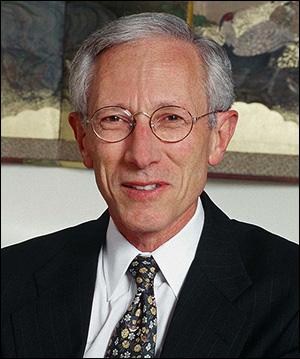
Stanley Fischer, Former Vice Chairman of Citigroup, Nominated to Serve as Vice Chairman of the Federal Reserve Board of Governors
According to his current financial disclosures to the Senate, Fischer kept that investment after leaving Citigroup and currently holds between $100,000 to $250,000 in the Fund. (That amount may not include other distributions that have been paid out over the years.) Fischer says he’ll exit the Fund if he’s confirmed to sit on the Fed Board of Governors.
The Citigroup Employee Fund of Funds I LP is so secretive that on December 31, 2001, the SEC filed a request on behalf of Citigroup in the Federal Register requesting to exempt it and other key employee limited partnership funds at Citigroup from certain provisions of securities laws. The SEC said it was going to approve the exemptions unless someone convinced it to hold a hearing. We could find no information on the SEC’s web site to suggest that the exemptions were not approved or that a hearing was held.
Among the many exemptions requested, Citigroup wanted “to act as custodian for a Partnership without a written contract.” Citigroup asked further for an “exemption from the rule 17f–1(b)(4) requirement that an independent accountant periodically verify the assets held by the custodian.” It also wanted an exemption to be able to keep the partnership’s investments “in the locked files of the General Partner” and to exempt members of the partnership from having to file reports of ownership interests with the SEC.
According to Bloomberg News, Fischer now has a net worth between $14.6 million to $56.3 million, according to his financial disclosure report with the Office of Government Ethics. That’s more than a $40 million spread and a preposterous method of presenting financial disclosures to the public.
On its web site, Citigroup boasts that it has “the largest presence of any foreign financial institution in Israel and offers corporate and investment banking services to leading Israeli corporations and institutions, and global corporations operating in Israel. Citi also offers private banking services to high-net-worth individuals living in Israel.”
Despite it being the U.S. taxpayer that bailed out Citigroup after it played a pivotal role in the economic collapse of 2008, Citigroup’s loyalty to creating jobs to help rebuild the struggling U.S. economy are bizarrely divided. According to its web site, in September 2011, while Fischer served as the head of the Bank of Israel, it established a Technology Innovation Lab in Israel with the aim of capitalizing on “Israel’s vast technological talent to lead the financial industry into the future of technology…The Lab is working on developing an array of state-of-the-art financial and banking applications…Citi has opened a Financial Data Intelligence Lab that will combine expertise in big-data-analytics and domain knowledge within the financial markets.”
While Senator Elizabeth Warren did not get into the nitty-gritty details outlined above, she did frame the core conflicts between Citigroup and the perpetual stream of money men it continues to install in high government positions. That not one other member of the Senate Banking Committee had the guts to go near this subject is further proof of the intractable corruption that plagues Washington.
Senator Warren said:
“Now, I’m concerned that the mega banks not only have the capacity to tilt the financial system, but that they also have the capacity to tilt the political system. You know, we’ve learned that as big banks get bigger and bigger their lobbying power and influence in Washington also tend to grow. That means big banks can often delay, water down or even kill important regulations. So, size can have ripple effects everywhere and for that reason I think it’s a mistake to talk about size without considering how it affects the ability of government to enforce meaningful regulation. A century ago when Teddy Roosevelt and others worked to break up the giant trusts, this was a big concern – not just the economic impact of size but the political impact that came with size as well. So, Dr. Fischer, you have a great deal of experience as an observer and as a participant in the financial system, is this a point that you’ve thought about and do you think it’s possible for large Wall Street banks to amass too much political power?”
Fischer gave a muted response that he wasn’t convinced that banking supermarkets actually achieve any economies of scale. Warren continued:
“Many big banks are well represented in Washington but the connection between Citigroup and Democratic administrations really sticks out. Three of the last four Democratic Treasury Secretaries have Citigroup ties; the fourth was offered but turned down the CEO position at Citigroup. Former Directors of the National Economic Council and the Office of Management and Budget at the White House and our current U.S. Trade Representative also have Citigroup ties. You once served as President of Citigroup International and are now in line to be number two at the Federal Reserve…”
Fischer said he thought his Citigroup experience would help him at the Fed. Warren plowed ahead:
“I also think it’s dangerous if our government falls under the grip of a tight knit group connected to one institution. Former colleagues get access through calls and meetings; economic policy can be dominated by group think; other qualified and innovative people can be crowded out of top government positions.”
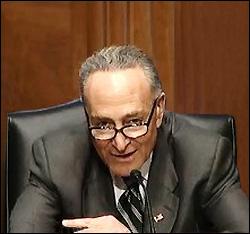
Senator Chuck Schumer Lavishes Praise on Stanley Fischer During Confirmation Hearing on March 13, 2014
Senator Chuck Schumer of New York was next in line to “question” Fischer. Instead of questioning, Schumer read the equivalent of a Man of the Year Award salute to Fischer calling him “brilliant” and lavishing praise on his credentials. It should be noted that Schumer did the same for Jack Lew, former Chief Operating Officer of Citigroup, during Lew’s confirmation hearing. Schumer has also previously led various drumbeats for looser Wall Street regulations.
As Schumer read his sugary tribute to Fischer, he punctuated his talk with frequent dagger stares in the direction of Senator Warren. By exposing the money men sent from Citigroup, Senator Warren had also, wittingly or unwittingly, pointed the finger at Schumer — their biggest cheerleader in confirmation hearings.

Why Income Inequality Is Going to Get Catastrophically Worse

Inequality is endemic to the core structure of an America that operates more as a plutocracy than a democracy.

There’s been a lot of discussion about the historically high levels of income and wealth inequality lately — mostly from people on the shorter end of that stick — with good reason: There’s no end in sight.
In his new book, “Capital in the Twenty-First Century,” economist Thomas Piketty argues that worsening inequality is inevitable in a mature capitalist system, based on his analysis of 200 years of data. But inequality isn’t just an evolving condition like a crippling allergy that comes and goes, or just grows, enumerated by horrifying statistics. Nor is it just the result of a capitalist-utopian idea of free markets in which everyone gets a fair shot armed with equal information (which simply don’t exist in the real world, where markets are routinely gamed by the biggest players). Inequality is endemic to the core structure of an America that operates more as a plutocracy than a democracy. It is an inherent result of the consolidation of a substantial amount of both financial power and political influence in the hands of a few families.
In my upcoming book, “All the Presidents’ Bankers,” I trace the lineage of the banking and political families and their associates who have had the most combined influence on American policy. Inequality of income or wealth is a byproduct of the predisposition and genealogy of this coterie of America’s power elite. True, being born into wealth means having a greater chance of accumulating more of it — but take it a step further. Expanding on the adage of “it takes money to make money,” we get a much better idea of why inequality is so rampant: Because aside from income and wealth issues, it takes power to keep power.
By nature of the construct and self-reinforcing behavior of a small circle of American families and their enterprises — particularly over the past century since financial capitalism replaced productive capitalism as the means to expand power, wealth and influence — a comparative handful of families and their connections run Wall Street and Washington collectively. They run America as two sides of one political-financial coin, not as divided factions but as co-influencers of policy through public and private office.
There have been times during the past century when the specific individuals commanding this joint effort paid credence to the public interest, or were imbued with more humility. During those times, levels of inequality happened to decrease. At other times, the power elite solely promoted private gain, as from WWI through the crash of 1929, and since the 1970s, particularly since the 2008 crisis. At those times,  inequality happened to grow. This is not to imply that the moods of the elite were the sole arbiters of the direction of inequality, but that whatever the direction of these levels, general economic health is more dependent on the actions of this long-term, tightknit and concentrated few than on the ideal of a democracy. In this environment of such power inequality, economic inequality is unavoidable — and unsolvable.
Today, the focus of this power structure is so skewed that any notion of “public good” is mere campaign fodder for presidents or presidential hopefuls, and nonexistent for the banking elite. That’s why inequality for the rest of the population has leapt back up to 1928 levels and will continue to rise from there. That’s why Jeb Bush or Hillary Clinton or both may run for president, while JPMorgan Chase, J.P. Morgan’s legacy, remains the most powerful bank in the world, as it was designed to be more than a century ago.
In the Economic Policy Institute’s February 2014 report “The Increasingly Unequal States of America,” authors Estelle Sommeiller and Mark Price chronicle income inequality on a state-by-state basis from 1917 to 2011. Starting in 1979 until 2011, as the average income of the bottom 99 percent of U.S. taxpayers rose by 18.9 percent, the average income of the top 1 percent rose by 10 times more, or 200.5 percent. Conversely, between 1928 and 1979, the share of income held by the top 1 percent fell in every state but one.
More recently, their results show that between 2009 and 2011, not only did income inequality grow in all 50 states, but all income growth went to the top 1 percent in 26 states. New York and Connecticut led the pack in terms of income inequality by virtue of their disproportionate share of financial industry millionaires and billionaires, whose fortunes were in turn bolstered by federal and Fed policies that championed the banks that had first access to cheap money and a place to dump their toxic assets. In these states, the average income gap in 2011 had the top 1 percent making 40 times more than the bottom 99 percent. (The gap in California was 26.8 times, confirming that on average Wall Street money trumps tech and entertainment money. The smallest average gap was in Hawaii at 12.1 times.)
Not only are current income inequality levels near the 1928 peak, but the systemic risk posed by this inequality is worse now. There is no counterbalance to the banking elite who possess no imbedded public spirit underlying their political influence and command more instruments of leverage capital than ever before. There’s no strong labor force, no large swaths of the population demanding reform by any means necessary, no revolution. Instead, we have an overhang of debt, stagnant wages and inferior jobs, all exacerbating income inequality.
Risk inequality means that those who have less to begin with have more to lose in adverse circumstances, whereas those with more have less to lose. This extra inequality dynamic is as dangerous to individuals as it is to the greater economy. It is particularly damaging in the wake of the epic Wall Street bailouts and ongoing zero-interest rate monetary policy and quantitative easing of the Federal Reserve policy, which helps the same banks whose family legacies worked with the Washington leaders who were their friends to create the Fed to back their bets and preserve their wealth a century ago.
Inequality has been given nothing but pithy lip service by the political-financial elite, elected or selected, or those aspiring to more of it. Last fall, Hillary Clinton was paid $400,000 to tell two Goldman Sachs gatherings that the financial crisis was a shared responsibility, implying that Wall Street had been unfairly demonized in its wake.
The Economic Policy Institute report authors conclude, “In the next decade, something must give. Either Americans must accept that the American dream of widespread mobility is dead or new policies must emerge that will restore broadly shared prosperity.” But the cards have already been dealt — and the verdict is in. Not only will the American dream remain dead, but also income and wealth and risk inequality will escalate by virtue of the government-supported consolidation of banking family and firm power.
Nomi Prins is a journalist and senior fellow at Demos. She is the author, most recently, of “It Takes a Pillage” and “Black Tuesday.”

Malaysian airplane investigators look at suicide as possible motive

The co-pilot of the missing Malaysia Airlines MH370 jetliner spoke the last words heard from the cockpit, the airline's chief executive said yesterday, as investigators consider suicide by the captain or first officer as one possible explanation for the disappearance.
No trace of flight MH370 has been found since it vanished on March 8 with 239 people on board. Investigators are increasingly convinced it was diverted perhaps thousands of miles off course by someone with deep knowledge of the Boeing 777-200ER and commercial navigation.
A search unprecedented in its scale is now under way for the plane, covering an area stretching from the shores of the Caspian Sea in the north to deep in the southern Indian Ocean.
Airline chief executive Ahmad Jauhari Yahya also told a news conference that it was unclear exactly when one of the plane's automatic tracking systems had been disabled, appearing to contradict the weekend comments of government ministers.
Suspicions of hijacking or sabotage had hardened further when officials said on Sunday that the last radio message from the plane – an informal "all right, good night" – was spoken after the tracking system, known as "ACARS", was shut down.
"Initial investigations indicate it was the co-pilot who basically spoke the last time it was recorded on tape," Jauhari said yesterday, when asked who it was believed had spoken those words.
That was a sign-off to air traffic controllers at 1.19 am, as the Beijing-bound plane left Malaysian airspace.
The last transmission from the ACARS system – a maintenance computer that relays data on the plane's status – had been received at 1.07 am, as the plane crossed Malaysia's northeast coast and headed out over the Gulf of Thailand.
"We don't know when the ACARS was switched off after that," Jauhari said. "It was supposed to transmit 30 minutes from there, but that transmission did not come through."
The plane vanished from civilian air traffic control screens off Malaysia's east coast less than an hour after taking off from Kuala Lumpur. Malaysian authorities believe that someone on board shut off its communications systems as the plane flew across the Gulf of Thailand.
Malaysian police are trawling through the backgrounds of the pilots, flight and ground staff for any clues to a possible motive in what they say is now being treated as a criminal investigation.
Asked if pilot or co-pilot suicide was a line of inquiry, Malaysian acting transport minister Datuk Seri Hishammuddin Hussein said: "We are looking at it." But it was only one of the possibilities under investigation, he added.
Intensive efforts by various governments to investigate the backgrounds of everyone on the airplane had not, as of yesterday, turned up any information linking anyone to militant groups or anyone with a known political or criminal motive to crash or hijack the aircraft, US and European security sources said.
One source familiar with US inquiries into the disappearance said the pilots were being studied because of the technical knowledge needed to disable the ACARS system.
Many experts and officials say while the jet's transponder can be switched off by flicking a switch in the cockpit, turning off ACARS may have required someone to open a trap door outside the cockpit, climb down into the plane's belly and pull a fuse or circuit breaker.
Whoever did so, had to have sophisticated knowledge of the systems on a 777, according to pilots and two current and former US officials close to the investigation.
Malaysian police special branch officers searched the homes of the captain, 53-year-old Zaharie Ahmad Shah, and first officer, 27-year-old Fariq Abdul Hamid, in middle-class suburbs of Kuala Lumpur close to the international airport on Saturday.
Among the items taken for examination was a flight simulator Zaharie had built in his home.
A senior police official familiar with the investigation said the flight simulator programmes were closely examined, adding they appeared to be normal ones that allow users to practise flying and landing in different conditions.
A second senior police official with knowledge of the investigation said they had found no evidence of a link between the pilot and any militant group.
Some US officials have expressed frustration at Malaysia's handling of the investigation. As of yesterday morning the Malaysian government still had not invited the FBI to send a team to Kuala Lumpur, two US security officials said.
The FBI, which has extensive experience in investigating airplane crashes, and other US law enforcement agencies have indicated they are eager to send teams to Kuala Lumpur, but will not do so unless formally invited.
Police and a multinational investigation team may never know for sure what happened in the cockpit unless they find the plane, and that in itself is a daunting challenge.
Satellite data suggests it could be anywhere in either of two vast corridors that arc through much of Asia: one stretching north from Laos to the Caspian, the other south from west of the Indonesian island of Sumatra into the southern Indian Ocean west of Australia.
Aviation officials in Pakistan, India, and Central Asian countries Kazakhstan and Kyrgyzstan – as well as Taliban militants in Pakistan and Afghanistan – said they knew nothing about the whereabouts of the plane.
China, which has been vocal in its impatience with Malaysian efforts to find the plane, called on its smaller neighbour to immediately expand and clarify the scope of the search. About two-thirds of the passengers aboard MH370 were Chinese.
Australian Prime Minister Tony Abbott said he had spoken to Malaysian counterpart Najib Razak by telephone, and had offered more surveillance resources in addition to the two P-3C Orion aircraft his country has already committed.
Hishammuddin said diplomatic notes had been sent to all countries along the northern and southern search corridors, requesting radar and satellite information as well as land, sea and air search operations.
The Malaysian navy and air force were also searching the southern corridor, he said, and US P-8A Poseidon surveillance aircraft were being sent to Perth, in Western Australia, to help scour the ocean.
Electronic signals between the plane and satellites continued to be exchanged for nearly six hours after MH370 flew out of range of Malaysian military radar off the northwest coast, following a commercial aviation route across the Andaman Sea towards India.
The plane had enough fuel to fly for about 30 minutes after that last satellite communication, Ahmad Jauhari said.
Twenty-six countries are involved in the search, stretching across much of Asia.
A source familiar with official US assessments of satellite data being used to try to find the plane said it was believed most likely it turned south sometime after the last sighting by Malaysian military radar, and may have run out of fuel over the Indian Ocean.
The Malaysian government-controlled New Straits Times yesterday quoted sources close to the investigation as saying data collected was pointing instead towards the northern corridor. – Reuters, March 18, 2014.