Thursday, March 3, 2016

Can Americans Handle Four More Years Of This?


Some folks were peddling fiction... for everyone else, there's this reality!

No child (or student, or poor person, or grandchild, or debtholder, or healthy person, or retiree, or African American, or family, or homeowner, or renter) left behind untouched...
Now that is a legacy.

Sports Authority to File For Bankruptcy Protection

Will Close One-Third of Its Stores Anyway Under Bankruptcy Plan
Sports Authority
Sports Authority has stores in Piscataway, East Brunswick, and Iselin, N.J., plus in other Garden State towns. Wikipedia
EAST BRUNSWICK, NJ–Beleaguered Sports Authority Inc. (SA) will file for bankruptcy protection immediately or could find itself out of business completely in coming weeks if it fails to find a buyer for its business, according to reports.
But the company plans to close about 150 of the 450 stores it operates nationwide anyway, as part of a bankruptcy plan, reports Bloomberg, citing sources with knowledge of the matter.
Dicks Sporting Goods Inc. and Modell’s Sporting Goods could also purchase the company.
SA has agreed to borrow $595 million in bankruptcy financing from Bank of America Corp., Wells Fargo & Co., and J.P. Morgan Chase & Co. according to a Wall Street Journal report, which cites sources familiar with the matter.
Some of the sources told the Journal that SA would be required to shutter and clear out dozens of its stores after filing for chapter 11 protection, and then close all its remaining stores, by the end of next month, unless it was then able to find a buyer to invest in the business.
But SA may be bluffing the bankruptcy: “To be sure, companies and their creditors often use the threat of bankruptcy to cut last-minute deals,” reads the Journal report.
The Journal notes that if a buyer wants a “package of Sports Authority’s best stores,” a portion of the business would continue running, adding that bankruptcy is very challenging for retailers.
“Under pressure from creditors, vendors, landlords and other stakeholders, money-losing store chains often go out of business while trying to reorganize in bankruptcy,” according to the journal which cites data from consultancy AlixPartners LLP, that just over half of retail bankruptcies since 2005 have ended up in liquidation.
Substantial debt, cut throat competition in the retail environment, and a consumer shift toward more spending on experiences and services, rather than trips to malls continues to challenge traditional retail, as more people begin shopping online.
To that end, many retailers are investing heavily in technology to improve the in-store shopping experience for consumers.
Progressive retailers are also educating their workforce to engage with customers more effectively, use devices to stay abreast of inventory levels, and track items in stores and distribution centers so as not to stock-out of items and loose sales.
Other supply chain challenges are also being solved through technology such as Radio-frequency identification (RFID) chips, which use radio waves to read information stored on price tags and packages, and also help give consumer information on TV screens in some stores.
“We recognize consumers are doing things differently than they have in the past,” said National Retail Federation President and Chief Executive Officer, Matthew Shay recently, after the trade group announced growth of only 3.1% for this year.
But the federation says online sales will grow as much as 9% this year.
Chains such as Macy’s Inc., Wal-Mart Inc., and Sears Holdings Corporation have begun closing dozens of stores this year and will shutter many more.
In the past decade Dicks, which operates 600 trade-mark name stores, has become larger than SA.
SA’s e-commerce business, which SA does not operate on its own, but has given that task to eBay, GSI Commerce, now called eBay Enterprise, has reportedly not gone well in terms of SA ability to build vendor relationships.

Payday Loan Sharks Have Good Friend in Government: Democratic Party Chair

(Deirdre Fulton)  Sketchy payday loan sharks, whose short-term, high-interest loans trap millions of Americans in a cycle of debt, have a new ally on Capitol Hill—Democratic National Committee chair Debbie Wasserman Schultz, who is reportedly pushing a bill that would “gut” forthcoming industry regulations.
According to a memo seen by the Huffington Post, Rep. Wasserman Schultz (D-Fla.) is co-sponsoring legislation (pdf) to delay new rules from the Consumer Financial Protection Bureau (CFPB), meant to crack down on abusive payday lending that profits off deceptive terms, automatic “rollovers,” staggering fees, and interest rates averaging over 300 percent annual percentage rate (APR).
The so-called “Consumer Protection and Choice Act” would delay those rules for two years and “permanently block them in any state that enacts the sort of ineffectual, industry-crafted regulatory sham that Florida adopted in 2001,” ThinkProgress reports.
In December, 265 civil rights, labor, and consumer advocacy groups signed onto a letter opposing the legislation, which they decried as “an attempt to codify industry-backed practices that do little to protect consumers.”
In backing the bill, the HuffPo notes, Wasserman Shultz is aligning herself with the Republican Party, which has “assailed the agency from every conceivable angle—going after its budget, attempting to tie its hands with new layers of red tape, fomenting conspiracy theories about rogue regulators illegally shutting down businesses and launching direct attacks on payday loan rules themselves.”
She is also going against public opinion. A poll conducted last year for Americans for Financial Reform and the Center for Responsible Lending,showed that nearly two in three voters have a negative view of payday lenders. The same survey showed that respondents viewed payday lenders as predators rather than resources by a margin of more than 3:1.
The move also puts Wasserman Schultz—who has come under fire for the DNC’s perceived pro-Hillary Clinton bias—at odds with U.S. Sen. Elizabeth Warren (D-Mass.), who conceived of and established the CFPB and who hasdenounced payday lending schemes for targeting the poor.
As Eric Levitz of New York Magazine‘s Daily Intelligencer said Tuesday—his tongue firmly in his cheek: “With such brave legislators leading the Democratic Party, it’s difficult to understand how Bernie Sanders can get so mad at the ‘Establishment’.”

Thursday, February 25, 2016

Here’s why (and how) the government will ‘borrow’ your retirement savings

According to financial research firm ICI, total retirement assets in the Land of the Free now exceed $23 trillion.
$7.3 trillion of that is held in Individual Retirement Accounts (IRAs).
That’s an appetizing figure, especially for a government that just passed $19 trillion in debt and is in pressing need of new funding sources.
Even when you account for all federal assets (like national parks and aircraft carriers), the government’s “net financial position” according to its own accounting is negative $17.7 trillion.
And that number doesn’t include unfunded Social Security entitlements, which the government estimates is another $42 trillion.
The US national debt has increased by roughly $1 trillion annually over the past several years.
The Federal Reserve has conjured an astonishing amount of money out of thin air in order to buy a big chunk of that debt.
But even the Fed has limitations. According to its own weekly financial statement, the Fed’s solvency is at precariously low levels (with a capital base of just 0.8% of assets).
And on a mark-to-market basis, the Fed is already insolvent. So it’s foolish to think they can continue to print money forever and bail out the government without consequence.
The Chinese (and other foreigners) own a big slice of US debt as well.
But it’s just as foolish to expect them to continue bailing out America, especially when they have such large economic problems at home.
US taxpayers own the largest share of the debt, mostly through various trust funds of Social Security and Medicare.
But again, given the $42 trillion funding gap in these programs, it’s mathematically impossible for Social Security to continue funding the national debt.
This reality puts the US government in rough spot.
It’s not like government spending is going down anytime soon; it already takes nearly 100% of tax revenue just to pay mandatory entitlements like Social Security, and interest on the debt.
Plus the government itself estimates that the national debt will hit $30 trillion within ten years.
Bottom line, they need more money. Lots of it. And there is perhaps no easier pool of cash to ‘borrow’ than Americans’ retirement savings.
$7.3 trillion in US IRA accounts is too large for them to ignore.
And if you think it’s inconceivable for the government to borrow your retirement savings, just consider the following:
1) Borrowing retirement funds is becoming a popular tactic.
Forced loans have been a common tactic of bankrupt governments throughout history.
Plus there’s recent precedent all over the world; Hungary, France, Ireland, and Poland are among many governments that have resorted to ‘borrowing’ public and private pension funds.
2) The US government has already done this with federal pension funds.
During the multiple debt ceiling fiascos since 2011, the Treasury Department resorted to “extraordinary measures” at least twice in order to continue funding the government.
What exactly were these extraordinary measures?
They dipped into federal retirement funds and borrowed what they needed to tide them over.
In fact, the debt ceiling debacles were only resolved because the Treasury Department had fully depleted available retirement funds.
3) They’ve been paving the way to borrow your retirement savings for a long time.
Two years ago the government launched a new initiative to ‘help Americans save for retirement.’
It’s called MyRA. And the idea is for people to invest retirement savings ‘in the safety and security of US government bonds’.
Since then they’ve gone on a marketing offensive involving the President, Treasury Secretary, and other prominent politicians.
(Most recently Nancy Pelosi published an Op-Ed in the San Francisco Chronicle a few days ago promoting the program.)
They’ve also proposed a number of legislative reforms to ‘encourage’ American businesses to sign their employees up for MyRA.
Just last week, Congress introduced the “Making Your Retirement Accessible”, or MyRA Act, which would charge a penalty to employers whose workers don’t have a retirement account.
The proposed penalty is $100. Per worker. Per day.
Imagine a small business with, say, 10 employees who don’t have retirement accounts. The penalty to Uncle Sam would be a whopping $30,000 PER MONTH.
There’s a word for this. It’s called extortion.
Obviously when facing a $30,000 monthly penalty, an employer will pick the easiest option.
Given the absurd amount of government regulation on the rest of the financial industry, MyRA is the fastest choice.
This isn’t about fear or paranoia. It’s about facts.
And the reality is that the government in the Land of the Free is moving in the direction of borrowing more and more of your retirement savings.
If you still remain skeptical, remember that last year the government stole more from its citizens through Civil Asset Forfeiture than thieves in the private sector.
Or that just 45-days ago a new law went into effect authorizing the government to strip you of your passport if they believe in their sole discretion that you owe them too much tax.
No judge. No jury. No trial. They just confiscate your passport.
This is happening. It’s a reality that rational, thinking people should plan for.
And yes, there are solutions for now.
For example, it’s possible to set up a more robust retirement structure that protects your savings and gives you much greater influence over your funds.
This is something that may make sense no matter what; it may be a good idea regardless to do some long-term financial planning that increases your influence over your own retirement savings and expands your investment options.
And if you want to learn more about the risks and solutions for your retirement savings, click here to access our free black paper.
Our goal is simple: To help you achieve personal liberty and financial prosperity no matter what happens.

Multiple times every week, we help over 100,000 Sovereign Man subscribers who are taking their family's liberty and prosperity into their own hands with our free publication, Notes From The Field.

Activate your free subscription today, and get fresh intelligence delivered securely to your inbox as we travel the world discovering the biggest opportunities available to smart, enterprising individuals like you.

Graham Summers: 2008 was just a warm up for what is ahead!

by FRA
Graham Summers is the Chief Market Strategist with Phoenix Capital Research in Washington, DC. Phoenix capital research is an investment research firm, that has clients in 56 countries around the world, specializing in investment research on a subscription basis.

Japan‘s NIRP announcement & the US$

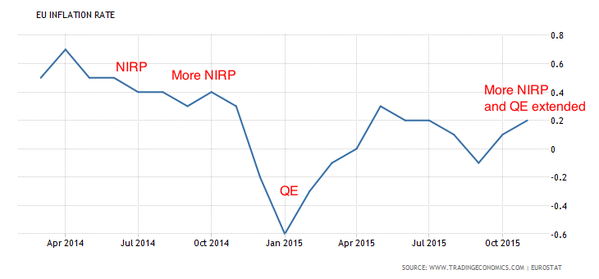
Japan is at the forefront of the Keynesian central planning that has been in the markets for the past few decades. The federal reserve first went to ZIRP and launched quantitative easing in 2008. The European central bank went to ZIRP and they launched QE in 2015. The bank of Japan first went to ZIRP in 1999, in which they then launched quantitative easing in 2000. They’re much more experienced in seeing what these sorts of policies can accomplish.
A week or two before NIRP was announced, Kuroda, the head of the Bank of Japan announced that Japan’s potential GDP growth was 0.5% or lower, which is an astounding admission, implicitly admitting that no matter how much money is printed or what monetary policy will be used, Japan’s GDP will not and cannot break above 0.5%.
Graham states, “From a psychological perspective, this is like a central banker saying, ‘we don’t have the tools required to generate economic growth’ – Similar to a doctor saying, ‘no matter how much medicine you take you won’t possibly get better’.”
That was the beginning of the end. “It wasn’t too surprising for me that shortly thereafter when the Bank of Japan went to NIRP, the market reaction was terrible. When you reach the end game for central banking omnipotence, there are no longer positive results from central bank policy.”
“Anytime you cut interest rates, or launch quantitative easing, there will always be negative as well as unintended consequences. The one positive consequence since 2008 is that when these policies are launched, stocks go up” “None of these policies really generate economic growth, they’re all about the bond bubble”
CaYHMomUUAAbnw8
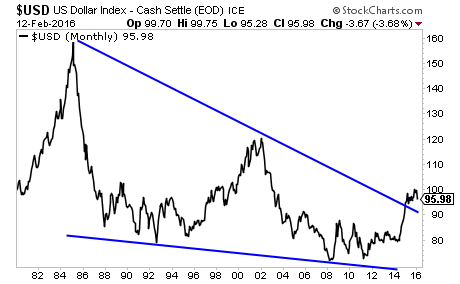
Graham mentions that when Kuroda launched NIRP, the positive consequences of that policy which is the Japanese stocks rising, only lasted one day. The negative aspects exist, and Japan has since had to cancel a bond auction due to a lack of interest, which in Japanese history, has never happened. Meaning that Japan was not able to sell it’s debt on the markets because investors did not want to buy bonds at a negative yield. “When the crisis hit in 2008, all central banks coordinated their responses, however, this was in a fiat world, where everything was relative. All the policies consisted of currency debasement,  with the idea of inflating away debt payments.” The problem with this is that when any one country launches any policy, it has an adverse effect on the currency against which their currency trades.  The most obvious example being the euro vis-à-vis US federal reserve and the dollar. The euro represents 56% of the value against which the dollar trades, if the ECB does anything to push the euro down, the dollar would naturally go up. The bank of Japan and the European Central Bank employing NIRP, should be very dollar positive. However, for years hedge funds have been betting very large leveraged sums that are shortening the yen and going long on the Nikkei, when the Bank of Japan implemented NIRP and the negative consequences occurred, that trade began to surge, as did the yen, and the Nikkei collapsed. What this has done is forced very many institutions and hedge funds to liquidate their positions.
“We are seeing the yen soaring and the dollar is falling as a result. That is not based on any fundamentals, that is just liquidity sloshing around the system. From a global perspective, what the bank of Japan did should be very dollar positive and I believe it will be proven to be the case”
sc-3
“We are in such a central planning oriented world that what has been driving markets in the short term is perspective on what central banks are going to do.”

An Imploding Bond Bubble

The bond bubble is the bedrock of the financial system, it is over $100 Trillion in size, and is going to take years to deflate. The first wave of deflation was the high yield bond market, which has begun to implode. It will also feature emerging market corporate debt defaulting. Slowly, one by one each foot will fall until we will reach the sovereign bond default but it will take months, if not years.
“Oil experiencing a 60% price collapse in about a 6 month period in 2014, was really the bond bubble, the junk bonds in the energy sector blowing up. The bubble we’re dealing with right now is the crisis to which 2008 was the warm-up, and it will take much longer to unfold than people think.”

Gold

Gold was in a bit of a bubble in 2011, it was so far overextended above it’s overall bull market trend line, it was bound to collapse. When that collapse is combined with central bank manipulation and the effort to suppress gold, you’re going to see an asset class struggle for years to find it’s legs again.
Since China devalued the Yuan in August – September, gold has begun to outperform stocks. Since Japan went to NIRP this process has accelerated dramatically. It appears for the last 6-7 years, investors were loading into stock as a hedge against central bank policy, and gold would also benefit from this. This trend reversed in 2011, investors continued to use stocks as a hedge against central bank policy, but they abandoned gold. That seems to have reversed, investors are now moving into gold as a hedge against central bank error and stocks are suffering. The reason gold is having such a dramatic move is that the gold market is so much smaller than stock, that when you start seeing large scale chunks of capital moving into gold, the movements become very significant.

Custodial Risk

Graham explains that custodial risk is the question of what an individual actually owns. He uses the example of buying stock and how individuals no longer receive a paper certificate, and the assets are held digitally, usually in a broker’s account.  If the financial institution who is sitting on these assets for you, goes out of business, what are people to do with their money? Graham illustrates that gold and physical cash is so appealing due to the lack of custodial risk.
“Central banks hate physical cash because the custodial risk does not exist”

Update: Fresnillo, the world’s largest primary silver producer announces sales were up 11% in 2015 as Silver and Gold output increased.

 Update: Fresnillo, the world’s largest primary silver producer announces sales were up 11% in 2015 as Silver and Gold output increased.
Fresnillo intends to increase silver production again in 2016 – as much as 8%
Further Reading:
Global Silver Mining Production Increased in 2015
North American Silver Miners Report Record Silver Production
The Tiny Silver Market in Perspective
chart showing relative value of silver mining production and JP morgan fines

The value of annual global silver mining production is about $13.1 billion as of February 2016.

The 80:1 Silver to Gold Ratio – Is it about to change?