Sunday, December 15, 2013

Bankers Arrested, Civil War Averted, Economy On The Rebound
Wish List, and a Tale of Two Countries
Dave Hodges
Activist Post
Who says there isn’t justice in the world for the globalists who continue to plunder the assets of average people? Four prominent bankers have been sentenced to prison and assessed hefty financial penalties.
The First District Court of Appeals sentenced four former Goldman Sachs Executives to prison terms ranging from three to five years in prison for financial crimes dating back to 2008. The Supreme Court, fearing civilian reprisals, has refused to hear the bankers appeals.
The mainstream media is reporting that Hank Paulson, former CEO of Goldman Sachs and Secretary of the Treasury as well as being known for being the architect of the bailouts, received the heaviest sentence of five years in prison. Paulson was ordered to pay $33.4 million dollars in fines. Along these same lines, former Goldman Sachs CEO and World Bank President, Tim Geithner, was sentenced to three years in prison along with being assessed a hefty $23 million dollar fine. The mastermind of the MF Global theft, former Goldman Sachs executive and the former Governor of New Jersey, Jon Corzine, was sentenced to four years and an $18 million dollar fine. The most recent Goldman Sachs CEO, Lloyd Blankfein was also sentenced to three years and assessed a $13 million dollar penalty.
When hundreds of thousands of citizens showed up at the Capitol building and began throwing rocks at the building, this triggered the biggest civil unrest in the country’s history. The military refused to become involved and government officials cowered in fear as DHS fought off the protesters. Shortly thereafter, the beleaguered Congress rediscovered its backbone and issued arrest warrants for the four criminal banksters. Of course, Goldman Sachs and several other international bank entities warned the citizens that the country would collapse economically and it would become necessary to usher in martial law. This proved to be an empty threat, as the opposite ended up being true. The year following the arrests of these four bankster thugs, the economy grew at a rate of 2.6%. It is safe to say that the government will never tolerate the undue influence of any financial institution again. The country is approaching financial solvency. Goldman Sachs has been turned into a bed and breakfast location. Who would have thought that this would have been possible?
In a related story, Nancy Pelosi also went to prison for two years after being convicted of insider trading on Wall Street. And Dianne Feinstein went to prison for five years for repeated violations of conflicts of interest as Feinstein’s husband was the beneficiary of several no-bid federal government contracts. Obama was impeached and convicted for identity theft and most importantly, treason. Happy days are here again.
Fade to black….not in a pigs eye!
I would pray that these events would take place, but unfortunately, our bankster crime rate continues to rise exponentially. However, the equivalent of these events, and more, just took place in Iceland.
Icelander’s must not eat GMOs, their water must not be
fluoridated and their men never need Viagra. If Americans were to ever
travel to Iceland, they would find that the country has much more than
just snowballs! Why? Icelander’s have courage and intestinal fortitude.
Meanwhile, back in the USA our sheep are too busy watching reality
shows, while at the same time running from reality. However, as the
reader will soon discover, the circumstances in Iceland are unique and
are not likely shared by other Western nations.
True Justice
In an unprecedented ruling, Reykjavík District Court sentenced four former banking executives of the Kaupthing Bank to between 3 and 5 1/2 years in prison for financial crimes dating back to 2008. Vísir is reporting that former Kaupthing director, Hreiðar Már Sigurðsson received the heaviest sentence which consisted of five and a half years. He was also ordered to pay $33.4 million and also pay the government’s legal fees. There is a God and there is justice in Iceland as former Kaupthing chairperson, and former Interpol fugitive, Sigurður Einarsson, was sentenced to five years, and ordered to pay a total of $14.3 million as well as legal fees.
If the Icelandic people could get their hands on Goldman Sachs officials they would.They impeached and convicted corrupt politicians who were in league with Wall Street, many of which are serving prison sentences. Iceland is on its way to a full economic recovery while still saying no to the corrupt Goldman Sachs influences in Europe. Iceland is saying no to the Bank for International Settlements. Iceland is a beacon of hope for the rest of the G20 nations including the United States, or is it?
Why Did the Uprising Work in Iceland and Nowhere Else?
Gadaffi showed the same level of defiance to the corrupt banksters as did the people of Iceland, yet he is dead. What is the difference? In Iceland, the people are engaged and are committed. This was not the case in Libya and this is certainly not the case in the United States. Both Libya and the United States have been invaded by massive immigration (i.e. many al-Qaeda took up residency in Libya before the revolution) and America’s immigration issues have been well chronicled. Both countries lacked the solidarity which ultimately served to dilute their national resolve. Further, in America, the mainstream media keeps the masses docile and dumbed down while conducting their version of “Occupy America”.
The Major Reason Why Iceland Beat the Bankers
Most of Congress has been bought off. The so-called representative government is beyond the reach of the people. In Iceland, that is not the case and even if it was, it would not matter.
The most important fact related to the Icelandic revolution happened after the implementation of a type of self-governing approach which includes some elements of "Direct Democracy". Icelanders have much more say in their government than we do. This is a huge advantage for the citizens of Iceland, as from this moment on, no external power can conquer their country through hidden activities and the creation of bribed puppets. Politicians can theoretically be bribed, but it would not matter.
Iceland’s President, Olafur Ragnar Grimmson, was interviewed earlier this year at the World Economic Forum in Davos on why Iceland has enjoyed such a strong recovery after its complete financial collapse in 2008, while the rest of the West is still mired in debt, poverty and hopelessness to go with empty promises of an economic recovery.
When asked whether Iceland’s policy of letting the banks fail would have worked in the rest of Europe, Grimsson stated:
Americans have three choices if our nation is to recover: (1) Civil War; (2) Establish direct democracy and begin the political purge that will rid the government of the banker takeover; or, (3) Passively accept our present circumstance and embrace our ultimate and complete demise.
Our best and most effective course of action would be to work towards direct democracy. This would be a slow process because our government has stage-four cancer. We would have to continually create one-term politicians until we got a majority of people who would grant the country a say in how they we are governed.
Some believe that civil war is inevitable as the bankster controlled government tightens it noose around the country. This could be the case when the government and its foreign assets begin to seize guns from American citizens. The implementation of Obamacare could prove to be the trigger event leading to the government’s need to seize the guns due to massive civil unrest.
Given the fact that the past is the best predictor of the future, at least at this moment, I would bet that FEMA camps and the unimaginable lies directly in our future.
What do you think? Is there a way to galvanize the country and proceed against the existing establishment with a single purpose similar to what happened to Iceland? I would propose that we have an electronic town hall meeting in order to share ideas. Please share your thoughts on the comment board with regard to these questions and issues.
Dave is an award winning psychology, statistics and research professor, a college basketball coach, a mental health counselor, a political activist and writer who has published dozens of editorials and articles in several publications such as Freedoms Phoenix, News With Views and The Arizona Republic.
The Common Sense Show features a wide variety of important topics that range from the loss of constitutional liberties, to the subsequent implementation of a police state under world governance, to exploring the limits of human potential. The primary purpose of The Common Sense Show is to provide Americans with the tools necessary to reclaim both our individual and national sovereignty.
Dave Hodges
Activist Post
Who says there isn’t justice in the world for the globalists who continue to plunder the assets of average people? Four prominent bankers have been sentenced to prison and assessed hefty financial penalties.
The First District Court of Appeals sentenced four former Goldman Sachs Executives to prison terms ranging from three to five years in prison for financial crimes dating back to 2008. The Supreme Court, fearing civilian reprisals, has refused to hear the bankers appeals.
The mainstream media is reporting that Hank Paulson, former CEO of Goldman Sachs and Secretary of the Treasury as well as being known for being the architect of the bailouts, received the heaviest sentence of five years in prison. Paulson was ordered to pay $33.4 million dollars in fines. Along these same lines, former Goldman Sachs CEO and World Bank President, Tim Geithner, was sentenced to three years in prison along with being assessed a hefty $23 million dollar fine. The mastermind of the MF Global theft, former Goldman Sachs executive and the former Governor of New Jersey, Jon Corzine, was sentenced to four years and an $18 million dollar fine. The most recent Goldman Sachs CEO, Lloyd Blankfein was also sentenced to three years and assessed a $13 million dollar penalty.
When hundreds of thousands of citizens showed up at the Capitol building and began throwing rocks at the building, this triggered the biggest civil unrest in the country’s history. The military refused to become involved and government officials cowered in fear as DHS fought off the protesters. Shortly thereafter, the beleaguered Congress rediscovered its backbone and issued arrest warrants for the four criminal banksters. Of course, Goldman Sachs and several other international bank entities warned the citizens that the country would collapse economically and it would become necessary to usher in martial law. This proved to be an empty threat, as the opposite ended up being true. The year following the arrests of these four bankster thugs, the economy grew at a rate of 2.6%. It is safe to say that the government will never tolerate the undue influence of any financial institution again. The country is approaching financial solvency. Goldman Sachs has been turned into a bed and breakfast location. Who would have thought that this would have been possible?
In a related story, Nancy Pelosi also went to prison for two years after being convicted of insider trading on Wall Street. And Dianne Feinstein went to prison for five years for repeated violations of conflicts of interest as Feinstein’s husband was the beneficiary of several no-bid federal government contracts. Obama was impeached and convicted for identity theft and most importantly, treason. Happy days are here again.
Fade to black….not in a pigs eye!
I would pray that these events would take place, but unfortunately, our bankster crime rate continues to rise exponentially. However, the equivalent of these events, and more, just took place in Iceland.
 |
| The World's Center of Democracy |
True Justice
In an unprecedented ruling, Reykjavík District Court sentenced four former banking executives of the Kaupthing Bank to between 3 and 5 1/2 years in prison for financial crimes dating back to 2008. Vísir is reporting that former Kaupthing director, Hreiðar Már Sigurðsson received the heaviest sentence which consisted of five and a half years. He was also ordered to pay $33.4 million and also pay the government’s legal fees. There is a God and there is justice in Iceland as former Kaupthing chairperson, and former Interpol fugitive, Sigurður Einarsson, was sentenced to five years, and ordered to pay a total of $14.3 million as well as legal fees.
If the Icelandic people could get their hands on Goldman Sachs officials they would.They impeached and convicted corrupt politicians who were in league with Wall Street, many of which are serving prison sentences. Iceland is on its way to a full economic recovery while still saying no to the corrupt Goldman Sachs influences in Europe. Iceland is saying no to the Bank for International Settlements. Iceland is a beacon of hope for the rest of the G20 nations including the United States, or is it?
Why Did the Uprising Work in Iceland and Nowhere Else?
Gadaffi showed the same level of defiance to the corrupt banksters as did the people of Iceland, yet he is dead. What is the difference? In Iceland, the people are engaged and are committed. This was not the case in Libya and this is certainly not the case in the United States. Both Libya and the United States have been invaded by massive immigration (i.e. many al-Qaeda took up residency in Libya before the revolution) and America’s immigration issues have been well chronicled. Both countries lacked the solidarity which ultimately served to dilute their national resolve. Further, in America, the mainstream media keeps the masses docile and dumbed down while conducting their version of “Occupy America”.
The Major Reason Why Iceland Beat the Bankers
Most of Congress has been bought off. The so-called representative government is beyond the reach of the people. In Iceland, that is not the case and even if it was, it would not matter.
The most important fact related to the Icelandic revolution happened after the implementation of a type of self-governing approach which includes some elements of "Direct Democracy". Icelanders have much more say in their government than we do. This is a huge advantage for the citizens of Iceland, as from this moment on, no external power can conquer their country through hidden activities and the creation of bribed puppets. Politicians can theoretically be bribed, but it would not matter.
Iceland’s President, Olafur Ragnar Grimmson, was interviewed earlier this year at the World Economic Forum in Davos on why Iceland has enjoyed such a strong recovery after its complete financial collapse in 2008, while the rest of the West is still mired in debt, poverty and hopelessness to go with empty promises of an economic recovery.
When asked whether Iceland’s policy of letting the banks fail would have worked in the rest of Europe, Grimsson stated:
… Why are the banks considered to be the holy churches of the modern economy? Why are private banks not like airlines and telecommunication companies and allowed to go bankrupt if they have been run in an irresponsible way? The theory that you have to bail-out banks is a theory that you allow bankers enjoy for their own profit their success, and then let ordinary people bear their failure through taxes and austerity. People in enlightened democracies are not going to accept that in the long run...Conclusion
Americans have three choices if our nation is to recover: (1) Civil War; (2) Establish direct democracy and begin the political purge that will rid the government of the banker takeover; or, (3) Passively accept our present circumstance and embrace our ultimate and complete demise.
Our best and most effective course of action would be to work towards direct democracy. This would be a slow process because our government has stage-four cancer. We would have to continually create one-term politicians until we got a majority of people who would grant the country a say in how they we are governed.
Some believe that civil war is inevitable as the bankster controlled government tightens it noose around the country. This could be the case when the government and its foreign assets begin to seize guns from American citizens. The implementation of Obamacare could prove to be the trigger event leading to the government’s need to seize the guns due to massive civil unrest.
Given the fact that the past is the best predictor of the future, at least at this moment, I would bet that FEMA camps and the unimaginable lies directly in our future.
What do you think? Is there a way to galvanize the country and proceed against the existing establishment with a single purpose similar to what happened to Iceland? I would propose that we have an electronic town hall meeting in order to share ideas. Please share your thoughts on the comment board with regard to these questions and issues.
Dave is an award winning psychology, statistics and research professor, a college basketball coach, a mental health counselor, a political activist and writer who has published dozens of editorials and articles in several publications such as Freedoms Phoenix, News With Views and The Arizona Republic.
The Common Sense Show features a wide variety of important topics that range from the loss of constitutional liberties, to the subsequent implementation of a police state under world governance, to exploring the limits of human potential. The primary purpose of The Common Sense Show is to provide Americans with the tools necessary to reclaim both our individual and national sovereignty.
“Honey Traps” and the Strauss-Kahn Affair: A Stealthy Coup d’état at the IMF?
Source: José Miguel Alonso Trabanco
French-born Dominique Gaston André
Strauss-Kahn became the International Monetary Fund’s (IMF) tenth
Managing Director in November 2007.
His term was remarkable because of three different extraordinary facts, namely:
Unlike most of his predecessors at the helm of the IMF, Dominique Strauss-Kahn –also known as DSK to his fellow Frenchmen– is not a banker and has no known affiliations to banking entities. Instead, he had worked as a politician and as a college professor. (Whitney, 2011).
 Nevertheless, DSK’s promising career, in both the IMF and French politics was abruptly undermined in New York, on May 14th,
2011 when he was arrested and charged with sexual assault and attempted
rape of Guinean-born Sofitel Hotel chambermaid Nafissatou Diallo.
Shortly afterwards –on May 18th, 2011–, DSK tendered his
resignation from the IMF. He was swiftly replaced by French Finance
Minister Christine Madeleine Odette Lagarde. DSK pleaded not guilty and,
eventually, all charges were dismissed (Los Angeles Times, 2011) after
even public prosecutors became unable to believe the accuser’s words
(BBC, 2011).
Nevertheless, DSK’s promising career, in both the IMF and French politics was abruptly undermined in New York, on May 14th,
2011 when he was arrested and charged with sexual assault and attempted
rape of Guinean-born Sofitel Hotel chambermaid Nafissatou Diallo.
Shortly afterwards –on May 18th, 2011–, DSK tendered his
resignation from the IMF. He was swiftly replaced by French Finance
Minister Christine Madeleine Odette Lagarde. DSK pleaded not guilty and,
eventually, all charges were dismissed (Los Angeles Times, 2011) after
even public prosecutors became unable to believe the accuser’s words
(BBC, 2011).
Was this incident just another high-profile sex scandal, similar to the ones involving former US President William Jefferson Clinton, former US Democratic Senator John Reid Edwards, former Italian Prime Minister Silvio Berlusconi, former Israeli President Moshe Katzav, former President of the World Bank Paul Dundes Wolfowitz, former Director of the Central Intelligence Agency David Howell Petraeus, et al. or… is there more than meets the eye at play? As an educated guess, this research paper is meant to provide a plausible answer.
Unanswered Questions and Reasonable Doubt
In the hermetic jargon of intelligence circles, well organized setups involving sexual baits and specially designed to compromise high-value targets are euphemistically known as ‘honey traps’, i.e. operations which are “undertaken to ensnare an unwary target in a compromising sexual encounter that may leave the victim vulnerable to blackmail that might result in espionage” (West, 2007). In fact, an experienced analyst observes that “a useful rule of thumb in evaluating spectacular scandals around prominent public figures is to ask what and who might want to eliminate that person” (Engdahl, 2008).
Statesmen, military leaders, diplomats, strongmen, warlords, ministers, dictators, potentates, monarchs, lawmakers, government officials, spies, businessmen, corporate executives, merchants, bankers, media moguls, influential journalists and decision makers in general, like any other human being, have personal weaknesses and flaws that can and sometimes are indeed exploited by rivals willing to damage them.
Those are factors that are closely scrutinized by psychological analysts employed by several intelligence agencies specifically for that purpose. Those same agencies “prepare sophisticated psychological profiles before they intervene. They know that the knowledge of the secret lives—and kinks— of public figures can easily discredit them. They specialize in foraging for dirt and can leak information or use it opportunistically […furthermore,] sex scandals have become a staple of media exploitation with personal morality plays trumping political morality confrontations every time. They are both great distractions and effective tools of character assassination which are often more effective than more violent ways to neutralize people considered dangerous” (Schechter, 2011).
 DSK
was well aware of his personal traits which could be used by political
opponents to damage his aspirations: “cash, women and being Jewish”
(Harman, 2011). The latter could be exploited by vicious anti-Semites
close to both extremes of the French political spectrum. Nevertheless,
his reputation of being a seducer was a far more threatening
vulnerability because he could be blackmailed if he were to contend
against then incumbent French President Nicolas Sarkozy, as was
discussed in French journalistic outlets (Bacqué, 2011).
DSK
was well aware of his personal traits which could be used by political
opponents to damage his aspirations: “cash, women and being Jewish”
(Harman, 2011). The latter could be exploited by vicious anti-Semites
close to both extremes of the French political spectrum. Nevertheless,
his reputation of being a seducer was a far more threatening
vulnerability because he could be blackmailed if he were to contend
against then incumbent French President Nicolas Sarkozy, as was
discussed in French journalistic outlets (Bacqué, 2011).
Concerning more specific details, there are several conditions surrounding alleged victim, Nafissatou Diallo that question the truthfulness of her testimony. Prior to the incident, it has surfaced that the Guinean-born woman’s bank account had received 100, 000 dollars (Roberts, 2011). Even mainstream media published that “little by little, her credibility as a witness crumbled — she had lied about her immigration, about being gang raped in Guinea, about her experiences in her homeland and about her finances, according to two law enforcement officials. She had been linked to people suspected of crimes. She changed her account of what she did immediately after the encounter with Mr. Strauss-Kahn. Sit-downs with prosecutors became tense, even angry. Initially composed, she later collapsed in tears and got down on the floor during questioning. She became unavailable to investigators from the district attorney’s office for days at a time” (Wilson, 2011).
 At this point, it is important to briefly examine a remarkable precedent. Back in 2008, it was leaked that then Governor of New York Eliot Spitzer
had resorted to exclusive sexual entertainment services. The scandal
was taken advantage of by Republican politicians willing to unseat the
Democratic Governor and his political career was ultimately undermined.
At this point, it is important to briefly examine a remarkable precedent. Back in 2008, it was leaked that then Governor of New York Eliot Spitzer
had resorted to exclusive sexual entertainment services. The scandal
was taken advantage of by Republican politicians willing to unseat the
Democratic Governor and his political career was ultimately undermined.
Initially, Spitzer had inflicted a painful defeat on the Grand Old Party –GOP– when was elected Governor with close to 70% of the vote and, a few years later, he may have irrevocably sealed his own fate by being an outspoken opponent of the Bush Administration’s apparent criminal complicity with banking behemoths –“predatory lenders”– at the expense of common citizens, i.e. homeowners, taxpayers and consumers (Spitzer, 2008). Also, as former Attorney General of the State which houses the very core of the US financial system, Spitzer even challenged powerful interests by looking deep into financial crimes, frauds and corruption by Wall Street investment banks in the early 2000’s (Engdahl, 2008).
Interestingly, in an apparent attempt to further tarnish DSK’s integrity, Kristin Davis, the Manhattan Madam of the prostitute who was involved in the Eliot Spitzer sex scandal, publically announced that “one of her call girls refused to service Strauss-Kahn a second time because he was too rough in the act” (Roberts, 2011).
So the possibility that Spitzer was overthrown by a cabal integrated by a combination of powerful financial interests and opportunistic political opponents must be seriously considered. The aforementioned raises an unavoidable question: Could something similar, although on a larger scale, have happened to Dominique Strauss-Kahn?
On the other hand, DSK had been alerted in advance that his political opponents back in France –the UMP Party– somehow had managed to gain access to his personal communications and, more amazingly, “he had already been warned by a friend in the French diplomatic corps that an effort would be made to embarrass him with a scandal” (Epstein, 2011). It is telling that DSK had previously anticipated that he would be the target of a conspiracy masterminded by political enemies and engineered to topple him through accusations of an alleged rape (Allen, 2011).
His suspicions could not have turned out to be more accurate given that he was well aware of his particular vulnerable points. It is even more revealing that the very first person to disseminate the news about the French FMI Managing Director was Jonathan Pinet, a politics student who also happens to be an activist in Nicolas Sarkozy’s UMP party. That information was, in turn, spread by Arnaud Dassier, a spin doctor who had worked for Sarkozy’s presidential campaign and responsible of orchestrating a campaign designed to discredit DSK’s Socialist political position (Roberts, 2011).
Furthermore, Accor Group is the owner of the Sofitel hotel. Along these lines, it cannot be ignored that, at the time of the incidence, Accor’s head of security was none other than René-Georges Querry, who had previously “worked closely in the police with Ange Mancini, who [was] coordinator for intelligence for President Sarkozy” (Epstein, 2011).
Sometimes, even silence is deafening. Dominique Strauss-Kahn could have been politically protected by prominent members of the US political establishment. He was not. Quite the contrary: DSK was charged with seven crimes –attempted rape, sexual abuse, forcible touching, among others– by Manhattan District Attorney Cyrus Vance Jr., son of former US Secretary of State Cyrus Vance, whose Deputy Executive Secretary of State was former CIA official Frank G. Wisner II, who became Nicolas Sarkozy’s stepfather in 1977 when he married his stepmother Christine de Ganay. Additionally, DSK was denied bail by Judge Melissa Jackson, who was politically sponsored and handpicked by New York Mayor Michael Bloomberg, who also happens to be a powerful player in Wall Street. (Chossudovsky, 2011).
Moreover, the fact that DSK was arrested aboard an airplane shortly before it was scheduled to depart creates the “image of a man fleeing from a crime” (Roberts, 2011) even though he was heading to Europe in order to hold a meeting with German Chancellor Angela Merkel and, afterwards, participate in a meeting of eurozone finance ministers in Brussels (Bucci, 2011).
 Afterwards,
it must not be forgotten that, when Strauss-Kahn was arrested, he was
temporarily substituted by John Philipp Lipsky before Christine Lagarde
was officially appointed as the next Managing Director of the IMF.
During his career, it has to be pointed out, Lipksy had worked for
banking corporations such as Salomon Brothers and JPMorgan Chase (Whitney, 2011).
Afterwards,
it must not be forgotten that, when Strauss-Kahn was arrested, he was
temporarily substituted by John Philipp Lipsky before Christine Lagarde
was officially appointed as the next Managing Director of the IMF.
During his career, it has to be pointed out, Lipksy had worked for
banking corporations such as Salomon Brothers and JPMorgan Chase (Whitney, 2011).
By the way, Lagarde’s candidacy to succeed DSK was promptly and enthusiastically backed by the US Treasury Secretary Timothy Geithner –himself a former Goldman Sachs man–, who somewhat prematurely argued that Dominique Strauss-Kahn was “obviously not it in the position to run the IMF” (Calabresi, 2011). Perhaps not incidentally, “the report from the prosecutor proving DSK’s innocence was released on the day following the IMF’s executive board decision instating Lagarde as Managing Director of IMF for a five year term […] if this information had been revealed a few days earlier, Lagarde’s candidacy as IMF chief might have been questioned” (Chossudovsky, 2011).
These surprising coincidences have lead some analysts to assert the hypothesis that “regime change at the IMF […had] been speedily implemented” (Chossudovsky, 2011). Was it? It is certainly a legitimate question that deserves careful attention. If so, who was interested in ousting him and, even more importantly, what were the motivations behind such move?
The above article is Part I of a longer essay forthcoming on Global Research
His term was remarkable because of three different extraordinary facts, namely:
Unlike most of his predecessors at the helm of the IMF, Dominique Strauss-Kahn –also known as DSK to his fellow Frenchmen– is not a banker and has no known affiliations to banking entities. Instead, he had worked as a politician and as a college professor. (Whitney, 2011).
1. Less than a
year after his arrival at the IMF, a worldwide financial crisis of
considerable proportions took place. (Chossudovsky, 2011).
2. As a member of
the French Socialist Party, DSK was widely believed to harbor
aspirations to run for the highest political office in France, i.e. the
Presidency, in the elections that were scheduled for 2012. He was
regarded as a competitive challenger who would contend against the then
incumbent President Nicolas Paul Stéphane Sarkozy de Nagy-Bocsa,
candidate of the conservative-leaning UMP Party –Union for a Popular
Movement– (Weisenthal, 2011).
3. His skill as
IMF Managing Director was praised for being a “sagacious leader”
(Stiglitz, 2011) and, replaying the role of the legendary Austrian
Prince and statesman, DSK was described as “Metternich with a
Blackberry” for his bright maneuvers to establish a “system of
interlocking interests” in order to ensure that stability and balance,
understood in both financial and political terms, could prevail
(Johnson, 2010).
A Sex Scandal at the Highest Levels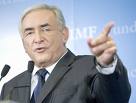 Nevertheless, DSK’s promising career, in both the IMF and French politics was abruptly undermined in New York, on May 14th,
2011 when he was arrested and charged with sexual assault and attempted
rape of Guinean-born Sofitel Hotel chambermaid Nafissatou Diallo.
Shortly afterwards –on May 18th, 2011–, DSK tendered his
resignation from the IMF. He was swiftly replaced by French Finance
Minister Christine Madeleine Odette Lagarde. DSK pleaded not guilty and,
eventually, all charges were dismissed (Los Angeles Times, 2011) after
even public prosecutors became unable to believe the accuser’s words
(BBC, 2011).
Nevertheless, DSK’s promising career, in both the IMF and French politics was abruptly undermined in New York, on May 14th,
2011 when he was arrested and charged with sexual assault and attempted
rape of Guinean-born Sofitel Hotel chambermaid Nafissatou Diallo.
Shortly afterwards –on May 18th, 2011–, DSK tendered his
resignation from the IMF. He was swiftly replaced by French Finance
Minister Christine Madeleine Odette Lagarde. DSK pleaded not guilty and,
eventually, all charges were dismissed (Los Angeles Times, 2011) after
even public prosecutors became unable to believe the accuser’s words
(BBC, 2011).Was this incident just another high-profile sex scandal, similar to the ones involving former US President William Jefferson Clinton, former US Democratic Senator John Reid Edwards, former Italian Prime Minister Silvio Berlusconi, former Israeli President Moshe Katzav, former President of the World Bank Paul Dundes Wolfowitz, former Director of the Central Intelligence Agency David Howell Petraeus, et al. or… is there more than meets the eye at play? As an educated guess, this research paper is meant to provide a plausible answer.
Unanswered Questions and Reasonable Doubt
«Justice, and only justice, you shall follow… » –Deuteronomy 16:20
This section is neither a specialized forensic
analysis nor is intended to be one. Instead, it is meant to highlight
the correlation of political circumstances that, once encompassed
together, turn out to be too disturbing and coincidental to be dismissed
outright as a mere product of chance and, thus, they provide a
plausible basis to raise more than reasonable doubts concerning the
official version of events as described in the previous section.In the hermetic jargon of intelligence circles, well organized setups involving sexual baits and specially designed to compromise high-value targets are euphemistically known as ‘honey traps’, i.e. operations which are “undertaken to ensnare an unwary target in a compromising sexual encounter that may leave the victim vulnerable to blackmail that might result in espionage” (West, 2007). In fact, an experienced analyst observes that “a useful rule of thumb in evaluating spectacular scandals around prominent public figures is to ask what and who might want to eliminate that person” (Engdahl, 2008).
Statesmen, military leaders, diplomats, strongmen, warlords, ministers, dictators, potentates, monarchs, lawmakers, government officials, spies, businessmen, corporate executives, merchants, bankers, media moguls, influential journalists and decision makers in general, like any other human being, have personal weaknesses and flaws that can and sometimes are indeed exploited by rivals willing to damage them.
Those are factors that are closely scrutinized by psychological analysts employed by several intelligence agencies specifically for that purpose. Those same agencies “prepare sophisticated psychological profiles before they intervene. They know that the knowledge of the secret lives—and kinks— of public figures can easily discredit them. They specialize in foraging for dirt and can leak information or use it opportunistically […furthermore,] sex scandals have become a staple of media exploitation with personal morality plays trumping political morality confrontations every time. They are both great distractions and effective tools of character assassination which are often more effective than more violent ways to neutralize people considered dangerous” (Schechter, 2011).
 DSK
was well aware of his personal traits which could be used by political
opponents to damage his aspirations: “cash, women and being Jewish”
(Harman, 2011). The latter could be exploited by vicious anti-Semites
close to both extremes of the French political spectrum. Nevertheless,
his reputation of being a seducer was a far more threatening
vulnerability because he could be blackmailed if he were to contend
against then incumbent French President Nicolas Sarkozy, as was
discussed in French journalistic outlets (Bacqué, 2011).
DSK
was well aware of his personal traits which could be used by political
opponents to damage his aspirations: “cash, women and being Jewish”
(Harman, 2011). The latter could be exploited by vicious anti-Semites
close to both extremes of the French political spectrum. Nevertheless,
his reputation of being a seducer was a far more threatening
vulnerability because he could be blackmailed if he were to contend
against then incumbent French President Nicolas Sarkozy, as was
discussed in French journalistic outlets (Bacqué, 2011).Concerning more specific details, there are several conditions surrounding alleged victim, Nafissatou Diallo that question the truthfulness of her testimony. Prior to the incident, it has surfaced that the Guinean-born woman’s bank account had received 100, 000 dollars (Roberts, 2011). Even mainstream media published that “little by little, her credibility as a witness crumbled — she had lied about her immigration, about being gang raped in Guinea, about her experiences in her homeland and about her finances, according to two law enforcement officials. She had been linked to people suspected of crimes. She changed her account of what she did immediately after the encounter with Mr. Strauss-Kahn. Sit-downs with prosecutors became tense, even angry. Initially composed, she later collapsed in tears and got down on the floor during questioning. She became unavailable to investigators from the district attorney’s office for days at a time” (Wilson, 2011).
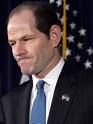 At this point, it is important to briefly examine a remarkable precedent. Back in 2008, it was leaked that then Governor of New York Eliot Spitzer
had resorted to exclusive sexual entertainment services. The scandal
was taken advantage of by Republican politicians willing to unseat the
Democratic Governor and his political career was ultimately undermined.
At this point, it is important to briefly examine a remarkable precedent. Back in 2008, it was leaked that then Governor of New York Eliot Spitzer
had resorted to exclusive sexual entertainment services. The scandal
was taken advantage of by Republican politicians willing to unseat the
Democratic Governor and his political career was ultimately undermined.Initially, Spitzer had inflicted a painful defeat on the Grand Old Party –GOP– when was elected Governor with close to 70% of the vote and, a few years later, he may have irrevocably sealed his own fate by being an outspoken opponent of the Bush Administration’s apparent criminal complicity with banking behemoths –“predatory lenders”– at the expense of common citizens, i.e. homeowners, taxpayers and consumers (Spitzer, 2008). Also, as former Attorney General of the State which houses the very core of the US financial system, Spitzer even challenged powerful interests by looking deep into financial crimes, frauds and corruption by Wall Street investment banks in the early 2000’s (Engdahl, 2008).
Interestingly, in an apparent attempt to further tarnish DSK’s integrity, Kristin Davis, the Manhattan Madam of the prostitute who was involved in the Eliot Spitzer sex scandal, publically announced that “one of her call girls refused to service Strauss-Kahn a second time because he was too rough in the act” (Roberts, 2011).
So the possibility that Spitzer was overthrown by a cabal integrated by a combination of powerful financial interests and opportunistic political opponents must be seriously considered. The aforementioned raises an unavoidable question: Could something similar, although on a larger scale, have happened to Dominique Strauss-Kahn?
On the other hand, DSK had been alerted in advance that his political opponents back in France –the UMP Party– somehow had managed to gain access to his personal communications and, more amazingly, “he had already been warned by a friend in the French diplomatic corps that an effort would be made to embarrass him with a scandal” (Epstein, 2011). It is telling that DSK had previously anticipated that he would be the target of a conspiracy masterminded by political enemies and engineered to topple him through accusations of an alleged rape (Allen, 2011).
His suspicions could not have turned out to be more accurate given that he was well aware of his particular vulnerable points. It is even more revealing that the very first person to disseminate the news about the French FMI Managing Director was Jonathan Pinet, a politics student who also happens to be an activist in Nicolas Sarkozy’s UMP party. That information was, in turn, spread by Arnaud Dassier, a spin doctor who had worked for Sarkozy’s presidential campaign and responsible of orchestrating a campaign designed to discredit DSK’s Socialist political position (Roberts, 2011).
Furthermore, Accor Group is the owner of the Sofitel hotel. Along these lines, it cannot be ignored that, at the time of the incidence, Accor’s head of security was none other than René-Georges Querry, who had previously “worked closely in the police with Ange Mancini, who [was] coordinator for intelligence for President Sarkozy” (Epstein, 2011).
Sometimes, even silence is deafening. Dominique Strauss-Kahn could have been politically protected by prominent members of the US political establishment. He was not. Quite the contrary: DSK was charged with seven crimes –attempted rape, sexual abuse, forcible touching, among others– by Manhattan District Attorney Cyrus Vance Jr., son of former US Secretary of State Cyrus Vance, whose Deputy Executive Secretary of State was former CIA official Frank G. Wisner II, who became Nicolas Sarkozy’s stepfather in 1977 when he married his stepmother Christine de Ganay. Additionally, DSK was denied bail by Judge Melissa Jackson, who was politically sponsored and handpicked by New York Mayor Michael Bloomberg, who also happens to be a powerful player in Wall Street. (Chossudovsky, 2011).
Moreover, the fact that DSK was arrested aboard an airplane shortly before it was scheduled to depart creates the “image of a man fleeing from a crime” (Roberts, 2011) even though he was heading to Europe in order to hold a meeting with German Chancellor Angela Merkel and, afterwards, participate in a meeting of eurozone finance ministers in Brussels (Bucci, 2011).
 Afterwards,
it must not be forgotten that, when Strauss-Kahn was arrested, he was
temporarily substituted by John Philipp Lipsky before Christine Lagarde
was officially appointed as the next Managing Director of the IMF.
During his career, it has to be pointed out, Lipksy had worked for
banking corporations such as Salomon Brothers and JPMorgan Chase (Whitney, 2011).
Afterwards,
it must not be forgotten that, when Strauss-Kahn was arrested, he was
temporarily substituted by John Philipp Lipsky before Christine Lagarde
was officially appointed as the next Managing Director of the IMF.
During his career, it has to be pointed out, Lipksy had worked for
banking corporations such as Salomon Brothers and JPMorgan Chase (Whitney, 2011). By the way, Lagarde’s candidacy to succeed DSK was promptly and enthusiastically backed by the US Treasury Secretary Timothy Geithner –himself a former Goldman Sachs man–, who somewhat prematurely argued that Dominique Strauss-Kahn was “obviously not it in the position to run the IMF” (Calabresi, 2011). Perhaps not incidentally, “the report from the prosecutor proving DSK’s innocence was released on the day following the IMF’s executive board decision instating Lagarde as Managing Director of IMF for a five year term […] if this information had been revealed a few days earlier, Lagarde’s candidacy as IMF chief might have been questioned” (Chossudovsky, 2011).
These surprising coincidences have lead some analysts to assert the hypothesis that “regime change at the IMF […had] been speedily implemented” (Chossudovsky, 2011). Was it? It is certainly a legitimate question that deserves careful attention. If so, who was interested in ousting him and, even more importantly, what were the motivations behind such move?
The above article is Part I of a longer essay forthcoming on Global Research
References
· Allen,
P., 2011. IMF chief ‘feared political opponent would pay a woman more
than $1m to allege rape’. The Daily Mail, May 16, p. News.
· Bacqué, R., 2011. Dominique Strauss-Kahn: A Scandal Waiting to Happen. TIME, p. World.
· BBC, 2011. Strauss-Kahn New York sexual assault case dismissed. [Online]
Available at: http://www.bbc.co.uk/news/world-us-canada-14637803
[Last accesed: June 12 2011].
Available at: http://www.bbc.co.uk/news/world-us-canada-14637803
[Last accesed: June 12 2011].
· Blomberg,
B. & Broz, L., 2006. The Political Economy of IMF Voting Power,
California: Claremont McKenna College | University of California.
· Bordo,
M. & James, H., 2000. The International Monetary Fund: Its Present
Role in Historical Perspective. Cambridge, National Bureau of Economic
Research.
· Brown, E., 2011. Libya: All about Oil, or Central Banking?.Asia Times, 14 April, p. Middle East.
· Bucci, M. T., 2011. “Soft Assassinations”: Strauss-Kahn and Eliot Spitzer. [Online]
Available at: http://www.globalresearch.ca/index.php?context=va&aid=24776
[Last accesed: June 09 2012].
Available at: http://www.globalresearch.ca/index.php?context=va&aid=24776
[Last accesed: June 09 2012].
· Calabresi, M., 2011. Dominique Strauss-Kahn’s Long Shadow in Washington. [Online]
Available at: http://www.globalresearch.ca/index.php?context=va&aid=24838
[Last accesed: June 10 2012].
Available at: http://www.globalresearch.ca/index.php?context=va&aid=24838
[Last accesed: June 10 2012].
· Carbaugh,
R. &Hendrik, D., 2009. Will the Dollar be Dethroned as the Main
Reserve Currency?.Global Economy Journal, Vol. 09 (Iss. 03), pp. 1-14.
· Central Intelligence Agency, 2012. Country Comparison: Reserves of Foreign Exchange and Gold. [Online]
Available at: https://www.cia.gov/library/publications/the-world-factbook/rankorder/2188rank.html
[Last accessed: June 12 2012].
Available at: https://www.cia.gov/library/publications/the-world-factbook/rankorder/2188rank.html
[Last accessed: June 12 2012].
· Central Intelligence Agency, 2012. The World Factbook: GDP (Official Exchange Rate). [Online]
Available at: https://www.cia.gov/library/publications/the-world-factbook/fields/2195.html
[Last accessed: June 20 2012].
Available at: https://www.cia.gov/library/publications/the-world-factbook/fields/2195.html
[Last accessed: June 20 2012].
· Chin,
G. & Wang, Y., 2010. Debating the International Currency System:
What’s in a Speech?.China Security, Vol. 6(Iss. 1), pp. 3 – 20.
· Chossudovsky, M., 2011. BREAKING NEWS: Mounting Evidence that Dominique Strauss Kahn was Framed. [Online]
Available at: http://www.globalresearch.ca/index.php?context=va&aid=25533
[Last accesed: June 09 2012].
Available at: http://www.globalresearch.ca/index.php?context=va&aid=25533
[Last accesed: June 09 2012].
· Chossudovsky, M., 2011. Regime Change at the IMF: The Frame-Up of Dominique Strauss-Kahn?.[Online]
Available at: http://globalresearch.ca/index.php?context=va&aid=24866
[Last accesed: June 09 2012].
Available at: http://globalresearch.ca/index.php?context=va&aid=24866
[Last accesed: June 09 2012].
· Clark, W., 2005. Petrodollar Warfare: Oil, Iraq and the Future of the Dollar. Gabriola Island: New Society Publishers.
· Coghland, A. &MacKenzie, D., 2011. Revealed – the Capitalist Network that Runs the World. [Online]
Available at: http://www.newscientist.com/article/mg21228354.500-revealed–the-capitalist-network-that-runs-the-world.html
[Last accessed: June 10 2012].
Available at: http://www.newscientist.com/article/mg21228354.500-revealed–the-capitalist-network-that-runs-the-world.html
[Last accessed: June 10 2012].
· Cohen, B., 2003. The Geopolitics of Currencies and the Future of the International System. Madrid, Real InstitutoElcano.
· Cohen,
B., 2008. The International Monetary System: Diffusion and Ambiguity.
International Affairs, Vol. 84 (Iss. 3), pp. 455-470.
· Cohen,
B., 2008. Whither the Key Currency? American Policy and the Global Role
of the Dollar in the 21st Century. Santa Barbara, University of
California at Santa Barbara.
· Cohen, B., 2009. Currency and State Power. Stranford, University of California.
· Dobbs,
R., 2009. An exorbitant privilege? Implications of Reserve Currencies
for Competitiveness, s.l.: McKinsey Global Institute.
· Dreher, A., Marchesi, S. & Vreeland, J. R., 2007. The Politics of IMF Forecasts, NA: Social Science Research Network.
· Drezner, D., 2010. Will currency follow the flag?.International Relations of the Asia-Pacific, Volumen Vol. 10, pp. 389-414.
· Dwyer,
G. & Lothian, 2002. International Money and Common Currencies in
Historical Perspective. Conference on Euro and Dollarization: Forms of
Monetary Union.
· Eichengreen,
B., 2003. Hegemonic Stability Theories of the International Monetary
System. En: J. Frieden& D. Lake, edits. International Political
Economy: Perspectives on Globval Power and Wealth. London: Routledge,
pp. 220-244.
· Eichengreen,
B., 2005. Sterling’s Past, Dollar’s Future: Historical Perspectives on
Reserve Currency Competition. Leicester, Economic History Society.
· Engdahl, W., 2003. The Dollar System and US economic reality post-Iraq War. [En línea]
Available at: http://www.engdahl.oilgeopolitics.net/1973_Oil_Shock/Dollar_System/dollar_system.html
[Último acceso: 10 June 2012].
Available at: http://www.engdahl.oilgeopolitics.net/1973_Oil_Shock/Dollar_System/dollar_system.html
[Último acceso: 10 June 2012].
· Engdahl, W., 2006. Why Iran’s Oil Bourse Can’t Break the Buck. Asia Times, 10 March, p. Middle East.
· Engdahl, W., 2008. Why the Bush Administration “Watergated” Eliot Spitzer. [Online]
Available at: http://globalresearch.ca/index.php?context=va&aid=8376
[Last accesed: June 09 2012].
Available at: http://globalresearch.ca/index.php?context=va&aid=8376
[Last accesed: June 09 2012].
· Epstein, E., 2011. Carefully Planned Sting Operation? What Really Happened to Strauss-Kahn?.[Online]
Available at: http://www.globalresearch.ca/index.php?context=va&aid=27970
[Last accesed: June 09 2012].
Available at: http://www.globalresearch.ca/index.php?context=va&aid=27970
[Last accesed: June 09 2012].
· Eslake,
S., 2009. Is the US Dollar in Danger of Losing its Reserve Currency
Status.Munich, International Conference of Commercial Bank Economists.
· Faugère, C. & Van Erlach, J., 2005. The Price of Gold: A Global Required Yield Theory. The Journal of Investing, Volumen Spring.
· Frenkel, J. & Chin, M., 2008. Why the Euro Will Rival the Dollar. International Finance, pp. 49-73.
· Friedberg,
A., 1991. The Changing Relationship between Economics and National
Security. Political Science Quarterly, Vol. 106 (No. 2), pp. 265-276.
· Gardner, D., 2011. The Age of America ends in 2016: IMF predicts the year China’s economy will surpass U.S..[Online]
Available at: http://www.dailymail.co.uk/news/article-1380486/The-Age-America-ends-2016-IMF-predicts-year-Chinas-economy-surpass-US.html
[Last accessed: June 11 2012].
Available at: http://www.dailymail.co.uk/news/article-1380486/The-Age-America-ends-2016-IMF-predicts-year-Chinas-economy-surpass-US.html
[Last accessed: June 11 2012].
· Gold Investment, 2011. Gaddafi Attacked for Gold Dinar ?.[Online]
Available at: http://goldthink.net/gaddafi-attacked-for-gold-dinar/
[Last accessed: July 01 2012].
Available at: http://goldthink.net/gaddafi-attacked-for-gold-dinar/
[Last accessed: July 01 2012].
· Goldberg,
L., 2011. The International Role of the Dollar: Does It Matter if This
Changes?,New York: Federal Reserve Bank of New York Staff Reports.
· Harman, D., 2011. The Strauss-Kahn affair and France’s Jews. Haaretz, May 25, p. Jewish World.
· International
Monetary Fund, 2011. Enhancing International Monetary Stability – A
Role for the SDR?,Washington D.C.: Strategy, Policy and Review
Department.
· International Monetary Fund, 2013. Currency Composition of Official Foreign Exchange Reserves (COFER), Washington D.C.: IMF.
· International Monetary Fund, 2013. IMF Managing Directors. [Online]
Available at: http://www.imf.org/external/np/exr/chron/mds.asp
[Last accessed: June 12 2012].
Available at: http://www.imf.org/external/np/exr/chron/mds.asp
[Last accessed: June 12 2012].
· International Monetary Fund, 2012. IMF Members’ Quotas and Voting Power, and IMF Board of Governors. [Online]
Available at: http://www.imf.org/external/np/sec/memdir/members.aspx#2
[Last accessed: June 24 2012].
Available at: http://www.imf.org/external/np/sec/memdir/members.aspx#2
[Last accessed: June 24 2012].
· Jaeger, M., 2010. Yuan as Reserve Currency, Frankfurt am Main: Detsche Bank Research.
· Johnson, S., 2010. Metternich With A Blackberry. [Online]
Available at: http://baselinescenario.com/2010/03/20/metternich-with-a-blackberry/
[Last accessed: 10 June 2012].
Available at: http://baselinescenario.com/2010/03/20/metternich-with-a-blackberry/
[Last accessed: 10 June 2012].
· Katusha, M., 2012. Tehran Pushes to Ditch the US Dollar. [Online]
Available at: http://www.geopoliticalmonitor.com/tehran-pushes-to-ditch-the-us-dollar-4591/
[Last accessed: July 02 2012].
Available at: http://www.geopoliticalmonitor.com/tehran-pushes-to-ditch-the-us-dollar-4591/
[Last accessed: July 02 2012].
· Kirshner, J., 2003. Money is politics. Review of International Political Economy, Vol. 10 (No. 4), p. 645–660.
· Leech,
D., 2002. Voting Power in the Governance of the International Monetary
Fund. Annals of Operations Research, Vol. 109, pp. 375-397.
· Lee, J.-W., 2010. Will the Renminbi Emerge as an International Reserve Currency?.Beijing, Asian Development Bank.
· Lips,
F., 2001. Gold Wars: The Battle Against Sound Money As Seen From A
Swiss Perspective. New York: The Foundation for the Advancement of
Monetary Education.
· Lips,
F., 2004. Gold Wars: Military Conflicts, Gold and Currency Crises. St.
Gallen, International Finance & Security lecture series.
· Los Angeles Times, 2011. All charges against Dominique Strauss-Kahn dismissed. Los Angeles Times, August 23, pp. http://latimesblogs.latimes.com/nationnow/2011/08/all-charges-dropped-in-strauss-kahn-case.html.
· Makin, J., 2011. Can China’s Currency Go Global?,Washington D.C.: American Enterprise Institute for Public Policy Research.
· McConnell,
J. M., 2008. Annual Threat Assessment of the Intelligence Community,
Washington D.C.: House Permanent Select Committee on Intelligence.
· Mearsheimer, 1994. The False Promise of International Institutions. International Security, Vol. 19 (No. 3), pp. 5-49.
· Mearsheimer, J., 1995. A Realist Reply. International Security, Vol. 20 (No. 1), pp. 82-93.
· Michaud, R., Michaud, R. &Pulvermacher, K., 2006. Gold as a Strategic Asset, London: World Gold Council.
· Moghadam,
R., 2011. Enhancing International Monetary Stability—A Role for the
SDR?,Washington D.C.: IMF Strategy, Policy, and Review Department.
· Mundell, R., 1993. EMU and the International Monetary System: A Transatlantic Perspective, Vienna: Austrian National Bank.
· National Intelligence Council, 2008. Global Trends 2025, Washington D.C.: US Government Printing Office.
· Osborn, A., 2011. Vladimir Putin hints at Dominique Strauss-Kahn conspiracy. The Telegraph, May 29, p. Finance.
· Oxford Analytica, 2008. Dollar is safe as world currency, Oxford: Oxford Analytica.
· Oxford Analytica, 2008. US Hegemony Will Persist, But Decline, Oxford: Oxford Analytica.
· Quiao, L. & Wang, X., 1999. Unrestricted Warfare. Beijing: PLA Literature and Arts Publishing House.
· Reuters, 2007. France’s Sarkozy wants Strauss-Kahn as IMF Head. [Online]
Available at: http://www.reuters.com/article/2007/07/07/us-france-imf-idUSPAB00331220070707
[Last accessed: June 10 2012].
Available at: http://www.reuters.com/article/2007/07/07/us-france-imf-idUSPAB00331220070707
[Last accessed: June 10 2012].
· Reynaud,
J. &Vauday, J., 2007. Geopolitics in the International
MonetaryFund, Madrid: Fundación Centro de Investigación Latinoamérica
Europa.
· Rickards,
J., 2012. Currencies of Power and the Power of Currencies: The
Geopolitics of Currencies,Reserves and the Global Financial System.
International Institute for Strategic Studies -ISSS Geo-economics and
Strategy Programme.
· Roberts, P. C., 2011. Strauss-Kahn. “Presumption of Innocence”. The Establishment Eliminates A Threat. [Online]
Available at: http://www.globalresearch.ca/index.php?context=va&aid=24875
[Last accesed: June 10 2012].
Available at: http://www.globalresearch.ca/index.php?context=va&aid=24875
[Last accesed: June 10 2012].
· Roberts, P. C., 2011. The Strauss Kahn Frame-Up: The Amerikan Police State Strides Forward. [Online]
Available at: http://globalresearch.ca/index.php?context=va&aid=24840
[Last accesed: May 18 2011].
Available at: http://globalresearch.ca/index.php?context=va&aid=24840
[Last accesed: May 18 2011].
· Roberts,
P. C., 2011. Was it a Political Conspiracy? Prosecutors Back Off From
Their ‘Iron-Clad’ Case Against Strauss-Kahn. [Online]
Available at: http://globalresearch.ca/index.php?context=va&aid=25473
[Last accesed: June 09 2012].
Available at: http://globalresearch.ca/index.php?context=va&aid=25473
[Last accesed: June 09 2012].
· Roby, E., 2010. Control of Oil is Dollar Strategy. Düsseldorf: DüsseldorferInstitutfürAußen- und Sicherheitspolitik.
· Rosensweig,
J., 2009. Global Macroeconomic Perspectives: Single Reserve Currency,
Atlanta: Emory University | Goizueta Business School.
· Schechter, D., 2011. The Sexual Underground of Bankers. [Online]
Available at: http://www.globalresearch.ca/index.php?context=va&aid=24878
[Last accesed: June 10 2012].
Available at: http://www.globalresearch.ca/index.php?context=va&aid=24878
[Last accesed: June 10 2012].
· Schulz, G., 2009. Petrodollar Recycling as a Predictive Means of Conflict Assessment. AARMS, Vol. 8 (No. 3), pp. 463-468.
· Scott, P. D., 2011. Libya and the decline of the petrodollar system. Asia Times Online, May 06, p. Global Economy.
· Setser,
B., 2009. Strategic Implications of the Financial Crisis. En: M.
Emerson, ed. Readings in European Security. Brussels: Centre for
European Policy Studies, pp. 201-217.
· Shelton, J., 2008. Security and the Falling Dollar. Wall Street Journal, February 15 , p. A.15.
· Spitzer, E., 2008. Predatory Lenders’ Partner in Crime. The Washington Post, February 14, p. Opinion.
· Stewart, H., 2011. IMF Boss Calls for Global Currency. [Online]
Available at: http://www.guardian.co.uk/business/2011/feb/10/imf-boss-calls-for-world-currency
[Last accessed: June 10 2012].
Available at: http://www.guardian.co.uk/business/2011/feb/10/imf-boss-calls-for-world-currency
[Last accessed: June 10 2012].
· Stiglitz, J., 2002. Globalization and Its Discontents. s.l.:Norton& Company.
· Stiglitz, J., 2011. The IMF’s change of heart. [Online]
Available at: http://www.aljazeera.com/indepth/opinion/2011/05/20115712428956842.html
[Last accesed: 12 June 2012].
Available at: http://www.aljazeera.com/indepth/opinion/2011/05/20115712428956842.html
[Last accesed: 12 June 2012].
· Strange, S., 1998. “What Theory? The Theory in Mad Money”, Coventry: Centre for the Study of Globalisation and Regionalisation.
· Strauss-Kahn,
D., 2009. The International Monetary System: Reforms to Enhance
Stability and Governance [Speech] (November 19 2009).
· Stroupe, J., 2005. The Strategy of the Central Banker, s.l.: Global Events Magazine.
· Stroupe, J. 2006. Russian Rubicon: Impending Checkmate of the West. Global Events Magazine.
· Summers, L., 2004. The United States and the Global Adjustment Process. Washington D.C., Institute for International Economics.
· Waltz, K., 2000. Structural Realism after the Cold War. Inetrnational Security, Vol. 25(Issue 1).
· Weisbrot, M., 2011. The IMF after DSK. [Online]
Available at: http://www.globalresearch.ca/index.php?context=va&aid=24909
[Last accessed 09 June 2012].
Available at: http://www.globalresearch.ca/index.php?context=va&aid=24909
[Last accessed 09 June 2012].
· Weisenthal, J., 2011. Business Insider. [Online]
Available at: http://articles.businessinsider.com/2011-06-30/europe/29991246_1_socialist-candidate-sexual-assault-charges-suicide-suit
[Last accessed: June 10 2012].
Available at: http://articles.businessinsider.com/2011-06-30/europe/29991246_1_socialist-candidate-sexual-assault-charges-suicide-suit
[Last accessed: June 10 2012].
· Weiss,
M., 2012. International Monetary Fund: Background and Issues for
Congress, Washington D.C.: Congressional Research Service.
· West, N., 2007. Historical Dictionary of Cold War Counterintelligence. Maryland: Scarecrow Press Inc..
· Whitney, M., 2011. IMF chief Strauss-Kahn caught in “Honey Trap”. [Online]
Available at: http://globalresearch.ca/index.php?context=va&aid=24784
[Last accesed: June 10 2012].
Available at: http://globalresearch.ca/index.php?context=va&aid=24784
[Last accesed: June 10 2012].
· Whitney, M., 2011. Replacing Strauss-Kahn with a Wall Street Washington Appointee: “Hardliner” Lagarde is a Shoo In. [Online]
Available at: http://globalresearch.ca/index.php?context=va&aid=24974
[Last accesed: June 10 2012].
Available at: http://globalresearch.ca/index.php?context=va&aid=24974
[Last accesed: June 10 2012].
· Whitney, M., 2011. Was Dominique Strauss-Kahn Trying to Torpedo the Dollar?.[Online]
Available at: http://globalresearch.ca/index.php?context=va&aid=24867
[Last accesed: June 11 2011].
Available at: http://globalresearch.ca/index.php?context=va&aid=24867
[Last accesed: June 11 2011].
· Wilson, J. D. a. M., 2011. Strauss-Kahn Affair: Unanswered Questions. Who was Pulling the Strings behind the Scenes. [Online]
Available at: http://www.globalresearch.ca/index.php?context=va&aid=25478
[Last accesed: June 10 2012].
Available at: http://www.globalresearch.ca/index.php?context=va&aid=25478
[Last accesed: June 10 2012].
· World Bank Group Presidents, 2012. The World Bank. [Online]
Available at: http://web.worldbank.org/WBSITE/EXTERNAL/EXTABOUTUS/EXTARCHIVES/0,,contentMDK:20510826~pagePK:36726~piPK:437378~theSitePK:29506,00.html
[Last accessed: June 12 2012].
Available at: http://web.worldbank.org/WBSITE/EXTERNAL/EXTABOUTUS/EXTARCHIVES/0,,contentMDK:20510826~pagePK:36726~piPK:437378~theSitePK:29506,00.html
[Last accessed: June 12 2012].
· World Gold Council, 2011. Investment – Statistics. [Online]
Available at: http://www.gold.org/investment/statistics/reserve_asset_statistics/
[Last accessed: June 12 2012].
Available at: http://www.gold.org/investment/statistics/reserve_asset_statistics/
[Last accessed: June 12 2012].
[1]SDRs
are supplementary foreign exchange reserve assets held by member
countries and maintained by the IMF and their value is based on four
international currencies: the US dollar, the euro, the yen and the pound
and can be exchanged for freely usable currencies. They represent a
potential claim on the freely usable currencies of IMF member states.
Iceland Jails Former Bank Bosses

Four former bosses from the Icelandic bank Kaupthing have been sentenced to between three and five years in prison.
They are the former chief executive, the chairman of the board, one of the majority owners and the chief executive of the Luxembourg branch.
They were accused of hiding the fact that a Qatari investor bought a stake in the firm with money lent – illegally – by the bank itself.
Kaupthing collapsed in 2008 under the weight of huge debts.
For years, Kaupthing and other Icelandic banks had aggressively pursued overseas expansion plans, but when they went into administration, they brought the country’s economy to its knees.
Just a few weeks before the collapse, Kaupthing announced that Sheikh Mohammed Bin Khalifa Bin Hamad al-Thani had bought a 5.1% stake during the financial crisis in 2008.
The move was seen as a confidence boost for the bank.
Legal costs
Hreidar Mar Sigurdsson, the former chief executive, received five and a half years, while Sigurdur Einarsson, former chairman of the board, was sentenced to five years in jail.
These are the heaviest sentences for financial fraud in Iceland’s history.
The court gave Olafur Olafsson, one of the majority owners three years and Magnus Gudmundsson the former chief executive of the Luxembourg branch, three and a half years.
None of them were in court for the decision but it is expected that they will appeal.
The four were also made to pay their own legal costs for the case, which amount to millions of pounds.
The special prosecutor, Olafur Hauksson, said the deal had influenced the bank’s share price. He also said the loans provided for the deal were illegal.
Mr Hauksson told the BBC that there was still another, bigger case against Kaupthing Bank ongoing, in which it is accused of market manipulation. It is due to come to court at the end of January.
Deceived
Kaupthing Singer and Friedlander was the UK arm of Kaupthing Bank – the largest of the Icelandic banks that went into administration in October 2008.
According to the Icelandic media, the charges state that the deal was done by first depositing a loan from Kaupthing bank into shell companies in the British Virgin Islands.
Read More: Here
Retired GM workers just lost $450 million in benefits
A federal judge said General Motors is not required to pay $450 million to cover medical benefits for retirees, in a defeat for the United Auto Workers union.
In a 36-page decision, U.S. District Judge Avern Cohn in Detroit said on Tuesday that the post-bankruptcy GM did not assume any obligation for the payment, which the automaker had contracted to make two years before its June 2009 Chapter 11 filing.
The payment had been part of a June 2007 contract between the old GM, its former Delphi Corp affiliate and the UAW.
(Read more: Barra broke glass ceiling, but real challenge is ahead)
It was not, however, included in a different contract over medical benefits signed in July 2009 by GM after it emerged from Chapter 11.
The UAW claimed that the new GM owed the money by virtue of Delphi's own emergence from bankruptcy in October 2009.
Cohn, nonetheless, said the language of the 2009 contract made clear that GM did not owe the payment.
In a 36-page decision, U.S. District Judge Avern Cohn in Detroit said on Tuesday that the post-bankruptcy GM did not assume any obligation for the payment, which the automaker had contracted to make two years before its June 2009 Chapter 11 filing.
The payment had been part of a June 2007 contract between the old GM, its former Delphi Corp affiliate and the UAW.
(Read more: Barra broke glass ceiling, but real challenge is ahead)
It was not, however, included in a different contract over medical benefits signed in July 2009 by GM after it emerged from Chapter 11.
The UAW claimed that the new GM owed the money by virtue of Delphi's own emergence from bankruptcy in October 2009.
Cohn, nonetheless, said the language of the 2009 contract made clear that GM did not owe the payment.

GM's new CEO a great choice: G1 Auto CEO
Group 1 Automotive CEO Earl Hesterberg maps out General Motors' road ahead under new CEO Mary Barra.
He added that U.S. Bankruptcy Judge
Robert Gerber in New York, who oversaw GM's bankruptcy, found the
contract fair, reasonable and in retirees' best interests.
"Whether New GM has a moral obligation regarding the payment is another matter and not relevant," he wrote. "The UAW's efforts to turn the absence of language into language is reminiscent of the efforts to capture a 'will o' the wisp."'
Andrew Roth, a partner at Bredhoff & Kaiser in Washington, representing the UAW, did not immediately respond to requests on Wednesday for comment.
(Read more: Biggest companies run by women)
The UAW was also not immediately available for comment.
GM spokesman Dave Roman declined to comment.
Chapter 11 reorganizations can allow debtors to reject obligations that predate their bankruptcies.
(Read more: As Uncle Sam unloads GM, shares at an all-time high)
On Monday, the federal bailout of GM ended when the U.S. Department of the Treasury said it had sold the last of its shares of the Detroit-based automaker.
The case is United Auto Workers v. General Motors LLC, U.S. District Court, Eastern District of Michigan, No. 10-11366.
—By Reuters.
"Whether New GM has a moral obligation regarding the payment is another matter and not relevant," he wrote. "The UAW's efforts to turn the absence of language into language is reminiscent of the efforts to capture a 'will o' the wisp."'
Andrew Roth, a partner at Bredhoff & Kaiser in Washington, representing the UAW, did not immediately respond to requests on Wednesday for comment.
(Read more: Biggest companies run by women)
The UAW was also not immediately available for comment.
GM spokesman Dave Roman declined to comment.
Chapter 11 reorganizations can allow debtors to reject obligations that predate their bankruptcies.
(Read more: As Uncle Sam unloads GM, shares at an all-time high)
On Monday, the federal bailout of GM ended when the U.S. Department of the Treasury said it had sold the last of its shares of the Detroit-based automaker.
The case is United Auto Workers v. General Motors LLC, U.S. District Court, Eastern District of Michigan, No. 10-11366.
—By Reuters.
Subscribe to:
Posts (Atom)