Monday, December 27, 2010

Ron Paul: Competing Currencies Can 'End the Fed' Softly (VIDEO)

Ron Paul on the House floor introducing his bill for legalizing competing currencies -- the HR 4248 Free Competition in Currency Act of 2009.

The Act Summary:
  1. Repeals the federal law establishing U.S. coins, currency, and reserve notes as legal tender for all debts, public charges, taxes, and dues.
  2. Prohibits any tax on any coin, medal, token, or gold, silver, platinum, palladium, or rhodium bullion issued by a state, the United States, a foreign government, or any other person.
  3. Prohibits states from assessing any tax or fee on any currency or other monetary instrument that is used in interstate or foreign commerce and that has legal tender status under the Constitution.
  4. Repeals provisions of the federal criminal code relating to uttering coins of gold, silver, or other metal for use as current money and making or possessing likenesses of such coins. Abates any current prosecution under such provisions and nullifies any previous convictions.
Contact your Rep to support this effort. Read full bill HERE.

Bartlett: Cooking the Books -- The 2010 Deficit Was $2.1 (Not $1.3) Trillion

Bruce Bartlett (The Fiscal Times), Cooking the Books: The 2010 Deficit Was $2.1 Trillion:

If corporate accountants used government rules for their financial statements, they’d be jailed. That’s why we rarely see the real number of the federal deficit—a terrifying $2.1 trillion last year. ...

In principle, changes in the cost of long-term commitments should be included in the budget, as they would under accrual accounting. The Financial Report takes a stab at doing so and finds that it would have almost doubled last year’s budget deficit from $1.3 trillion to $2.1 trillion.

Table

WHO CARES ~ WHAT COULD POSSIBLY GO WRONG ??

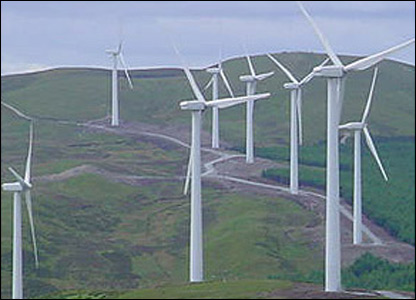
3,149 UK Wind Turbines – Produced Less Than 0.5% Of UK’s Electricity Needs

During the cold snap, the 3,149 UK wind turbines were nearly useless. At times delivering less than half of a percent of the UK’s electricity needs.

Maybe 1,000,000 wind turbines would do the job, as long as there aren’t any calm days?

Would there be any birds or tourists left in the UK?

Economics Is Simple ... The Fat Cats Just Want You to Think It's Complicated So That You Won't Demand Change

Economics and finance seem like complicated topics, and so many people "leave it to the experts".
However, these topics are actually simple, and if people hear a clear explanation, they will be able to form an opinion about our current economy and the government's response to economic challenges.
It will be easy to understand the economy if we think of money as water. Links showing that the analogy holds true with the economy are provided for convenience.
Let's imagine that there is only a limited amount of fresh, drinkable water in the U.S. (which is true), and that a handful of say 5 big water companies control the rights to 90% of the water in the country.
Let's further imagine that the water companies - wishing to make more money - expand beyond their traditional water business, into mining for oil and gas. Indeed, the oil and gas mining business becomes so lucrative that it soon dwarfs the size of their actual water business. They keep their traditional water business, but soon also become the largest polluters in the country.
They dig for oil and gas right around where the aquifiers are where they pump water. Unfortunately, they are greedy and cut corners, and end up polluting all of the aquifiers with toxic crude petroleum compounds.
The water companies loudly tell the government that this pollution was "unexpected" and simply a temporary "water-flow" problem. They jump up and down and yell that - unless the government "bails them out" by giving them more water - the entire water distribution system in the U.S. will fail, and Americans will suffer a water shortage and severe thirst.
Advocates for the American people argue that the big water companies should be forced to clean up the aquifiers. They point out that we will have a drastic water shortage unless these water supplies - which constitute the lion's share of fresh water in the U.S. - are cleaned, and that the water companies must be forced to stop mining for oil and gas right next to the water supplies so that it won't happen again. They also demand that the government distribute the water in its emergency strategic water supply directly to the people, as that will directly address the problem of thirst and water scarcity.
They point out that drilling for oil is a wholly-separate business from pumping and selling drinking water, and demand that the water companies sell their petrol business.
They point out that if the costs of cleaning up the aquifier are honestly tallied, the water companies are bankrupt. They say this the problem is not a "temporary" water shortage, but that the big water companies are actually insolvent, and that their entire business model is flawed.
And they note that the big water companies are not as efficient at extracting water from aquifiers as smaller water companies, but that the big companies are getting so big that they re driving the smaller companies out of business.
The big water companies respond that they're "too big to fail", that they're doing fine and only experiencing a very temporary "liquidity crisis" shortage of water, that they just need a little temporary help to get the water flowing to America again, and that they'll drill safely for oil and gas and that so new rules are needed.
The White House and Congress (having received a lot of contributions from the big water companies), and the Federal Water Reserve - a quasi-governmental agency owned entirely by the big 5 water companies - decide not to crack down on the big 5 water companies. Instead, they exempt them from pollution laws by relaxing reporting requirements so that the companies don't have to report how much oil and gas pollution has really gotten into the aquifiers. Indeed, the government let's the big companies write the rules for a series of highly-publicized "stress tests" which are simply a P.R. ploy to reassure the public that the water is safe and the companies sound, even though neither is true.
The government and Federal Water Reserve also buy all of the polluted water in the aquifiers at 100% of the normal price for clean water (and used it for security for cheap loans to the big water companies), and that water is stockpiled in the bowels of the Federal Water Reserve building (even though the high petrol content makes the water highly flammable, and thus a fire hazard). So instead of the water companies having to pay for their toxic pollution problems themselves, the government takes care of it ... at the taxpayers' expense.
The government also taps into it's emergency water supply, and gives all of the water to the big 5 companies to help them through their "temporary" water shortage. Americans are starting to get thirsty, but the big 5 don't sell to average Americans. Instead, they use most of the water in their oil and gas mining operations (it takes a lot of water sprayed on the rocks being drilled to keep the dust down). The big 5 sell some of the water to fat cats who already have lots of fresh water in private ponds and storage tanks, and stockpile some of it. Somehow the water given to the big companies never trickles down to the public. The average American on "Main Street" gets thirstier and thirstier.
The government also props up the big water companies by giving them all sorts of subsidies, incentives and business opportunities which guarantee that they'll make money. The government offers none of these to smaller water companies, and actually penalizes smaller water companies by charging them extra fees to pay for the misbehavior of the big companies.
The American people become thirstier and thirstier, and without water to grow crops, put in their cars' radiators, or even wash their hands, America becomes poorer and living standards decline.
The big water companies try to make the situation seem extremely complicated, so that only the "experts" can understand it. By making things seem complex, the American people won't feel competent to demand changes. Indeed, they even promote academics who are trained to ignore the real world and instead focus on highly complex - and unrealistic - models.
But the situation is actually simple. Things haven't improved, and won't improve until:
  • The big water companies are broken up, so that smaller water companies focusing just on H20 can step up to find clean water and sell it to normal Americans
  • The big companies are forced to clean up the polluted water, and the illegal mining operations of the big companies are prosecuted
Simple, isn't it?

Missouri Guard to train inmates for emergencies

JEFFERSON CITY, Mo. —The Missouri National Guard plans to start training some of the state's prison inmates to help it during natural disasters and other emergencies.

Missouri Guard spokeswoman Maj. Tammy Spicer said Thursday that under the proposal, the prison inmates would become a more formalized part of the Guard's disaster response. She said it would give the Guard a larger and better trained pool of workers to respond to emergencies. The training would focus on skills such as filling and stacking sandbags and removing debris.

Prison inmates already have been used in the past to help local officials during floods and other emergencies. Over the past several years, prison inmates have worked with volunteers and others to shore up levees and fill sandbags along flooding rivers from near St. Louis to northwestern Missouri.

Earlier this year, Gov. Jay Nixon allowed 37 inmates from a prison in St. Joseph to help stack sandbags along I-29 near Craig to protect the highway from a flooded Missouri River. In 2008, nearly 150 inmates from prisons across the state were among those fortifying levees near the Mississippi River in northeastern Missouri. And in 2007, prison inmates and the National Guard worked to protect a water treatment plant, schools and an ethanol plant near Craig from flood water.

Spicer said formal agreements between the Missouri Guard and the state Department of Corrections have not yet been signed. It was not known how many inmates could participate or how much the training would cost.

The National Guard said the inmates who participate in the training could not be convicted of violent offenses and would need to be eligible for the Department of Corrections work release program.

The Department of Corrections said the requirements to be eligible for work release include having 5 years or less left on their sentence and having no escape attempts or convictions for offenses such as rape, kidnapping and robbery. Prison officials also examine the inmates' mental health and the risk they pose to the public

Fading optimism in “new normal” America

Optimism is so deeply embedded in the American national psyche that it withstood the Great Depression in the 1930s and a string of recessions since then. But in the era some economists call “the new normal” in America, optimism is fading.

So say public opinion polls that ask Americans how they see the future, theirs and their country’s. One recent survey, by the respected Pew Research Center, found that depression era Americans were more optimistic about economic recovery in the near future than people questioned in a Pew poll this October, when only 35 percent said they expected better economic conditions in a year’s time. In response to a similar question in 1936 and 1937, about half expected general business conditions to improve over the next six months.

The phrase “new normal” was coined by PIMCO, one of the world’s biggest investment funds, and is shorthand for an American future that includes lowered living standards, slow growth and high unemployment. Joblessness now stands at 9.8 percent, up from 9.6 percent in October. Add workers who have given up looking for jobs and people forced to work part time and the rate climbs to 17 percent, a powerful reason for declining optimism.

But it’s not the only one. A slew of studies, surveys and reports show that a growing number of Americans – some surveys say more than half – no longer believe that their country is a land of unlimited opportunity, where all it takes to rise to success is hard work and determination.

“The end of American optimism,” as a headline over an opinion piece in the Wall Street Journal proclaimed this summer, has not quite arrived. But Americans increasingly believe that the rich just get richer and the poor just get poorer. They have good reason to think so. The rich-poor gap in the United States is wider than in any other developed country.

That has rarely been a matter of concern for most Americans but the recession that began in December 2007 turned inequality into a topic of public debate, on occasion with peculiar twists.

In November, a widely-read New York Times columnist, Nicholas Kristof, compared the United States to Latin American banana republics. To see countries where the richest one percent take home more than a fifth of the national income, he said, it was no longer necessary to leave the U.S.

Read Full Article